

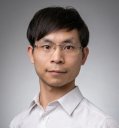
 Cheng Long
· 3 previous affiliations
- Nanyang Technological UniversitySince 2018
- Associate Professor · Since 2024
- Assistant Professor · 2018–2024
- Queen's University Belfast2016–2018
- Lecturer · 2016–2018
- Postdoc · 2015–2016
2 other authors named Cheng Long: Cheng Long (1 paper), Cheng Long (Microsoft (United States) · 1 paper)
Research Overview
Cheng Long focuses on vector databases, spatial data management, and the intersection of machine learning with time series and graph analytics. His trajectory spans foundational algorithms for trajectory simplification and subgraph enumeration to recent work on high-dimensional vector quantization and cross-modality time series forecasting. Currently, he investigates the security of machine learning models and the integration of large language models into data management systems.
Research Trajectory
His early research addressed foundational problems in spatial data management and algorithmic matching. This included work on Collective spatial keyword queries: a distance owner-driven approach, which explored efficient retrieval mechanisms for spatial objects associated with textual descriptions, and exact algorithms detailed in On optimal worst-case matching. A significant focus during this period was trajectory data management. In Trajectory Simplification: On Minimizing the Direction-based Error, he introduced the "Min-Error" problem, developing exact and approximate algorithms to simplify sequences of location points. Crucially, this approach preserved the direction of movement rather than just spatial proximity, outperforming existing methods in directional accuracy.
Expanding into graph analytics, he contributed to the research direction of Overcoming the Combinatorial Explosion in Subgraph Enumeration with Fast Maximal Quasi-clique Enumeration: A Pruning and Branching Co-Design Approach. This work addressed the computational bottlenecks inherent in mining dense subgraphs from large networks. He also continued to advance trajectory processing, as seen in Collectively Simplifying Trajectories in a Database: A Query Accuracy Driven Approach, which optimized trajectory simplification collectively across a database to maintain high query accuracy.
A major shift in his trajectory involved the development of vector databases for modern AI applications. In RaBitQ: Quantizing High-Dimensional Vectors with a Theoretical Error Bound for Approximate Nearest Neighbor Search, he introduced a quantization framework that enables high-accuracy, low-memory vector search. This work provided theoretical error bounds for approximate nearest neighbor search, a critical component for scaling Retrieval-Augmented Generation (RAG) systems and large language model inference.
As machine learning models became increasingly valuable assets, his research expanded into model security and intellectual property protection, particularly within the area of Black Box Ownership Verification for Deep Neural Networks. In Watermarking Recommender Systems, he introduced Autoregressive Out-of-distribution Watermarking (AOW), a black-box defense that embeds a hidden signature into a recommendation model without sacrificing its accuracy. This method proved highly effective at identifying stolen models, even after modifications like distillation or fine-tuning, contributing to the broader direction of The Vulnerability and Fragility of Neural Network Watermarks. He extended this concept to protect the training data itself in Data Watermarking for Sequential Recommender Systems, proposing a framework that embeds digital fingerprints into sequential interaction data to prove ownership even after a model has been trained on stolen datasets.
Simultaneously, he began exploring the integration of Large Language Models (LLMs) with numerical and spatial data. His work in the research direction of Aligning Continuous Time Series with Language Models is highlighted by Towards Cross-Modality Modeling for Time Series Analytics: A Survey in the LLM Era, which surveys how integrating textual context—such as statistical summaries or expert reports—can significantly outperform models relying solely on raw numbers. He applied these insights in TimeCMA: Towards LLM-Empowered Multivariate Time Series Forecasting via Cross-Modality Alignment, a framework that aligns raw numerical data with LLM world knowledge. By focusing on the LLM's last-token embedding, the method achieves high accuracy with a fraction of the memory and computational cost of previous approaches. Further contributing to the area of Semantic Augmentation for Numerical Time Series Forecasting, he developed STRATA-TS: Selective Knowledge Transfer for Urban Time Series Forecasting with Retrieval-Guided Reasoning. This framework tackles cross-city urban forecasting by selectively retrieving relevant data patches from data-rich source cities and combining them with LLM reasoning to mitigate negative transfer caused by city heterogeneity. In parallel, he advanced spatio-temporal graph neural networks with KITS: Inductive Spatio-Temporal Kriging with Increment Training Strategy, introducing an increment training strategy that bridges the structural gap between training and inference by adding virtual nodes rather than masking existing ones.
His integration of LLMs with structured data extended to text-rich networks. In HierPromptLM: A Pure PLM-based Framework for Representation Learning on Heterogeneous Text-rich Networks, he proposed a framework that converts complex graph structures into hierarchical text prompts, allowing a single Pretrained Language Model to process both text and network topology simultaneously, bypassing the traditional hybrid approach of combining language models with graph neural networks.
Most recently, his focus has broadened to encompass the security and safety of generative AI systems. He investigated vulnerabilities in LLM safety alignment with The Trojan Example: Jailbreaking LLMs through Template Filling and Unsafety Reasoning, demonstrating how malicious requests framed as demonstrative examples can bypass safety filters by exploiting the decoupling of unsafety reasoning from content generation. In the vision domain, he contributed to Wukong Framework for Not Safe For Work Detection in Text-to-Image systems, which identifies unsafe content by analyzing the early stages of the image generation process. He also addressed privacy concerns in RAG systems with Mask-based Membership Inference Attacks for Retrieval-Augmented Generation, introducing a mask-based framework to detect if specific documents are present in a system's retrieval corpus by strategically masking words and observing the system's predictive capabilities. Finally, in RedVisor: Reasoning-Aware Prompt Injection Defense via Zero-Copy KV Cache Reuse, he developed a lightweight defense framework that forces LLMs to generate an explicit reasoning trace to detect prompt injections, achieving high defense accuracy with minimal latency overhead through a novel cache reuse strategy.
Current Directions
Recent work investigates the security, privacy, and cross-modal capabilities of large language models and generative AI systems. A primary focus is on defending LLMs against adversarial attacks, including prompt injections and jailbreaks that exploit reasoning flaws or safety alignment gaps. This includes developing lightweight, reasoning-aware defense mechanisms that maintain high throughput without degrading model performance. Additionally, current research addresses privacy in Retrieval-Augmented Generation (RAG) systems, exploring membership inference attacks to understand and mitigate data leakage. In parallel, ongoing work explores cross-modality alignment, specifically leveraging the reasoning capabilities and world knowledge of LLMs to enhance multivariate time series forecasting and spatial data analytics, bridging the gap between raw numerical data and semantic text.
Profile updated
Loading new papers…
Other researchers whose papers cluster into the same research directions — a proxy for overlapping technical interests and shared intellectual neighborhoods.
See something wrong? Report a mistake