

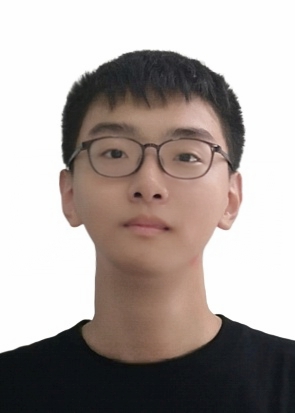
 Cheng Jin
· 2 previous affiliations
- Current
- PhD student · 2022–2026
- Undergrad student · 2018–2022
2 other authors named Cheng Jin: Cheng Jin (Fudan University · 158 papers), Cheng Jin (Tsinghua University · 54 papers)
Research Overview
Cheng Jin focuses on pathology image analysis, multimodal foundation models, and the application of artificial intelligence in healthcare. His early work addressed efficient computer vision architectures and spiking neural networks before shifting toward computational pathology. Currently, he develops scalable medical reasoning systems and foundation models designed to improve diagnostic accuracy and molecular prediction from whole-slide images.
Research Trajectory
Cheng Jin’s early research explored fundamental neural network architectures and efficient computer vision techniques. In 2022, he investigated biologically plausible neural models, introducing the Standardized Izhikevich Tonic (SIT) neuron in SIT: A Bionic and Non-Linear Neuron for Spiking Neural Network. By applying Phase Plane Analysis, this work successfully integrated complex Izhikevich neuron dynamics into spiking neural networks, achieving competitive accuracy while maintaining realistic neural behaviors. Concurrently, he developed lightweight architectures for multispectral image processing. He presented Laplacian pyramid networks: A new approach for multispectral pansharpening and subsequently introduced SpanConv: A New Convolution via Spanning Kernel Space for Lightweight Pansharpening. SpanConv treated the convolution kernel space as a mathematical subspace, allowing a model with merely 16,000 parameters to match the performance of significantly larger networks by learning convolutional filters as linear combinations of shared bases.
In 2023, his focus transitioned toward the intersection of artificial intelligence and healthcare. He published Label-Efficient Deep Learning in Medical Image Analysis: Challenges and Future Directions, a comprehensive survey analyzing over 300 papers. This work synthesized methods for leveraging unlabeled and weakly labeled data, establishing a foundation for his subsequent contributions to the research direction of Overcoming Cross-Institutional Domain Shift in Medical AI.
By 2024 and 2025, his work centered heavily on computational pathology and the development of Pathology Foundation Models (PFMs). Addressing the computational and morphological challenges of gigapixel images, he developed HMIL: Hierarchical Multi-Instance Learning for Fine-Grained Whole Slide Image Classification. This framework moved beyond flat multi-class classification by capturing hierarchical label correlations, advancing the broader area of Scaling Deep Learning to Gigapixel Whole Slide Images. He also addressed domain shifts in clinical cytology with Generalizable Cervical Cancer Screening via Large-scale Pretraining and Test-Time Adaptation, validating a highly robust screening paradigm across a multi-center dataset of over 127,000 whole-slide images.
A major theme in his recent trajectory is the integration of multimodal data to enhance pathology models. He contributed to A multimodal knowledge-enhanced whole-slide pathology foundation model, which integrated whole-slide images, pathology reports, and gene expression data to improve downstream molecular prediction. He further explored the intersection of histology and genomics in Genome-Anchored Foundation Model Embeddings Improve Molecular Prediction from Histology Images. This framework utilized transcriptomic data during training to anchor histology features to the genome, enabling accurate molecular predictions from routine whole-slide images alone during inference. Continuing this focus on scalable pretraining, he also contributed to A generalizable pathology foundation model using a unified knowledge distillation pretraining framework.
To improve the efficiency and interpretability of these massive models, he developed a bilateral reinforcement learning framework in Discovering Pathology Rationale and Token Allocation for Efficient Multimodal Pathology Reasoning. This system trained AI models to generate internal diagnostic rationales while dynamically allocating image tokens, drastically reducing inference costs. He also participated in the development of A Versatile Pathology Co-pilot via Reasoning Enhanced Multimodal Large Language Model, a multiscale architecture capable of mastering 72 distinct clinical tasks without requiring manually labeled chain-of-thought data. To rigorously evaluate the rapid proliferation of such models, he collaborated on PathBench: A comprehensive comparison benchmark for pathology foundation models towards precision oncology, a leakage-free benchmark testing 19 leading models across 64 clinical tasks.
Beyond medical imaging, his recent collaborations have extended into complex generative modeling. He participated in the development of GameGen-X: Interactive Open-world Game Video Generation, a diffusion transformer capable of generating and interactively simulating high-quality gameplay. This work represents a significant contribution to the research areas of Action Conditioned Generative World Models and Spatio-Temporal Latent Compression for Video Diffusion.
Current Directions
Cheng Jin’s most recent work investigates the next generation of multimodal foundation models for precision oncology and clinical diagnostics. A primary focus is bridging the gap between visual tissue morphology and underlying molecular signatures, enabling routine histology images to serve as proxies for expensive genomic testing. He is also actively exploring reasoning-enhanced large language models tailored for pathology, aiming to create versatile clinical "co-pilots" that can perform both low-level segmentation and high-level diagnostic reasoning. Across these domains, his research emphasizes test-time adaptation, knowledge distillation, and dynamic token allocation to ensure that massive medical AI systems remain both computationally efficient and highly generalizable across diverse clinical environments.
Profile updated
Loading new papers…
Other researchers whose papers cluster into the same research directions — a proxy for overlapping technical interests and shared intellectual neighborhoods.
See something wrong? Report a mistake