

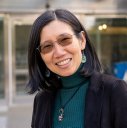
 Chen-Nee Chuah
· 4 previous affiliations
- Deloitte (United States)Since 2001
- Professor · Since 2001
- University of California, DavisSince 2008
- Co-Director · Since 2025
- Child Family Professor of Engineering, Electrical & Computer Engineering · Since 2020
- Professor, Electrical & Computer Engineering · Since 2010
- Vice Chair & Designated Graduate Program Chair, Electrical & Computer Engineering · 2008–2010
- Sprint Corporation2001–2002
- Visiting Researcher · 2001–2002
- University of California, Berkeley1997–2001
- PhD, EECS · 1998–2001
- MS, EECS · 1997
Research Overview
Chen-Nee Chuah focuses on the efficient adaptation of foundation models for specialized domains, privacy-preserving data querying, and synthetic data generation. Her recent research investigates parameter-efficient fine-tuning for histopathology and the application of large language models to human mobility and cognitive assessment. This trajectory spans from fundamental network capacity analysis to modern, resource-constrained machine learning in healthcare.
Research Trajectory
The earliest work in the provided evidence centers on wireless communication infrastructure. In Capacity growth of multi-element arrays in indoor and outdoor wireless channels (2000), Chuah and collaborators utilized ray-tracing tools to model the capacity growth of multiple-element antenna arrays. This work quantified how effective degrees of freedom scale with transmit power and antenna spacing in realistic propagation environments.
Following this early research, the more recent evidence from 2024 onward highlights a focus on data privacy and secure systems. Chuah has contributed to high-performance frameworks for cryptographic queries, notably in Private Aggregate Queries to Untrusted Databases. This paper introduces a method combining Information-Theoretic Private Information Retrieval with polynomial batch coding. The approach enables complex statistical queries—such as sums and means—in a single round of interaction, addressing the round complexity bottleneck in secure computation.
A major theme in Chuah's recent trajectory is the adaptation of large machine learning models to domains with limited labeled data. In Empowering Source-Free Domain Adaptation with MLLM-driven Curriculum Learning, she developed a reliability-based curriculum learning framework that distills knowledge from multimodal large language models into compact student models. This work contributes to the research direction of Agreement Filtering for Robust Pseudo-Labeling by utilizing multiple teacher models to guide adaptation without requiring source data.
This focus on efficient adaptation extends deeply into medical imaging, specifically pathology. To address the representational bottleneck of frozen foundation models, Chuah introduced frameworks to adapt models like CLIP to histopathology. Bridging the Pathology Domain Gap: Efficiently Adapting CLIP for Pathology Image Analysis with Limited Labeled Data proposes lightweight adapter modules and residual feature refinement to achieve high accuracy on cancer detection tasks using minimal labeled data. Building on this, Co-HSF: Resource-Efficient One-Shot Semi-Supervised Adaptation of Histopathology Foundation Models presents a dual-model teacher-student training loop that adapts large histopathology models using only a single labeled example per class. To systematize this area, Chuah also co-authored Benchmarking Parameter Efficient Adaptation of Vision Language Models on Pathology, which categorizes parameter-efficient fine-tuning (PEFT) methods and introduces a novel neuropathology dataset for detecting neurofibrillary tangles associated with Alzheimer's disease.
Beyond visual data, Chuah investigates the application of language models to clinical and behavioral domains. Language-Based Dementia Classification Should Consider Model Cognition for Interpretability argues for a shift from binary classification to cognition-based reasoning in automated cognitive assessment, probing model cognition through fine-grained linguistic cues to improve clinical trustworthiness. Most recently, MobilityGPT: Enhanced Human Mobility Modeling With a GPT Model leverages generative pre-trained transformers to synthesize realistic human mobility trajectories. By incorporating geospatial constraints and reinforcement learning, this work advances techniques relevant to the broader area of Differentially Private Synthetic Data Generation.
Current Directions
The most recent papers in the evidence investigate the intersection of parameter-efficient machine learning and specialized healthcare applications. A primary focus is the continued refinement of vision-language models for histopathology, specifically addressing domain shifts and label scarcity through one-shot learning and lightweight adapters. Concurrently, Chuah is exploring the interpretability of AI in clinical diagnostics, emphasizing cognition-based reasoning over opaque binary classification for conditions like dementia. Finally, the application of generative models to human behavior—such as using LLMs for synthetic mobility data generation—represents an ongoing effort to balance realistic data modeling with geospatial and privacy constraints.
Profile updated
Loading new papers…
Other researchers whose papers cluster into the same research directions — a proxy for overlapping technical interests and shared intellectual neighborhoods.
See something wrong? Report a mistake