

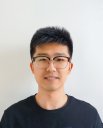
 Chen Gao
· 3 previous affiliations
- National University of SingaporeSince 2024
- Postdoc · Since 2024
- Beihang University2021–2024
- PhD student · 2021–2024
- MS student · 2018–2021
5 other authors named Chen Gao: Chen Gao (Tsinghua University · 179 papers), Chen Gao (Meta (United States) · waymo · 4 papers), Chen Gao (Tsinghua University · 1 paper), Chen Gao (1 paper), Chen Gao (0 papers)
Research Overview
Chen Gao focuses on embodied artificial intelligence, vision-language navigation, and generative computer vision. His early work explored neural architecture search and spatial-aware generative adversarial networks for image synthesis and editing. More recently, his research addresses long-horizon robotic manipulation and 3D open-vocabulary detection, emphasizing the integration of large language models and structured reasoning for complex autonomous systems.
Research Trajectory
In his early research, Gao focused on generative models and automated network design. In 2020, he contributed to the research area of Adversarial Neural Architecture Search with the introduction of AdversarialNAS: Adversarial Neural Architecture Search for GANs. This work presented a differentiable method to simultaneously search the architectures of both the generator and discriminator in generative adversarial networks without requiring extra evaluation metrics during the search phase. Around the same time, his research addressed complex image editing and synthesis. He developed Recapture as You Want, a method enabling semantic-aware geometric and appearance transformations in portrait photography, allowing users to edit posture, body figure, and clothing styles. This interest in complex image synthesis extended into the research direction of Bridging Geometric Mismatches in Facial Style Transfer, as demonstrated by his participation in developing PSGAN: Pose and Expression Robust Spatial-Aware GAN for Customizable Makeup Transfer. PSGAN disentangles makeup into spatial-aware matrices, utilizing an attentive morphing module to enable high-fidelity makeup transfer across vastly different facial poses and expressions.
Following this work in generative vision, Gao's trajectory shifted significantly toward embodied artificial intelligence, specifically Vision-Language Navigation (VLN) and Remote Embodied Referring Expression (REVERIE). In 2021, he proposed Room-and-Object Aware Knowledge Reasoning for Remote Embodied Referring Expression. This work introduced a Cross-modality Knowledge Reasoning model that generates scene memory tokens, allowing agents to utilize historical clues for goal-oriented exploration rather than relying on strict step-by-step instruction following. To address the persistent challenge of agents forgetting spatial layouts during long-horizon tasks, he introduced Reinforced Structured State-Evolution for Vision-Language Navigation in 2022. This model maintains a structured, graph-based memory of the environment, enabling agents to navigate complex 3D spaces by understanding the relationships between objects over time.
Continuing his focus on structured planning for embodied agents, Gao developed Adaptive Zone-aware Hierarchical Planner for Vision-Language Navigation in 2023. This approach explicitly divides the navigation process into two heterogeneous phases: high-level sub-goal setting via zone partition and low-level action execution, moving away from less efficient single-step planning schemes. He further refined embodied reasoning with Room-Object Entity Prompting and Reasoning for Embodied Referring Expression in 2024, which incorporated prior knowledge as decision guidance to improve goal-oriented exploration in unseen environments.
Concurrently with his work on single-agent navigation, Gao explored collaborative systems for autonomous vehicles. In 2023, he published Towards Vehicle-to-everything Autonomous Driving: A Survey on Collaborative Perception. This comprehensive survey provided a taxonomy of collaborative perception architectures—systems that allow vehicles to share sensor data to eliminate blind spots—and benchmarked their robustness against real-world challenges such as network latency, localization errors, and limited bandwidth.
Most recently, Gao's work has expanded into 3D scene understanding and complex robotic manipulation. In 2025, he contributed to the area of Distilling 2D Semantic Knowledge into 3D Point Cloud Models with GLRD: Global-Local Collaborative Reason and Debate with PSL for 3D Open-Vocabulary Detection. This framework combines local object features with global scene context using large language models and a Probabilistic Soft Logic solver to correct misclassifications based on spatial common sense. In the robotics domain, he participated in creating ManiSoft: Towards Vision-Language Manipulation for Soft Continuum Robotics (2026), which introduced a hybrid simulator and dataset designed to bridge the gap between vision-language models and the deformable dynamics of soft robots. He also contributed to Escaping the Diversity Trap in Robotic Manipulation via Anchor-Centric Adaptation (2026), addressing the instability of robot learning under tight data budgets by stabilizing policies around anchor points before expanding to difficult boundary areas.
Current Directions
The most recent papers in the evidence indicate a strong focus on complex robotic manipulation and 3D scene understanding, heavily integrating large language models and structured reasoning. Recent work investigates how to bridge the gap between vision-language models and soft continuum robotics, developing hybrid simulators to handle deformable, non-rigid dynamics. Concurrently, research in this phase addresses the data efficiency and stability of robot learning policies. By employing anchor-centric adaptation strategies, these approaches seek to overcome the noise introduced by highly diverse demonstrations under tight data budgets, allowing robots to learn stable policy skeletons. In the perception domain, current efforts also explore 3D open-vocabulary detection, utilizing probabilistic logic and global scene context to correct localized misclassifications and improve the reliability of autonomous spatial reasoning.
Profile updated
Loading new papers…
Other researchers whose papers cluster into the same research directions — a proxy for overlapping technical interests and shared intellectual neighborhoods.
See something wrong? Report a mistake