

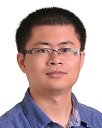
 Chen Feng
· 6 previous affiliations
- Affiliated Professor at Computer Science · Since 2022
- New York UniversitySince 2018
- Co-Director of NYU Center for Robotics and Embodied Intelligence (CREO) · Since 2025
- Associate Professor · Since 2024
- Assistant Professor · 2018–2024
- Amazon (United States)Since 2026
- Amazon Scholar · Since 2026
- Building Diagnostic Robotics2022–2025
- Chief Scientific Officer · 2022–2025
- Research Scientist · 2017–2018
- Research Scientist · 2015–2018
- Visiting Research Scientist · 2015–2016
- University of Michigan2010–2013
- PhD student · 2010–2013
7 other authors named Chen Feng: Chen Feng (MHFA England® · Queen's University Belfast · 38 papers), CHEN FENG (University of Bristol · 11 papers), Chen Feng (Hong Kong University of Science and Technology · 5 papers), Chen Feng (Wuhan HGCyber Data System Co, Ltd. & HGTECH Central Research Institute · 3 papers), Chen Feng (Qualcomm (United States) · 2 papers), and 2 more
Research Overview
Chen Feng focuses on robotics, computer vision, and machine learning, with an emphasis on enabling intelligent agents to understand and interact with unstructured environments. His early work addressed fundamental methods for 3D point cloud processing and spatial mapping. More recently, his research investigates embodied artificial intelligence, visual place recognition, and collaborative perception for autonomous navigation and human-robot interaction.
Research Trajectory
Feng’s early research addressed fundamental challenges in spatial mapping and geometric data processing. He developed techniques for real-time environment tracking, such as Point-plane SLAM for hand-held 3D sensors, which improved localization accuracy by incorporating planar features into simultaneous localization and mapping pipelines. Building on this geometric focus, he also introduced Fast plane extraction in organized point clouds using agglomerative hierarchical clustering, providing efficient methods for parsing structured 3D environments.
As neural networks became prominent in computer vision, Feng contributed to the area of Deep Learning on Unstructured 3D Point Clouds. He designed novel architectures to handle the irregular nature of 3D data, notably introducing FoldingNet: Point Cloud Auto-Encoder via Deep Grid Deformation. This unsupervised framework reconstructs shapes by folding a virtual 2D grid into 3D space, advancing the broader research direction of Generating 3D Surfaces by Deforming Canonical Templates. Concurrently, he explored the area of Modeling 3D Point Clouds as Local Geometric Graphs through Mining Point Cloud Local Structures by Kernel Correlation and Graph Pooling, which proposed kernel correlation and graph pooling operations to capture local geometric structures more efficiently than hierarchical alternatives. He also collaborated on Fast Resampling of Three-Dimensional Point Clouds via Graphs, optimizing the storage and visualization of large-scale point clouds. Extending unsupervised learning to spatial alignment, he developed DeepMapping: Unsupervised Map Estimation From Multiple Point Clouds, which reframed geometric registration as a binary occupancy classification task to globally align multiple scans without relying on precise initial pose estimates.
Moving into complex, dynamic environments, Feng’s work expanded to include collaborative perception and spatial reasoning. He contributed to the field of Mitigating Spatial Misalignment in Collaborative Perception by participating in the development of Learning Distilled Collaboration Graph for Multi-Agent Perception. This research introduced a teacher-student framework to optimize the performance-bandwidth trade-off for connected autonomous agents. He further supported this domain by co-creating V2X-Sim: Multi-Agent Collaborative Perception Dataset and Benchmark for Autonomous Driving. In parallel, his group investigated fundamental spatial intelligence, releasing SPARE3D: A Dataset for SPAtial REasoning on Three-View Line Drawings to evaluate how well deep networks can infer 3D shapes and camera poses from 2D projections. To facilitate human-robot collaboration, his team also introduced Egocentric Prediction of Action Target in 3D, proposing a multimodal dataset and baseline methods for anticipating the 3D locations of human object manipulation from a first-person perspective.
Feng’s subsequent trajectory emphasizes embodied intelligence, where agents must simultaneously understand and act within their surroundings. He proposed Active Topological Mapping by Metric-Free Exploration via Task and Motion Imitation, a lightweight exploration policy operating entirely in image feature space without requiring metric information. Addressing the interdependence of localization and environmental modification, his lab explored Learning Simultaneous Navigation and Construction in Grid Worlds, utilizing deep reinforcement learning to enable agents to build structures while navigating dynamic spaces. To advance the research direction of Visual Place Recognition Across Extreme Appearance Changes, his team published NYC-Indoor-VPR: A Long-Term Indoor Visual Place Recognition Dataset with Semi-Automatic Annotation, capturing significant appearance changes over time to train more resilient navigation systems. Further bridging visual recognition and spatial topology, he oversaw the development of Multiview Scene Graph, a Transformer-based model that jointly learns place recognition and object association from unposed 2D images.
In his most recent work, Feng continues to scale embodied AI and refine human-robot interaction. He led the development of EgoPAT3Dv2: Predicting 3D Action Target from 2D Egocentric Vision for Human-Robot Interaction, which improves upon earlier egocentric prediction models by relying solely on RGB data and human priors to ensure safer robotic interactions. He also collaborated on Wanderland: Geometrically Grounded Simulation for Open-World Embodied AI, a "real-to-sim" framework leveraging 3D Gaussian Splatting to create metrically accurate urban simulations. Concurrently, his group introduced CityWalker: Learning Embodied Urban Navigation from Web-Scale Videos, a scalable approach that trains autonomous agents for map-free urban navigation using thousands of hours of in-the-wild walking and driving footage.
Current Directions
The most recent papers in the evidence address the scalability and real-world deployment of embodied artificial intelligence. A primary focus is on training autonomous agents for complex, map-free urban navigation by leveraging large-scale, unstructured data, such as web-sourced videos. This is complemented by efforts to build highly realistic, geometrically grounded simulation environments that bridge the gap between real-world data and virtual training grounds. Additionally, ongoing work investigates predictive modeling for human-robot interaction, specifically focusing on anticipating human actions in 3D space using egocentric vision to facilitate safer and more fluid collaboration.
Profile updated
Loading new papers…
Other researchers whose papers cluster into the same research directions — a proxy for overlapping technical interests and shared intellectual neighborhoods.
See something wrong? Report a mistake