

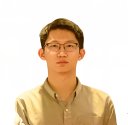
 Chen Chen
· 1 previous affiliation
- Beihang UniversitySince 2022
- Researcher · Since 2022
32 other authors named Chen Chen: Chen Chen (University of Central Florida · 429 papers), Chen Chen (University of Virginia · 146 papers), Chen Chen (National Technological University · 113 papers), Chen Chen (University of Wollonong · 68 papers), Chen Chen (Sony AI · 38 papers), and 27 more
Research Overview
Chen Chen focuses on medical image analysis, robotic navigation, and simultaneous localization and mapping (SLAM). Early work emphasized deep learning architectures for breast cancer diagnosis and anatomical landmark detection using multi-modal ultrasound and cephalometric data. More recently, the focus has shifted toward spatial computing, specifically enhancing RGB-D SLAM systems in dynamic environments and integrating large language models into robotic navigation frameworks.
Research Trajectory
The broader corpus of evidence associated with Chen reflects participation across a wide array of computational domains. This includes peripheral involvement in diverse taxonomy themes such as the research direction Transcriptomic Deconvolution of Tissue Microenvironments, the area of Generative Error Correction for Robust Automatic Speech Recognition, and work in the broader area of Federated Recommendation for Data-Sparse Clients. However, the primary and most cohesive research trajectory evolves distinctly from medical imaging to advanced spatial computing and robotics.
Between 2021 and 2023, Chen’s primary focus was on medical image analysis, particularly leveraging temporal and multi-modal data to improve diagnostic accuracy. In 2021, Chen led research on utilizing temporal data for oncological diagnostics, serving as first author on Domain Knowledge Powered Deep Learning for Breast Cancer Diagnosis Based on Contrast-Enhanced Ultrasound Videos. This work addressed the limitations of static ultrasound images by employing 3D convolutional neural networks to extract detailed blood supply information from contrast-enhanced ultrasound (CEUS) videos.
Continuing in the medical domain, Chen contributed to automated orthodontic analysis in Anatomical Landmarks Annotation on 2D Lateral Cephalograms with Channel Attention (2022). As a co-author, Chen helped develop a deep learning model utilizing multi-scale and multi-channel attention mechanisms to improve the consistency of landmark localization, moving away from traditional uniform sampling rules. In 2023, collaborative efforts in multi-modal diagnostics continued with IMAN: An Iterative Mutual-Aid Network for Breast Lesion Segmentation on Multi-modal Ultrasound Images. This research proposed an hourglass-shaped architecture to integrate standard ultrasound and CEUS data, enhancing lesion segmentation performance for clinical practice.
By 2024, Chen's research focus transitioned significantly toward computer vision and robotics, taking on senior leadership roles in SLAM development. As the principal investigator (last author), Chen directed the development of NID-SLAM: Neural Implicit Representation-based RGB-D SLAM In Dynamic Environments. This system addressed the vulnerability of neural SLAM to moving objects by leveraging depth image geometry to accurately mask dynamic elements and reduce camera drift. During this period, Chen also participated in integrating modern AI paradigms into physical agents. As a co-author on L2R-Nav: A Large Language Model-Enhanced Framework for Robotic Navigation, Chen contributed to an end-to-end framework that combines large language models with reinforcement learning to guide robots through dynamic environments based on user instructions, bypassing the limitations of static maps.
Current Directions
The most recent papers in the evidence indicate a strong focus on high-fidelity mapping and intelligent navigation in dynamic environments. Current work investigates the application of novel rendering techniques to spatial computing, as seen in collaborative research on GLC-SLAM: Gaussian Splatting SLAM with Efficient Loop Closure (2024). This direction addresses accumulated tracking errors in large-scale environments by combining 3D Gaussian Splatting with global optimization and hierarchical loop closure.
Broadly, Chen’s latest research addresses the intersection of semantic reasoning, real-time rendering, and physical movement. The ongoing focus is on developing systems that can maintain robust spatial awareness despite environmental disruptions, exploring how foundation models and neural implicit representations can replace or augment traditional static maps for autonomous agents operating in unfamiliar settings.
Profile updated
Loading new papers…
Loading research neighbors…
See something wrong? Report a mistake