

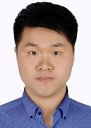
 Chaoning Zhang
· 5 previous affiliations
- Full Professor · Since 2025
- Kyung Hee University2022–2025
- Tenure-Track Faculty · 2022–2025
- Postdoc · 2021–2022
- Postdoctoral Researcher · 2018–2021
- LS ELECTRIC2015–2018
- R&D Engineer · 2015–2018
- Harbin Institute of Technology2012–2015
- Master's degree, Electrical Engineering · 2012–2015
Research Overview
Chaoning Zhang focuses on self-supervised representation learning, model robustness, and the efficient deployment of large foundation models. His trajectory spans from foundational work in contrastive learning and adversarial training to recent advancements in large language model reasoning and multimodal compression. Currently, his research emphasizes neuro-symbolic reasoning frameworks and the optimization of complex generative architectures.
Research Trajectory
Zhang’s early work investigates the fundamental mechanisms of representation learning and adversarial robustness. He introduced simplified frameworks for contrastive learning in Towards Understanding and Simplifying MoCo: Dual Temperature Helps Contrastive Learning without Many Negative Samples. By proposing a dual-temperature mechanism to control inter-anchor hardness, this work removed the need for massive negative sample dictionaries, contributing to the broader research direction of Unifying Self-Supervised Learning via Spectral and Information Theory.
Parallel to his work in representation learning, Zhang explored the intersection of model security and feature statistics. In Towards Understanding Dual BN In Hybrid Adversarial Training, he examined how disentangling feature statistics can mitigate trade-offs in robust deep learning, a problem closely tied to the area of The Robustness Cost of Feature Normalization. This focus on security extends to distributed systems; he developed methods for logit calibration and feature contrast to defend against adversarial attacks in heterogeneous environments in Logit Calibration and Feature Contrast for Robust Federated Learning on Non-IID Data. These efforts align with his broader contributions to areas such as Class Wise Robustness Disparity in Adversarial Training, Data-Free Security and Robustness in Deep Learning, and Enhancing Adversarial Transferability for Black Box Attacks.
During this period, Zhang also engaged extensively with the rapid evolution of foundation models, focusing on their efficiency and domain adaptation. He collaborated on adapting Meta's Segment Anything Model for edge devices in Faster Segment Anything: Towards Lightweight SAM for Mobile Applications, utilizing decoupled knowledge distillation to drastically reduce parameter counts while maintaining performance. To synthesize the rapid developments in this space, he participated in comprehensive reviews, including A Survey on Segment Anything Model (SAM): Vision Foundation Model Meets Prompt Engineering. He also led a systematic review of generative audio technologies in A Survey on Audio Diffusion Models: Text To Speech Synthesis and Enhancement in Generative AI, mapping the landscape of high-fidelity synthesis and speech enhancement.
As large language models (LLMs) became central to artificial intelligence, Zhang's research shifted toward analyzing and improving their reasoning capabilities and structural efficiency. He oversaw a broad synthesis of conversational AI in A Complete Survey on LLM-based AI Chatbots. Moving from surveys to structural innovations, he introduced a novel reasoning framework in Syzygy of Thoughts: Improving LLM CoT with the Minimal Free Resolution. By applying principles from commutative algebra to decompose complex problems, this work provided a mathematically grounded alternative to standard chain-of-thought prompting. His focus on structured reasoning culminated in his oversight of MemoGraph: Augmenting LLMs with Explicit Episodic Memory for Multi-step Mathematical Reasoning. This neuro-symbolic framework addresses the volatility of implicit parametric memory in LLMs by maintaining a heterogeneous graph of the proof state, allowing models to retrieve verified semantic principles during complex mathematical tasks.
Concurrently, Zhang has maintained a strong focus on the efficiency of multimodal and 3D generative architectures, contributing to the area of Scaling 3D Generative Models with 2D Priors. He authored a systematic taxonomy of compression techniques for real-time 3D scene rendering in Compression in 3D Gaussian Splatting: A Survey of Methods, Trends, and Future Directions. In the multimodal domain, he collaborated on LLaVA-FA: Learning Fourier Approximation for Compressing Large Multimodal Models, which shifts weight approximation into the frequency domain to drastically reduce activated parameters and model hallucinations. He also contributed to structural awareness in natural language processing with Text summarization via global structure awareness, a framework designed to preserve the logical skeleton of long documents during summarization.
Extending his focus on foundational model efficiency and deployment, Zhang contributed to RAG-FGO: Dynamic Optimization of Query-Rewriting Agents for Generative RAG, a dynamic optimization framework that tunes discrete prompt templates and continuous decoding parameters to bolster retrieval-augmented generation. In visual token reduction, Zhang co-developed ReMiC: Representation-Driven Token Pruning for 3D VLMs via Minimax Hierarchical Clustering, which applies minimax hierarchical clustering to prune long visual token sequences in 3D vision-language models without retraining. He also guided the development of TPRL: Adaptive Visual Token Pruning in LVLMs via Language-Guided Reinforcement Learning, which uses reinforcement learning to formulate sequential multi-step token reduction during training and amortize it into an adaptive, deterministic one-shot pruning policy at inference time.
Current Directions
The most recent papers in the evidence indicate a dual focus on advanced reasoning frameworks for large language models and the extreme compression of complex multimodal systems. In the domain of reasoning, recent work investigates neuro-symbolic architectures that augment LLMs with explicit episodic memory and algebraic problem decomposition, aiming to solve the context drift and hallucination issues inherent in multi-step mathematical proofs. Simultaneously, ongoing research addresses the computational bottlenecks of spatial and multimodal architectures through adaptive visual token pruning, agent-based query-rewriting optimization, and clustering-based token compression for 3D vision-language models.
Profile updated
Loading new papers…
Other researchers whose papers cluster into the same research directions — a proxy for overlapping technical interests and shared intellectual neighborhoods.
See something wrong? Report a mistake