

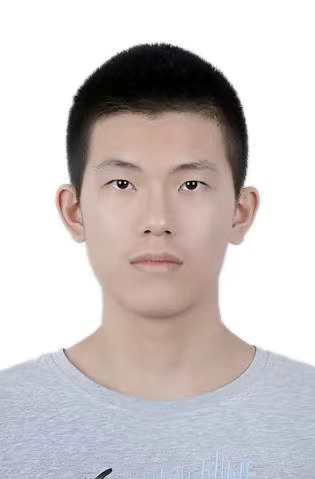
 Chao Zhang
· 6 previous affiliations
- PhD student · 2022–2028
- Current
- City University of Hong KongSince 2022
- PhD student · 2022–2028
- Intern · 2023–2025
- Microsoft (United States)2022–2023
- Intern · 2022–2023
- Meituan (China)2023
- Intern · 2023
- Shandong University2018–2022
- Undergrad student · 2018–2022
18 other authors named Chao Zhang: Chao Zhang (Georgia Institute of Technology · 326 papers), Chao Zhang (Tsinghua University · 171 papers), Chao Zhang (University College London · Shanghai Artificial Intelligence Laboratory · Tsinghua University · 84 papers), Chao Zhang (Peking University · 84 papers), Chao Zhang (Zhejiang University · 54 papers), and 13 more
Research Overview
Chao Zhang focuses on retrieval-augmented generation, multimodal recommendation systems, and the application of large language models to complex reasoning tasks. His trajectory spans early work in predictive modeling and federated learning to recent advancements in agentic frameworks and verifiable reasoning. Currently, he investigates token-efficient retrieval architectures and reinforcement learning techniques to enhance the strategic and spatial reasoning capabilities of foundation models.
Research Trajectory
Zhang’s early research addressed predictive modeling, federated learning, and multimodal alignment across diverse domains. In 2022, he contributed to MM-Rec: Visiolinguistic Model Empowered Multimodal News Recommendation, which integrated textual and visual features via pretrained visiolinguistic models to improve news representation and click prediction. He subsequently explored theoretical limits in urban forecasting, introducing context-transition predictability to account for spatial and temporal variables in Beyond the Limits of Predictability in Human Mobility Prediction: Context-Transition Predictability. Concurrently, he developed methods for privacy-preserving machine learning, proposing a semi-supervised approach to handle unlabeled client data without relying on biased global pseudo-labels in Non-IID always Bad? Semi-Supervised Heterogeneous Federated Learning with Local Knowledge Enhancement. His interest in multimodal alignment also extended to video understanding, where he designed a multi-step inference solution for instructional videos in A Solution to CVPR'2023 AQTC Challenge: Video Alignment for Multi-Step Inference, utilizing video-script alignment features to ground question-relevant content.
Moving into 2024, Zhang’s focus shifted toward the capabilities and applications of large language models (LLMs). He participated in a comprehensive review of the field, Large language models for generative information extraction: a survey, which aligns with the research direction Information Extraction as Sequence to Sequence Generation. In the domain of recommendation systems, he introduced NoteLLM: A Retrievable Large Language Model for Note Recommendation, a framework that compresses items into special tokens for retrieval and generation, bridging semantic and behavioral signals. He also began addressing the reliability of LLMs in knowledge-intensive tasks, collaborating on Retrieve-Plan-Generation: An Iterative Planning and Answering Framework for Knowledge-Intensive LLM Generation. This work sought to mitigate hallucinations by generating plan tokens before synthesizing retrieved documents, preventing off-topic information from misleading the model.
In 2025, Zhang’s research expanded significantly into agentic frameworks, reinforcement learning (RL), and verifiable reasoning. Building on his earlier recommendation work, he developed NoteLLM-2: Multimodal Large Representation Models for Recommendation to incorporate broader multimodal representations. He also contributed to visual context understanding in From a Social Cognitive Perspective: Context-Aware Visual Social Relationship Recognition, which captures subtle visual cues and interactions to infer social dynamics beyond basic object classification.
A major theme of his recent work involves using RL to enhance the reasoning capabilities of foundation models. He contributed to Xiangqi-R1: Enhancing Spatial Strategic Reasoning in LLMs for Chinese Chess via Reinforcement Learning, which applies Group Relative Policy Optimization (GRPO) to improve strategic analysis, contributing to the broader area of Reinforcement Learning for Generalizable Reasoning in Large Models. Similarly, he applied RL to visual document retrieval in Look as You Think: Unifying Reasoning and Visual Evidence Attribution for Verifiable Document RAG via Reinforcement Learning. This work trains vision-language models to interleave reasoning steps with precise visual grounding—such as bounding boxes and page indexes—advancing the research direction Intermediate Step Supervision for Verifiable Reasoning and the area of General Purpose Reasoning from Specialized Reinforcement Learning.
Zhang has also focused on the efficiency and control of complex LLM pipelines. He collaborated on Streamlining the Collaborative Chain of Models into A Single Forward Pass in Generation-Based Tasks, which addresses the computational overhead of passing plain text between specialized models by managing hidden states directly, a contribution to the research direction Controlling Language Models Through Latent Space Interventions. Most recently, he introduced TeaRAG: A Token-Efficient Agentic Retrieval-Augmented Generation Framework, which compresses retrieval content and reasoning steps to reduce the token overhead inherent in autonomous, multi-round agentic RAG systems.
Current Directions
The most recent papers in the evidence indicate a strong focus on optimizing and verifying retrieval-augmented generation (RAG) and agentic reasoning systems. Zhang is actively investigating token-efficient architectures that compress reasoning steps and retrieved contexts to reduce the computational overhead of autonomous agents. Additionally, his recent work explores the intersection of reinforcement learning and multimodal reasoning, utilizing techniques like Group Relative Policy Optimization to train models that can ground their logic in precise visual evidence or execute complex spatial strategies. A parallel focus involves streamlining multi-model collaborative pipelines to improve inference efficiency in generation-based tasks by operating directly on model hidden states.
Profile updated
Loading new papers…
Other researchers whose papers cluster into the same research directions — a proxy for overlapping technical interests and shared intellectual neighborhoods.
See something wrong? Report a mistake