

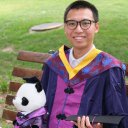
 Changli Tang
· 1 previous affiliation
- Tsinghua UniversitySince 2020
- PhD student · 2024–2029
- Undergrad student · 2020–2024
Research Overview
Changli Tang focuses on multimodal large language models, audio-visual fusion, and speech processing. His trajectory spans early work in self-supervised speech representations to the development of integrated auditory and video-language architectures that perceive complex acoustic and visual environments. Most recently, he investigates 3D spatial reasoning and unified audio-visual embeddings for comprehensive multimodal understanding.
Research Trajectory
Changli Tang's research initially concentrated on improving self-supervised learning (SSL) for speech processing. In 2022, he investigated methods to maximize the utility of speech-based SSL models by introducing Exploring Effective Fusion Algorithms for Speech Based Self-Supervised Learning Models. This work evaluated various fusion techniques across distinct architectures, such as Hubert and Data2vec, to extract superior universal representations for downstream tasks. He subsequently participated in developing multi-task learning frameworks for SSL, contributing to MT4SSL: Boosting Self-Supervised Speech Representation Learning by Integrating Multiple Targets. By generalizing target extraction into offline (K-means) and online (gradient-free teacher networks) components, this framework significantly improved performance on speech benchmarks, intersecting with the broader research direction of Supervised Warmup for Reliable Pseudo Labeling.
Transitioning toward multimodal architectures, Tang began integrating audio and visual modalities directly into large language models (LLMs). He helped develop the FAVOR framework in Fine-grained Audio-Visual Joint Representations for Multimodal Large Language Models, which introduced a causal Q-Former and frame-level synchronization to process speech, audio events, and video with high temporal resolution. This architecture yielded substantial accuracy improvements in video reasoning tasks and advanced the research areas of Enforcing Temporal Causality with Causal Attention Masking and Modeling Temporal Asynchrony in Multimodal Fusion. To further bridge speech encoders and LLMs, he co-authored Connecting Speech Encoder and Large Language Model for ASR, a comparative study evaluating structural connectors—including fully connected layers, multi-head cross-attention, and Q-Formers—for automatic speech recognition across models like Whisper and Vicuna.
In 2024, Tang led several initiatives to build comprehensive auditory capabilities into LLMs. He introduced a dual auditory encoder structure in Extending Large Language Models for Speech and Audio Captioning, combining Whisper for speech and BEATs for audio events to achieve simultaneous speech recognition and audio captioning. This foundation culminated in SALMONN: Towards Generic Hearing Abilities for Large Language Models, a multimodal LLM capable of perceiving and reasoning across speech, music, and general audio events. By implementing a novel "activation tuning" stage, the model successfully unlocked emergent cross-modal reasoning abilities—such as audio-based storytelling—that are typically suppressed during standard instruction tuning. He also expanded this architecture to visual domains, participating in the design of video-SALMONN: Speech-Enhanced Audio-Visual Large Language Models.
Concurrently, Tang expanded the spatial and temporal resolution of multimodal models. He explored 3D acoustic environments in Can Large Language Models Understand Spatial Audio?, demonstrating that LLMs could leverage multichannel audio cues for sound source localization, far-field speech recognition, and localisation-informed speech extraction. To improve video understanding, he developed multi-round preference optimization (mrDPO) techniques in Enhancing Multimodal LLM for Detailed and Accurate Video Captioning using Multi-Round Preference Optimization. This methodology was formalized in video-SALMONN 2: Captioning-Enhanced Audio-Visual Large Language Models, which iteratively refined the model's ability to generate factual, detailed video descriptions by bootstrapping from its own improvements. His work on high-resolution temporal processing continued with Improving LLM Video Understanding with 16 Frames Per Second. By designing a temporal aligner to compress dense visual data, this model processed 16 frames per second—a significant leap over standard low-frame-rate bottlenecks—advancing the research direction of Audio Visual Fusion for Video Event Understanding. Additionally, he explored the utility of these models for automated metrics, contributing to Enabling Auditory Large Language Models for Automatic Speech Quality Evaluation, which fine-tuned auditory LLMs to predict mean opinion scores and speaker similarity for text-to-speech systems.
By 2026, Tang's research evolved to address unified multimodal representations and complex physical reasoning. He introduced WAVE: Learning Unified & Versatile Audio-Visual Embeddings with Multimodal LLM, an embedding model that leverages hierarchical feature fusion and instruction-following to create a shared, prompt-aware representation space for text, audio, and video. He also co-developed JAEGER: Joint 3D Audio-Visual Grounding and Reasoning in Simulated Physical Environments, a framework that upgrades audio-visual LLMs to perform 3D spatial reasoning by integrating RGB-D video with multi-channel spatial audio and neural intensity vectors to accurately identify sound sources in overlapping acoustic environments.
Current Directions
The most recent papers in the evidence indicate a focus on unified multimodal representation learning and 3D spatial reasoning in simulated environments. Recent work investigates how to map text, audio, and video into a single, prompt-aware embedding space that can dynamically shift focus based on user instructions. Additionally, ongoing research addresses the challenge of grounding audio-visual large language models in three-dimensional physical spaces, utilizing multi-channel spatial audio and depth data to accurately localize and reason about sound sources in complex, overlapping acoustic environments.
Profile updated
Loading new papers…
Other researchers whose papers cluster into the same research directions — a proxy for overlapping technical interests and shared intellectual neighborhoods.
See something wrong? Report a mistake