

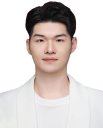
 Chang Liu
· 1 previous affiliation
- Current
- PhD student · 2021–2026
37 other authors named Chang Liu: Chang Liu (Southeast University · 1,094 papers), Chang Liu (146 papers), Chang Liu (Zhongguancun Academy · 51 papers), Chang Liu (Peking University · 43 papers), Chang Liu (Huawei Technologies (China) · Shanghai Jiao Tong University · 18 papers), and 32 more
Research Overview
Chang Liu focuses on the intersection of generative modeling, computer vision, and cross-modal information synthesis. His work emphasizes the development of robust frameworks for image restoration, interactive content creation, and the application of large-scale models to specialized domains such as medical imaging and long-form text generation. By leveraging diffusion priors and large language models (LLMs), Liu addresses fundamental challenges in aligning visual and textual features, mitigating artifacts in interactive systems, and balancing the trade-offs between perceptual quality and fidelity in image reconstruction.
Research Trajectory
The evolution of Liu’s research reflects a transition from foundational problems in statistical inference and loss function design toward the application of sophisticated generative architectures in complex, real-world scenarios. Early thematic interests included Mitigating Variance Collapse in High-Dimensional Particle Inference, which explored Stein Variational Gradient Descent (SVGD) as a mechanism for Bayesian inference. This work sought a middle ground between Markov Chain Monte Carlo (MCMC) and traditional Variational Inference (VI), establishing a methodological interest in how particles can represent complex posterior distributions without collapsing into single-point estimates.
By 2021, this interest in high-dimensional modeling shifted toward computer vision, specifically regarding Angular Loss Functions for Chromatic Fidelity. This research addressed the limitations of standard Euclidean metrics (L1/L2 loss) in capturing human-centric color perception, proposing loss functions that better align with how the human visual system distinguishes chromatic shifts. This period marked a pivot toward perceptually-aware machine learning, a theme that remains central to Liu’s current work in image restoration.
In 2023 and 2024, Liu’s focus expanded to include Hybrid Generative and Discriminative Learning for Robust Models. This direction explored the synergy between understanding data distributions ($p(x, y)$) and focusing on decision boundaries ($p(y|x)$), aiming to create models that are both accurate in classification and robust in their underlying representation of the data.
Concurrently, Liu has participated in interdisciplinary research applying statistical and machine learning methods to physical and systemic problems. This includes work on Machine Learning for Autonomous Data Systems, which addresses the complexity of database configuration through automated "knob" tuning. Furthermore, Liu’s portfolio includes contributions to high-energy physics and cosmology, specifically Detecting Chiral Gravitational Wave Backgrounds with Non-Coplanar Networks and Probing Cosmic Parity Violation with Chiral Gravitational Waves. These projects investigate the "handedness" or circular polarization of the Stochastic Gravitational Wave Background (SGWB) as a means of testing theories of the early universe and parity-violating gravity.
Current Directions
Liu’s current primary research focuses on the deployment of diffusion models and LLMs for high-fidelity content generation and restoration. A significant portion of this work is dedicated to overcoming the limitations of existing generative models in specific contexts, such as the generation of long-form textual descriptions from images and the refinement of user-provided sketches for image inpainting.
In the domain of image-to-text synthesis, Liu has moved beyond simple image captioning to address the generation of comprehensive, diversified textual content. This involves the integration of semantic memory into diffusion networks to ensure that generated text remains semantically consistent over longer sequences. Similarly, in the medical domain, Liu explores how LLMs can be bootstrapped for radiology report generation, focusing on the alignment of visual features from radiographs with the precise, technical language required for clinical reporting.
His recent collaborative work also investigates the "Perception-Distortion tradeoff" in face restoration and image dehazing. By utilizing diffusion priors and rectified flow in latent spaces, these projects aim to achieve minimal distortion while maintaining high perceptual quality, moving away from pixel-space modeling toward representations that better align with human visual judgment.
Representative Work
Liu’s contributions to the field are exemplified by several key papers that demonstrate his focus on generative refinement and cross-modal alignment.
In Toward Interactive Image Inpainting via Robust Sketch Refinement, Liu (as first author) addresses the difficulty of restoring complex structures in corrupted image regions using user-provided sketches. Recognizing that the randomness and free-form nature of human sketches can introduce artifacts, he proposed "SketchRefiner," a two-stage system. The first stage acts as a data provider that simulates real-world sketches and calibrates them, ensuring that the subsequent inpainting model receives structured, reliable guidance. This work highlights Liu’s interest in making generative models more robust and interactive for end-users.
Liu’s work on Semantic Memory Guided Diffusion Networks for Image-to-Long Text Generation tackles the limitations of conventional image captioning models, which often fail when required to produce comprehensive descriptions. By proposing a diffusion-based framework guided by semantic memory, Liu enables the generation of text with arbitrary length while maintaining semantic completeness. This research is a significant step toward more generic and capable image-to-text solutions that can handle enriched visual content.
In the specialized field of medical AI, Liu authored Bootstrapping Large Language Models for Radiology Report Generation. This paper addresses the challenge of Radiology Report Generation (RRG), where models often struggle to align visual features from X-rays with informative textual reports due to limited training data. Liu demonstrates how LLMs, despite being pre-trained on general data, can be effectively bootstrapped for the RRG task, improving the alignment of cross-modal features and the quality of clinical descriptions.
Liu also participated in the development of Exploiting Diffusion Prior for Real-World Image Dehazing with Unpaired Training. As a contributing author, he helped develop "Diff-Dehazer," a framework that leverages the generative capabilities of diffusion models within a CycleGAN architecture. This approach uses diffusion priors as bijective mapping learners to improve the generalization of dehazing models in real-world scenes where paired training data is unavailable.
Furthering the study of image restoration, Liu contributed to Latent Posterior-Mean Rectified Flow for Higher-Fidelity Perceptual Face Restoration. This work addresses the Perception-Distortion tradeoff by reformulating Posterior-Mean Rectified Flow (PMRF) within the latent space of a variational autoencoder (VAE). By moving the modeling process into the latent space, the framework better aligns with human perception, facilitating higher-fidelity restoration of facial images compared to traditional pixel-space approaches.
Through these diverse yet methodologically linked projects, Liu continues to advance the state of generative AI, focusing on making these models more precise, perceptually accurate, and applicable to complex real-world data.
Profile updated
Loading new papers…
Other researchers whose papers cluster into the same research directions — a proxy for overlapping technical interests and shared intellectual neighborhoods.
See something wrong? Report a mistake