

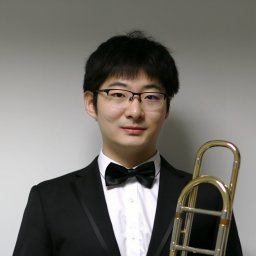
 Chang Liu
· 5 previous affiliations
- Zhongguancun AcademySince 2025
- Associate Professor · Since 2025
- Microsoft (United States)2019–2025
- Senior Researcher · 2021–2025
- Researcher · 2019–2021
- Tsinghua University2010–2019
- PhD student · 2014–2019
- Research Assistant · 2014–2015
- Undergrad student · 2010–2014
- Duke University2017–2018
- Visiting scholar · 2017–2018
- Teaching Assistant · 2016
37 other authors named Chang Liu: Chang Liu (Southeast University · 1,094 papers), Chang Liu (146 papers), Chang Liu (Peking University · 43 papers), Chang Liu (Huawei Technologies (China) · Shanghai Jiao Tong University · 18 papers), Chang Liu (Shanghai University of Finance and Economics · 17 papers), and 32 more
Research Overview
Chang Liu focuses on probabilistic sampling methods, generative model formulations, and artificial intelligence for scientific discovery. His early work developed scalable Bayesian inference techniques and causal representation learning to improve model generalization across distributional shifts. More recently, his research addresses the physical sciences, developing deep learning frameworks for molecular equilibrium distributions, protein modeling, and density functional theory.
Research Trajectory
The early phase of his research concentrated on advancing Markov Chain Monte Carlo (MCMC) methods and variational inference. He introduced scalable sampling techniques for Bayesian posterior distributions on Riemann manifolds in Stochastic Gradient Geodesic MCMC Methods, utilizing geodesic integrators to bypass the need for global coordinate systems. Continuing in this domain, he analyzed particle-based variational inference methods in Understanding and Accelerating Particle-Based Variational Inference, contributing to the research direction of Heat Semigroup Regularization for Discrete and Non-smooth Measures. This theoretical grounding was further expanded in Understanding MCMC Dynamics as Flows on the Wasserstein Space, which connected Langevin dynamics to gradient flows of the Kullback-Leibler divergence.
By 2021, his focus broadened to encompass generative modeling architectures and out-of-distribution generalization. He explored the mathematical compatibility of inference and likelihood models in On the Generative Utility of Cyclic Conditionals, investigating how joint distributions can be modeled without relying on uninformative priors. Concurrently, he addressed the challenge of spurious correlations in machine learning. With collaborators, he developed the Latent Causal Invariance Model in Recovering Latent Causal Factor for Generalization to Distributional Shifts. This work isolated causal structures from domain-dependent variations, advancing the areas of Causal Representation Learning from Raw Observations and Provable Causal Representation Learning. He expanded on these principles by proposing a Causal Semantic Generative model in Learning Causal Semantic Representation for Out-of-Distribution Prediction, which separated semantic factors from variation factors to improve prediction robustness, contributing to the broader area of Invariant Representation Learning Across Diverse Environments.
Returning to constrained sampling problems, he co-authored Sampling with Mirrored Stein Operators, introducing particle evolution samplers that operate in dual spaces defined by mirror maps. This work provided accurate approximations for non-Euclidean geometries and advanced the research direction of Mirror Maps for Constrained Sampling and Generative Modeling.
Subsequently, his research trajectory shifted significantly toward the physical sciences. He formalized the mathematical machinery of quantum mechanics in A Verbose Note on Density Functional Theory, providing a pedagogical derivation of DFT. Building on this domain knowledge, he helped develop a self-consistency training method in Self-Consistency Training for Density-Functional-Theory Hamiltonian Prediction, enabling machine learning models to predict DFT Hamiltonian matrices using unlabeled molecular structures.
In the realm of molecular dynamics and structural biology, he participated in the development of the Distributional Graphormer in Predicting equilibrium distributions for molecular systems with deep learning. This framework leverages diffusion models to generate diverse molecular conformations, contributing to the area of Aligning Generative Models with Physical Energy Landscapes. He also contributed to large-scale biomolecular modeling through FlexRibbon: Joint Sequence and Structure Pretraining for Protein Modeling, a foundation model designed to learn protein representations without relying on multiple sequence alignments.
Most recently, his work has focused on the theoretical refinement of diffusion models. He led the development of Quotient-Space Diffusion Models, which mathematically projects diffusion processes onto a shape space to efficiently handle symmetric objects. Additionally, he investigated model evaluation in Diagnosing and Improving Diffusion Models by Estimating the Optimal Loss Value, deriving techniques to estimate the optimal loss floor and better predict scaling performance.
Current Directions
The most recent papers in the evidence indicate a dual focus on AI for scientific discovery and the mathematical foundations of generative modeling. In the physical sciences, current work investigates deep learning surrogates for quantum chemical simulations, as well as the generation of equilibrium distributions for complex molecular systems and proteins. Methodologically, recent research addresses the theoretical limits and geometric properties of diffusion models, specifically focusing on incorporating symmetries through quotient spaces and establishing rigorous metrics for evaluating training convergence via optimal loss estimation.
Profile updated
Loading new papers…
Other researchers whose papers cluster into the same research directions — a proxy for overlapping technical interests and shared intellectual neighborhoods.
See something wrong? Report a mistake