

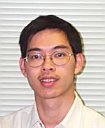
 Carson Leung
· 1 previous affiliation
- University of ManitobaCurrent
- Full Professor · Current
Research Overview
Carson Leung focuses on data mining, applied machine learning, and computational biology. His trajectory spans early work in pattern mining and structural support vector machines to more recent applications of deep learning in medical imaging and bioinformatics. Currently, he investigates privacy-preserving machine learning and the integration of deep learning with statistical models for multimodal omics and molecular representation.
Research Trajectory
Leung’s early research centered on traditional data mining techniques and machine learning applications for structured data. In the early 2010s, his collaborative work explored methods for extracting semantic knowledge from human interactions. As a co-author, he contributed to Mining Frequent Patterns from Human Interactions in Meetings Using Directed Acyclic Graphs (2013), which proposed using directed acyclic graphs to capture complex triggering relations and participant hierarchies that standard tree-based methods often missed. The following year, he led first-authored research applying advanced classification techniques to business intelligence. In A machine learning approach for stock price prediction (2014), Leung utilized structural support vector machines (SSVMs) to analyze graph-structured data representing collaborating technology companies, demonstrating how complex graph inputs could be leveraged to forecast market movements.
By 2020, Leung’s focus shifted toward deep learning, particularly its application in healthcare and medical imaging. During the onset of the global pandemic, he co-authored A Two-Dimensional Sparse Matrix Profile DenseNet for COVID-19 Diagnosis Using Chest CT Images (2020). This second-author work integrated matrix profile techniques for anomaly detection with supervised DenseNet architectures, aiming to accelerate the time-consuming process of clinical image reading. This period marked a broader engagement with the challenges of medical data, including participation in research on semi-supervised learning for CT image segmentation and the generation of synthetic medical data to mitigate re-identification risks.
As deep learning models became more ubiquitous, Leung increasingly addressed the privacy vulnerabilities inherent in training large models on sensitive data. In Privacy-Preserving Learning via Data and Knowledge Distillation (2023), he and his collaborators investigated methods to prevent membership privacy leakage in computer vision models, utilizing knowledge distillation to decouple sensitive training records from the final deployed models.
Most recently, Leung has expanded his methodological focus into bioinformatics and computational chemistry, exploring how deep learning can be combined with statistical rigor. He co-authored Computational frameworks integrating deep learning and statistical models in mining multimodal omics data (2024), which evaluated multi-stage and end-to-end strategies for analyzing high-dimensional biological data, emphasizing the need for models that offer both high performance and biological interpretability. Continuing this trajectory into molecular representation, he participated in the development of MolGraph-xLSTM: A graph-based dual-level xLSTM framework with multi-head mixture-of-experts for enhanced molecular representation and interpretability (2025). This collaborative work addressed the limitations of standard Graph Neural Networks in capturing long-range dependencies by processing molecular graphs at both the atom and motif levels, applying extended Long Short-Term Memory (xLSTM) architectures to drug discovery tasks.
Current Directions
Recent work investigates the intersection of deep learning and computational biology, with a particular focus on multimodal omics and molecular representation. The most recent papers in the evidence address the integration of statistical models with neural networks to improve interpretability and explainability when analyzing high-dimensional biological datasets. Additionally, collaborative efforts explore advanced graph-based architectures to capture long-range dependencies in molecular graphs. This includes the application of xLSTM frameworks and mixture-of-experts models to predict molecular properties, reflecting an ongoing interest in building robust, interpretable computational tools for drug discovery and bioinformatics. Parallel to this biological focus, Leung continues to engage with the structural challenges of machine learning, including privacy-preserving techniques and the optimization of complex probabilistic models.
Profile updated
Loading new papers…
Other researchers whose papers cluster into the same research directions — a proxy for overlapping technical interests and shared intellectual neighborhoods.
See something wrong? Report a mistake