

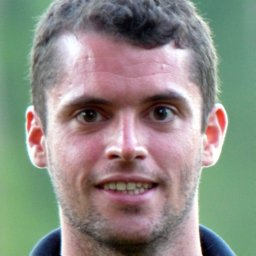
 Hadrien Mary
· 8 previous affiliations
- BeLiverSince 2025
- Deputy CTO and Co-Funder · Since 2025
- Valence Labs2020–2023
- Translational Research Team Lead - Staff Research Scientist · 2023
- Team Lead - Molecular Computational Design · 2021–2023
- Senior Machine Learning Engineer · 2020–2021
- McGill University2016–2020
- Postdoctoral Researcher in Biophysics and Computational Biology · 2016–2020
- Postdoc · 2016–2019
- Doctor of Philosophy (Ph.D.), Cell biology and Biophysics · 2012–2015
- Université de Toulouse2012–2015
- PhD student · 2012–2015
- PhD in Cell Biology and Biophysics · 2012–2015
- Institute for Molecular Bioscience, Brisbane, Australia2011
- Intern at the Genomics & Computational Biology division · 2011
- Université de Bordeaux2009–2011
- Master, Computational Biology · 2009–2011
Research Overview
Hadrien Mary focuses on the development of computational frameworks and software tools for biological image analysis and molecular machine learning. His work bridges the gap between fundamental cell biology and large-scale data science, moving from the precise quantification of cellular dynamics via microscopy to the construction of foundational models for molecular property prediction. Currently, his research is centered on improving the robustness of machine learning models in drug discovery, specifically addressing the challenges of out-of-distribution generalization and the scalability of graph-based neural networks.
Research Trajectory
The early stage of Mary’s research career was defined by a focus on bio-imaging and the mechanics of cell division. During this period, he specialized in the development of open-source software designed to automate the tracking and analysis of biological structures. In 2014, he contributed to the release of scikit-tracker v0.2, a Python-based library aimed at providing a robust framework for cell tracking. This work reflected a broader move in the life sciences toward reproducible, scriptable analysis pipelines that could handle the increasing volume of data generated by high-resolution microscopy.
This technical expertise in image processing supported his doctoral research, which culminated in the 2015 thesis Analyse et modélisation de la dynamique des chromosomes durant la mitose chez la levure à fission. In this work, Mary investigated the biophysical processes governing chromosome segregation in Schizosaccharomyces pombe. The research focused on how sister chromatids establish bipolar attachments to the mitotic spindle to ensure genetic stability. By combining live-cell imaging with computational modeling, he analyzed the forces and movements required for the equal distribution of genetic material between daughter cells.
Following his doctoral work, Mary continued to develop specialized tools for the microscopy community. In 2016, he released KymographBuilder: Version 1.1.1, a plugin for the Fiji/ImageJ ecosystem that simplified the creation of kymographs—time-space plots used to visualize the movement of organelles and molecular complexes. During the same period, he worked on FrameProcessor: Version 1.0.1, a plugin for the Micro-Manager acquisition software. This tool enabled live frame processing during the acquisition phase, allowing researchers to apply filters or transformations to images in real-time as they were captured by the microscope.
In recent years, Mary’s research trajectory has shifted significantly toward the field of molecular machine learning and cheminformatics. This transition reflects a move from observing biological systems at the cellular level to predicting the behavior of molecular systems using deep learning. His recent contributions involve the development of large-scale datasets and the investigation of how model architecture and data diversity influence the performance of machine learning interatomic potentials (MLIPs) and graph neural networks.
Current Directions
Mary’s current work addresses the limitations of existing machine learning models in chemistry and drug discovery, particularly their inability to generalize to new chemical spaces. A primary focus of this research is "Molecular Out-Of-Distribution" (MOOD) generalization. In drug discovery, models are often trained on known chemical libraries but must perform on novel molecules that differ significantly from the training data. Mary has participated in efforts to formalize this problem, investigating how covariate shifts—changes in the distribution of molecular features—impact model reliability and uncertainty calibration.
Another major area of current focus is the development of foundational models for molecular learning. Mary is part of a collaborative effort to create large-scale, multi-task datasets that can serve as a benchmark for the field, similar to how ImageNet transformed computer vision. This includes the development of the Graphium library, an open-source toolkit designed to facilitate the training of graph machine learning models on massive datasets. This work aims to enable models to learn across thousands of different molecular tasks simultaneously, improving their ability to predict properties for a wide range of chemical entities.
Additionally, Mary investigates the role of data diversity in the training of machine learning potentials. This involves analyzing how structural and conformational variety in quantum mechanics datasets affects the ability of a model to generalize to unseen molecular geometries. By identifying the optimal balance between different types of data diversity, this research seeks to improve the efficiency of data generation for molecular simulations.
Representative Work
In his doctoral thesis, Analyse et modélisation de la dynamique des chromosomes durant la mitose chez la levure à fission, Mary utilized fission yeast as a model organism to study the mechanics of the mitotic spindle. The work provided a detailed analysis of how chromosomes align at the metaphase plate and the subsequent movement of chromatids toward opposite poles during anaphase. This research was foundational in establishing his expertise in combining biological observation with quantitative modeling.
Mary’s contribution to the software ecosystem is exemplified by scikit-tracker v0.2. As a tool for the scientific Python community, this library addressed the need for a flexible, modular approach to object tracking in biological images. By providing a standardized interface for tracking algorithms, the project aimed to reduce the fragmentation of tools in the bio-image analysis field.
The study Real-World Molecular Out-Of-Distribution: Specification and Investigation represents a significant part of Mary’s recent focus on machine learning robustness. The research clarifies the concept of MOOD by demonstrating how the distance between a test sample and the training set correlates with performance degradation. The findings showed that real-world distribution shifts can lead to a 60% drop in model performance, prompting the proposal of a new splitting protocol to better simulate deployment conditions during the testing phase.
Mary participated in the development of Towards Foundational Models for Molecular Learning on Large-Scale Multi-Task Datasets, a large-scale collaborative project that introduced a suite of datasets containing 100 million molecules and 13 billion labels. This work also involved the release of Graphium, a library specifically engineered for multi-task learning on graphs. The project represents a significant effort to scale molecular machine learning to a level that allows for the emergence of foundational representations of chemical space.
In the area of interatomic potentials, Mary contributed to the paper Role of Structural and Conformational Diversity for Machine Learning Potentials. This research investigated the relationship between data biases and model generalization. By conducting experiments with fixed data budgets, the study revealed nuanced patterns in how different types of molecular diversity—structural versus conformational—contribute to the accuracy of machine learning models used in quantum chemistry simulations.
Finally, the development of KymographBuilder: Version 1.1.1 highlights Mary's commitment to creating accessible tools for the broader research community. By automating the generation of kymographs within the Fiji environment, the tool enabled researchers to more easily quantify dynamic processes, such as vesicle transport or microtubule growth, which are central to understanding cellular function.
Profile updated
| Title | Venue | Year |
|---|---|---|
| Real-World Molecular Out-Of-Distribution: Specification and Investigation | Journal of Chemical Information and Modeling | 2024 |
| Towards Foundational Models for Molecular Learning on Large-Scale Multi-Task Datasets | ICLR | 2024 |
| Towards Foundational Models for Molecular Learning on Large-Scale Multi-Task Datasets (Ultra Large Dataset) | Zenodo | 2023 |
| Role of Structural and Conformational Diversity for Machine Learning Potentials | AI4Science @ NeurIPS | 2023 |
| InsightSoftwareConsortium/itkwidgets: itkwidgets 0.32.0 | Zenodo | 2020 |
| ZhuangLab/storm-analysis: Version 2.1 | Zenodo | 2019 |
| Kappa ( κ ): Analysis of Curvature in Biological Image Data using B-splines | Biorxiv | 2019 |
| hadim/FilamentDetector: FilamentDetector-0.4.7 | Zenodo | 2019 |
| tqdm/tqdm: tqdm v4.23.0 stable | Zenodo | 2018 |
| tqdm/tqdm: tqdm v4.28.1 stable | Zenodo | 2018 |
Loading new papers…
Other researchers whose papers cluster into the same research directions — a proxy for overlapping technical interests and shared intellectual neighborhoods.
See something wrong? Report a mistake