

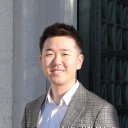
 Bowen Deng
· 7 previous affiliations
- Massachusetts Institute of TechnologySince 2025
- Postdoctoral Researcher · Since 2025
- University of California, Berkeley2021–2025
- Doctor of Philosophy - PhD, Materials Science · 2021–2025
- Graduate Student Researcher · 2021–2025
- PhD student · 2021–2025
- Student Researcher · 2024
- Research Assistant · 2020
- Bachelor of Science - BS, Physics · 2016–2020
- Undergraduate Research Assistant · 2019–2020
2 other authors named Bowen Deng: Bowen Deng (Sun Yat-sen University · 11 papers), Bowen Deng (Peking University · 4 papers)
Research Overview
Bowen Deng focuses on the intersection of materials science and artificial intelligence, developing machine learning interatomic potentials and deep learning frameworks for large-scale atomistic simulations. His trajectory spans from early work in solid-state physics and thermodynamics to the creation of universal neural network potentials for materials discovery. Currently, he investigates scalable and distributed inference methods to enable highly accurate, agentic materials design.
Research Trajectory
Deng’s early research investigated the structural and thermal properties of complex solid-state systems. In 2019, he published Layer Dependence of Interlayer Breathing and Shear Modes in Ising Ferromagnetic CrI3, using polarized Raman spectroscopy to resolve the low-temperature crystal structure of few-layer chromium triiodide. This work contributed to the research areas of optical polarization mapping of material symmetry and the vibrational modulation of phase transitions. The following year, he explored how topological phase transitions trigger lattice vibration softening in Phonon softening near topological phase transitions. This discovery provided a mechanism for controlling thermal transport, advancing research in topological Dirac and Weyl semimetals and the domain of decoupling heat and charge transport for thermoelectric efficiency. In 2021, his work briefly extended into experimental catalysis, participating in the study of A selective Au-ZnO/TiO2 hybrid photocatalyst for oxidative coupling of methane to ethane with dioxygen.
A central theme of Deng’s subsequent work has been the design of scalable machine learning models for atomistic modeling. He was instrumental in developing CHGNet, detailed in CHGNet: Pretrained universal neural network potential for charge-informed atomistic modeling. By incorporating magnetic moments to capture electronic degrees of freedom, CHGNet enabled large-scale molecular dynamics with ab-initio accuracy. This model advanced several research areas, including universal foundation models for atomistic simulation, the specific direction of Scaling Quantum Accuracy with Machine Learning Interatomic Potentials, and the broader area of Accelerating Molecular Simulations with Physics-Informed Machine Learning. Applying these predictive capabilities to specific material classes, he developed DRXNet in Deep learning of experimental electrochemistry for battery cathodes across diverse compositions. This framework predicts the electrochemical performance of complex materials like high-entropy disordered rocksalts, driving progress in neural surrogate models for accelerated molecular discovery and the field of Graph Neural Networks for Molecular and Materials Representation. Concurrently, he explored molecular engineering techniques in Homochirality to design high-Tclead-free ferroelastic semiconductors, demonstrating how chiral molecules can enhance thermal stability. This research intersected with the directions of engineering symmetry breaking for emergent quantum responses and Thermal Stabilization via Intermolecular Anchoring and Confinement.
In 2025, Deng’s focus expanded to the software infrastructure, evaluation, and refinement of materials AI. He introduced a comprehensive open-source framework in Materials Graph Library (MatGL), an open-source graph deep learning library for materials science and chemistry, which unified invariant and equivariant models to support research in interoperability and code migration for deep learning. He also addressed the integration of physical symmetries into neural networks with Spin-informed universal graph neural networks for simulating magnetic ordering, contributing to the area of Euclidean equivariant representations for molecular geometry. To improve the training efficiency of these models, he investigated elemental energy referencing in Cross-functional transferability in foundation machine learning interatomic potentials, a method that bridges low- and high-fidelity data to advance multi-fidelity transfer learning for scientific simulations. He also identified and corrected systematic biases in out-of-distribution environments in Systematic softening in universal machine learning interatomic potentials, informing the research directions of learning the energy landscape beyond equilibrium and overcoming equilibrium bias in machine learning interatomic potentials.
Beyond model architecture, Deng contributed to rigorous evaluation standards. He participated in establishing the Matbench Discovery framework in A framework to evaluate machine learning crystal stability predictions, shifting the community's focus from energy prediction to actual material discovery. This work supported research areas such as thermodynamic stability mapping for new material discovery and the extrapolation gap in chemical machine learning. He also applied hierarchical machine learning workflows to polymer chemistry in Screening Diels–Alder reaction space to identify candidate reactions for self-healing polymer applications, advancing the fields of template-free retrosynthesis, generative molecular design, and solvent-aware molecular property prediction.
Moving into 2026, Deng's research addressed the computational efficiency and scalability of machine learning interatomic potentials for massive molecular dynamics simulations. In DistMLIP: A Distributed Inference Platform for Machine Learning Interatomic Potentials, he and collaborators developed a platform utilizing zero-redundancy graph partitioning to accelerate inference across multiple GPUs, advancing the research direction of eliminating synchronization bottlenecks in parallel graph algorithms. Additionally, he explored fundamental architectural optimizations in Smooth Dynamic Cutoffs for Machine Learning Interatomic Potentials. By replacing fixed-radius cutoffs with mathematically smooth, dynamic alternatives, this work reduces memory overhead and increases inference speed, contributing to the areas of smooth and differentiable interatomic potentials for stable simulations and adaptive neighborhood selection for non-uniform data distributions.
Current Directions
Recent work investigates the computational efficiency and scalability of machine learning interatomic potentials for massive, near-million-atom molecular dynamics simulations. The most recent papers in the evidence address the engineering of distributed inference platforms that utilize zero-redundancy graph partitioning to accelerate calculations across multiple GPUs. Alongside hardware-level scaling, current research also focuses on fundamental architectural optimizations—such as replacing traditional fixed-radius atomic neighborhoods with mathematically smooth, dynamic cutoffs. These ongoing efforts aim to significantly reduce memory overhead and increase inference speed while maintaining the strict simulation stability required for long-term, large-scale materials discovery.
Profile updated
Loading new papers…
Other researchers whose papers cluster into the same research directions — a proxy for overlapping technical interests and shared intellectual neighborhoods.
See something wrong? Report a mistake