

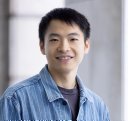
 Xiang Fu
· 4 previous affiliations
- Periodic LabsCurrent
- Current
- Meta (United States)2024–2025
- Research Scientist · 2024–2025
- PhD student · 2019–2024
- Cornell Tech2016–2019
- Undergrad student · 2016–2019
2 other authors named Xiang Fu: Xiang Fu (1 paper), Xiang Fu (Boston University · Modularium Research · Columbia University · 1 paper)
Research Overview
Xiang Fu focuses on the intersection of machine learning and the physical sciences, with a specific emphasis on developing generative models and interatomic potentials for molecular and materials design. His work addresses the computational challenges inherent in simulating atomic systems by leveraging geometric deep learning, diffusion models, and task-informed abstractions. Currently a Member of Technical Staff at Periodic Labs and formerly a researcher at Meta FAIR, Fu’s research aims to bridge the gap between the high accuracy of quantum-mechanical calculations and the scalability required for large-scale materials discovery and long-time molecular dynamics.
Research Trajectory
Fu's research trajectory began with a focus on representation learning within reinforcement learning (RL), specifically addressing how agents can ignore irrelevant environmental noise. In 2021, he introduced methods to decouple task-relevant information from background distractors, a foundational step in improving the robustness of model-based RL in complex visual environments. This early work established his interest in "task-informed" abstractions—a theme that would later evolve into "physics-informed" abstractions as his focus shifted toward atomistic systems.
By 2022, Fu transitioned significantly into the domain of geometric machine learning applied to molecular dynamics (MD) and materials science. He addressed the fundamental trade-off between simulation speed and accuracy, developing methods to coarse-grain physical systems while maintaining stability over long time horizons. This period also saw his entry into the generative modeling of periodic structures, where he contributed to the development of variational autoencoders capable of capturing the physical constraints of crystal lattices. This work directly addressed the challenge of The Stability Gap in Atomistic Machine Learning, ensuring that learned models do not diverge during iterative simulations.
From 2023 to the present, Fu’s work has increasingly focused on scaling and unification. At Meta FAIR, he contributed to the creation of massive open-source datasets and high-capacity models intended to serve as foundations for inorganic materials science. His recent research explores unified architectures, such as diffusion transformers, that can model both isolated molecules and periodic crystals within a single framework. This evolution reflects a broader move in the field toward "universal" models for atoms that can generalize across the entire periodic table and various physical states. Throughout this period, he has also explored the derivation of Conservative Force Fields from Scalar Energy Gradients, ensuring that machine-learned potentials remain physically consistent.
Current Directions
Fu’s current research at Periodic Labs continues to push the boundaries of universal atomistic modeling. A primary focus is the development of the "UMA" (Universal Models for Atoms) family, which aims to provide a standardized, high-performance toolkit for physical property prediction and interatomic potential modeling. He is also investigating multi-scale approaches to interatomic potentials, seeking to overcome the limitations of short time steps in MD simulations by integrating information across different temporal and spatial resolutions.
Another significant area of current interest is the modeling of Long Range Interactions in Atomistic Machine Learning. While many existing models rely on local cutoffs, Fu is exploring ways to incorporate global context and long-range forces, which are critical for accurately simulating complex materials and large biomolecules. His work also extends to charge density prediction and the use of adjoint sampling to improve the efficiency of diffusion-based samplers for molecular conformer generation.
Representative Work
Learning Task Informed Abstractions (2021) In this first-author work, Fu addressed the failure of model-based reinforcement learning in environments with high visual complexity. He proposed Task Informed Abstractions (TIA), a framework that splits a world model into a "Task Model" for reward-relevant features and a "Distractor Model" for irrelevant background noise. By employing adversarial training to ensure the distractor model contains no reward-predictive information, TIA allows agents to focus their computational capacity on essential features, achieving state-of-the-art performance on cluttered benchmarks.
Simulate Time-integrated Coarse-grained Molecular Dynamics with Geometric Machine Learning (2022) As the lead author, Fu developed a machine learning approach to accelerate molecular dynamics by coarse-graining physical systems through graph clustering. The model uses graph neural networks (GNNs) to evolve the system with significantly larger time-integration steps than traditional methods. A key contribution of this paper is a score-based GNN refinement module that addresses the long-standing problem of simulation instability in long-time MD, enabling stable simulations even when trained on relatively short trajectories.
Crystal Diffusion Variational Autoencoder for Periodic Material Generation (2022) In this second-author paper, Fu contributed to the development of the Crystal Diffusion Variational Autoencoder (CDVAE), a generative model designed specifically for periodic materials. The model captures the physical inductive biases of material stability by jointly diffusing atom types, coordinates, and periodic lattices. CDVAE addresses the difficulty of generating structures that lie within the low-dimensional subspace of local energy minima, providing a framework for the inverse design of stable inorganic materials.
Learning Interatomic Potentials at Multiple Scales (2023) In this first-author research, Fu explored the limitations of short time steps in MD simulations governed by machine learning interatomic potentials (MLIPs). He proposed a multi-scale approach that evaluates different potential energy terms at different frequencies, analogous to multiple-time-step integrators in classical potentials. This work demonstrates how equivariant neural networks can be adapted to handle multi-scale temporal dynamics, potentially offering significant speedups for accurate electronic structure-based simulations.
Open Materials 2024 (OMat24) Inorganic Materials Dataset and Models (2024) As a second author, Fu played a key role in the release of OMat24, a massive dataset containing over 110 million Density Functional Theory (DFT) calculations. The project also introduced state-of-the-art EquiformerV2 models trained on this data, which achieved record-breaking performance on material stability leaderboards. This work represents a major contribution to the infrastructure of the field, providing the community with the data and models necessary to advance large-scale materials discovery.
All-atom Diffusion Transformers: Unified generative modelling of molecules and materials (2025) In this second-author paper, Fu contributed to the development of ADiT (All-atom Diffusion Transformer), a unified framework for the generative design of both 3D molecules and periodic crystals. By utilizing a latent space for diffusion and employing scalable Transformer architectures, ADiT achieves significant speed improvements over traditional equivariant models while maintaining high generative quality. This work points toward a future of unified, high-capacity models for all forms of atomic matter.
Beyond these primary contributions, Fu has participated in several other significant research efforts. He contributed to the development of MatterGen, a diffusion-based model for steered materials design, and participated in the creation of the Open Molecular Crystals 2025 (OMC25) dataset. He also contributed to research on Adjoint Sampling for efficient diffusion and LaMoDy, a latent-space simulator for molecular dynamics. His work on Fragment-Based Sequential Translation and Thermodynamically Informed Multimodal Learning further illustrates his broad engagement with the technical challenges of molecular optimization and coarse-graining.
Profile updated
Loading new papers…
Other researchers whose papers cluster into the same research directions — a proxy for overlapping technical interests and shared intellectual neighborhoods.
See something wrong? Report a mistake