

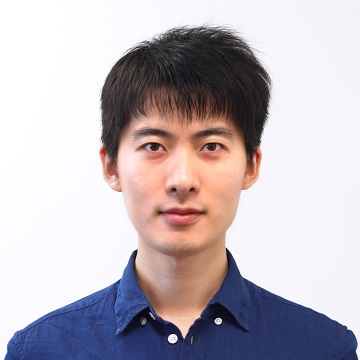
 Bo Zhang
· 5 previous affiliations
- Zhejiang UniversitySince 2024
- Assistant Professor · Since 2024
- Bachelor's degree, Optical Engineering · 2009–2013
- Simplex AISince 2025
- Founder · Since 2025
- DeepSeek (China)2023–2024
- AI Scientist · 2023–2024
- Microsoft (United States)2019–2023
- Senior Researcher · 2021–2023
- Researcher · 2019–2021
- Doctor of Philosophy (Ph.D.), Electronic and Computer Engineering · 2013
22 other authors named Bo Zhang: Bo Zhang (Shanghai Artificial Intelligence Laboratory · 110 papers), Bo Zhang (robotera · ROBOTERA(星动纪元) · 52 papers), Bo Zhang (Nanjing Normal University · 11 papers), Bo Zhang (Beijing University of Post and Telecommunication · 11 papers), Bo Zhang (China Mobile (China) · Shanghai Jiao Tong University · 8 papers), and 17 more
Research Overview
Bo Zhang focuses on 2D and 3D content creation, virtual human modeling, and multimodal generative models. His trajectory spans early work in exemplar-based image translation and video restoration to recent advancements in 3D-aware generative frameworks and diffusion models. Currently, his research addresses the alignment, scaling, and reliability of multimodal large language models and autoregressive visual generation.
Research Trajectory
Bo Zhang’s early research focused heavily on image and video restoration, particularly through the use of reference exemplars and temporal consistency mechanisms. In 2019, he introduced a recurrent framework for colorizing video sequences in Deep Exemplar-Based Video Colorization. By unifying semantic correspondence and color propagation, the network allowed a single reference image to guide the colorization of subsequent frames while minimizing accumulated errors. He subsequently contributed to restoring severely degraded archival imagery via a triplet domain translation network in Bringing Old Photos Back to Life, which utilized variational autoencoders and synthetic paired data to bridge the domain gap between artificial and real-world degradation. Expanding on exemplar-based methods, he developed CoCosNet in Cross-Domain Correspondence Learning for Exemplar-Based Image Translation. This framework established dense, semantically meaningful links between input masks and reference images, advancing the broader area of Scaling Dense Pixel Matching for High Resolution Vision.
In 2021, he scaled these correspondence techniques to full-resolution synthesis with CoCosNet v2: Full-Resolution Correspondence Learning for Image Translation. By implementing a hierarchical strategy alongside a differentiable PatchMatch algorithm refined by Convolutional GRUs, the model successfully transferred meticulous textures from reference images at high resolutions. Concurrently, he addressed complex video restoration challenges, such as removing semi-transparent lens contaminants like dust and moisture, using recurrent modules and camera motion cues in Let's See Clearly: Contaminant Artifact Removal for Moving Cameras. His work in video restoration culminated in the Recurrent Transformer Network for archival footage, detailed in Bringing Old Films Back to Life. This architecture combined bi-directional RNNs for temporal consistency with Swin Transformers to remove structured defects like scratches and cracks. He also applied dense correspondence techniques to animation, automating the labor-intensive inbetweening process from single sketches in Deep Sketch-Guided Cartoon Video Inbetweening.
Around 2022, his focus expanded into 3D-aware synthesis and neural rendering. He introduced a framework combining Multiplane Images (MPI) with pose-guided synthesis in Real-Time Neural Character Rendering with Pose-Guided Multiplane Images, bridging the gap between expensive 3D capture setups and compute-intensive neural rendering methods. He further integrated the geometric priors of 3D Morphable Models (3DMM) with Neural Radiance Fields (NeRF) to achieve disentangled control over pose, expression, and illumination in Explicitly Controllable 3D-Aware Portrait Generation, utilizing a novel volume blending strategy to improve animation stability.
As diffusion models emerged as a dominant paradigm in generative AI, he adapted these architectures for complex editing and 3D generation tasks. He contributed to exemplar-based editing frameworks that bypass text prompts in favor of visual references, as seen in Paint by Example: Exemplar-based Image Editing with Diffusion Models. This approach utilized an information bottleneck and self-supervised training to semantically harmonize reference objects into source scenes. Extending diffusion to three dimensions, he developed RODIN: A Generative Model for Sculpting 3D Digital Avatars Using Diffusion. This work demonstrated how diffusion could synthesize structurally faithful 3D digital avatars, significantly impacting the research direction of Coarse to Fine Generative Refinement.
More recently, his trajectory has incorporated large-scale multimodal and autoregressive models. He participated in developing hierarchical frameworks for coherent, long-duration narrative video synthesis in MovieDreamer: Hierarchical Generation for Coherent Long Visual Sequences, which paired the reasoning capabilities of autoregressive models with the rendering power of diffusion models to maintain character consistency across extended shots. He also collaborated on methods to mitigate hallucinations in vision-language models through perturbative visual training in PerturboLLaVA: Reducing Multimodal Hallucinations with Perturbative Visual Training. By intentionally introducing misleading text hints during training, the model is forced to rely more heavily on actual visual evidence rather than internal linguistic biases. Most recently, he guided research on reinforcement learning for text-to-image flow models, introducing trajectory branching and noise-aware weighting to improve alignment efficiency in TEMPFLOW-GRPO: WHEN TIMING MATTERS FOR GRPO IN FLOW MODELS.
Current Directions
The most recent papers in the evidence address the alignment, scaling, and reliability of multimodal generative models. Recent work investigates reinforcement learning techniques—specifically trajectory branching and noise-aware weighting—to efficiently align text-to-image flow models with human preferences, recognizing that early generation steps are critical for structural fidelity. Additionally, current research explores hierarchical autoregressive frameworks for generating temporally coherent, long-duration visual sequences that maintain strict character consistency. Parallel efforts focus on improving the factual grounding of large vision-language models, utilizing perturbative training strategies designed to reduce linguistic bias and mitigate hallucinations without incurring additional inference costs.
Profile updated
Loading new papers…
Other researchers whose papers cluster into the same research directions — a proxy for overlapping technical interests and shared intellectual neighborhoods.
See something wrong? Report a mistake