

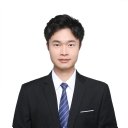
 Bo Huang
· 2 previous affiliations
- Chongqing UniversitySince 2022
- Associate Professor · Since 2022
- Beijing Institute of Technology2012–2022
- PhD student · 2018–2022
- MS student · 2016–2018
- Undergrad student · 2012–2016
8 other authors named Bo Huang: Bo Huang (University of Hong Kong · 630 papers), Bo Huang (Chan Zuckerberg Initiative (United States) · 200 papers), Bo Huang (Hong Kong University of Science and Technology · 36 papers), Bo Huang (Northwestern Polytechnical University · 4 papers), Bo Huang (NeoPrimeTech Biology Co, Ltd · 3 papers), and 3 more
Research Overview
Bo Huang focuses on computer vision, machine learning, and pattern recognition, with a primary emphasis on visual tracking and robust learning under imperfect data conditions. His research addresses the technical challenges of object detection and tracking in complex environments, particularly for unmanned aerial vehicles (UAVs) and thermal infrared (TIR) imaging. By integrating deep learning architectures with traditional signal processing techniques, such as correlation filters and Fourier ptychography, he develops methods to enhance the efficiency and accuracy of visual perception systems. His recent work explores meta-learning and semi-supervised frameworks to mitigate the effects of noisy labels and class imbalance in large-scale datasets.
Research Trajectory
The early phase of Huang’s research, spanning approximately 2016 to 2018, was centered on computational imaging and optical remote sensing. During his doctoral studies at the Beijing Institute of Technology, he investigated methods to improve the acquisition efficiency of Fourier ptychographic microscopy (FPM). This work focused on optimizing spectral sampling to reduce the number of required measurements and decrease acquisition time without compromising image resolution. Simultaneously, he applied wavelet transforms to the problem of ship detection in optical remote sensing images, addressing the challenges of meteorological interference and weak target-to-background contrast.
Between 2019 and 2021, Huang’s focus shifted toward the development of robust visual tracking algorithms. This period was characterized by an exploration of correlation filters and Siamese networks. He addressed the "boundary effect" in kernelized trackers by introducing spatial cropping operators and efficient optimization techniques. His work also began to incorporate attentional transfer learning to facilitate online updates of tracking networks, ensuring stability in dynamic environments. During this time, he also participated in research regarding object detection refinements, specifically addressing the limitations of traditional Non-Maximum Suppression (NMS) by proposing learned identification tasks to resolve overlapping proposals.
From 2022 onward, Huang’s research has evolved toward specialized tracking applications and the broader problem of learning from noisy or imbalanced data. A significant portion of his recent output focuses on anti-UAV missions, where he has developed benchmarks and customized Siamese tracking schemes for thermal infrared video. These systems are designed to handle the unique challenges of small, fast-moving targets in infrared spectra. In parallel, he has contributed to the development of meta-learning strategies that analyze sample loss curves to distinguish between noisy data and difficult-to-learn "hard" samples. This methodological shift reflects a move toward Confidence-Aware Token Reweighting for Neural Sequence Training and similar adaptive weighting schemes to improve model generalization in semantic segmentation and medical imaging.
Current Directions
Huang’s current research is increasingly defined by the integration of multi-modal data and the development of large-scale benchmarks for specialized vision tasks. A major ongoing effort involves the Anti-UAV410 benchmark, which provides a large-scale thermal infrared dataset for drone tracking in diverse wild environments. This work aims to bridge the gap between laboratory-scale experiments and realistic anti-UAV scenarios.
Furthermore, he is exploring Multi-Source Heterogeneous Data Fusion for Urban Informatics through the development of hierarchical attentive fusion networks. These frameworks are designed for multispectral pedestrian detection, combining visible and thermal image pairs to maintain performance in low-light and occluded conditions. His recent collaborations also extend into 3D generation, where he has participated in developing frameworks for part-based 3D modeling that utilize implicit layout diffusion to maintain high resolution across individual object components.
Representative Work
Optimized fast spectral sampling for adaptive Fourier ptychographic microscopy This early work addresses the processing efficiency limitations of conventional Fourier ptychographic microscopy (FPM). Huang proposes an optimized spectral sampling scheme that analyzes the importance of spectra in the domain to select the most informative components. This approach reduces the amount of captured measurements and decreases acquisition time, facilitating more efficient computational imaging.
Robust Visual Tracking via Constrained Multi-Kernel Correlation Filters In this paper, Huang introduces the Constrained Multi-Kernel Correlation Filter (CMKCF) to solve the boundary effect problem inherent in kernelized trackers. By integrating multi-channel features with a spatial cropping operator and utilizing an Alternating Direction Method of Multipliers (ADMM) for optimization, the algorithm achieves high accuracy while maintaining real-time performance.
Delving into Sample Loss Curve to Embrace Noisy and Imbalanced Data As a contributor to this research, Huang explored a "probe-and-allocate" strategy for training models on imperfect datasets. The method, termed CurveNet, analyzes the temporal evolution of a sample's loss curve rather than a single loss value. This allows the model to differentiate between label noise and rare but clean classes, assigning optimal weights via meta-learning to improve robustness against class imbalance.
SCANet: A Unified Semi-Supervised Learning Framework for Vessel Segmentation In the domain of medical imaging, Huang participated in the development of SCANet, a semi-supervised framework for subcutaneous vessel segmentation. The work addresses the scarcity of annotated near-infrared (NIR) data by employing an alternate training strategy and a multi-scale recurrent neural network. This approach enables accurate vessel localization, which is critical for clinical venipuncture research.
Searching Region-Free and Template-Free Siamese Network for Tracking Drones in TIR Videos This research introduces SiamSRT, a Siamese network specifically engineered for tracking drones in thermal infrared (TIR) video. By moving away from traditional local search windows and fixed templates, the method achieves improved robustness in anti-UAV missions where targets are often small and move unpredictably against complex backgrounds.
Anti-UAV410: A Thermal Infrared Benchmark and Customized Scheme for Tracking Drones in the Wild As the lead author, Huang presents a comprehensive infrared UAV tracking benchmark consisting of 410 videos and over 438,000 manual annotations. Alongside the dataset, he introduces the Siamese drone tracker (SiamDT), which incorporates specialized modules to handle the attribute distributions characteristic of realistic drone perception tasks.
Profile updated
Loading new papers…
Other researchers whose papers cluster into the same research directions — a proxy for overlapping technical interests and shared intellectual neighborhoods.
See something wrong? Report a mistake