

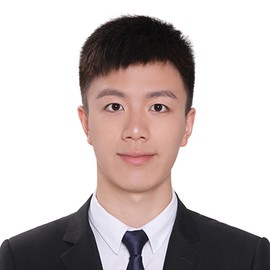
 Bin Xu
· 3 previous affiliations
- Chinese Academy of SciencesSince 2024
- Engineer · Since 2024
- NetEase (China)2018–2024
- Algorithm Expert · 2018–2024
- Beijing Institute of Technology2015–2018
- Master · 2015–2018
5 other authors named Bin Xu: Bin Xu (Tsinghua University · 108 papers), Bin Xu (4 papers), BIN XU (Arizona State University · 2 papers), Bin Xu (1 paper), Bin Xu (Dà-Jiāng Innovations Science and Technology (China) · 1 paper)
Research Overview
Bin Xu focuses on computer vision and human-robot interaction, particularly in the context of telepresence systems and image processing. Early work addressed the development of interactive interfaces and image stitching techniques for robotic navigation, while recent contributions extend into large-scale dataset curation for time series forecasting.
Research Trajectory
Bin Xu’s research trajectory demonstrates a sustained engagement with human-robot interaction and applied computer vision, specifically focusing on telepresence technologies and image alignment. Early collaborative work established foundational architectures for assistive robotics. In A low-cost tele-presence wheelchair system, Xu contributed to the design of a system integrating a commercial electric wheelchair with a telepresence interaction module. This project introduced an early iteration of a touchable live video image-based user interface (TIUI), designed to facilitate both social communication and semi-autonomous navigation for elderly or disabled users.
Parallel to this work in robotics, Xu led research in computer vision to address the technical challenges of utilizing multi-camera systems. As the first author of Wide-angle image stitching using multi-homography warping, Xu proposed a method to correct the severe nonlinear distortions typical of wide-angle lenses. By integrating multiple local homographies with a global homography through an adaptive weighting scheme, this work provided a robust solution for accurate image alignment and shape preservation, which is critical for the visual systems of navigating robots.
These dual interests in vision and telepresence converged in subsequent collaborative projects. Xu participated as a co-author in developing more complex visual interfaces for robotics, such as the work detailed in Stitching Videos from a Fisheye Lens Camera and a Wide-Angle Lens Camera for Telepresence Robots. This research addressed the practical challenge of providing remote operators with a comprehensive view of a robot's environment by seamlessly blending feeds from a forward-facing wide-angle lens and a downward-facing fisheye lens. Building on the interface concepts introduced in earlier assistive systems, Xu also co-authored TIUI: Touching Live Video for Telepresence Operation. This paper formalized the TIUI framework, enabling users to control "teleinteractive devices" directly through touchscreen gestures applied to live video feeds, integrating modules for video understanding, control, and communication.
While the representative papers primarily highlight telepresence and image stitching, the broader evidence indicates participation in several other distinct research areas. These include themes such as the research direction The Depth Bottleneck in Monocular 3D Object Detection, the area of Monocular 3D Object Detection via Geometric Lifting, and work in the broader area of The Computational Overhead of Spectral Neural Networks.
Current Directions
The most recent work in the evidence indicates a broadening of research scope into machine learning infrastructure and time series analysis. Xu recently participated as a co-author in BLAST: Balanced Sampling Time Series Corpus for Universal Forecasting Models. This direction suggests an interest in developing universal forecasting models and addressing the foundational data requirements—such as balanced sampling and corpus curation—necessary to train robust predictive systems.
Profile updated
| Title | Venue | Year |
|---|---|---|
| BLAST: Balanced Sampling Time Series Corpus for Universal Forecasting Models | KDD | 2025 |
| TIUI: Touching Live Video for Telepresence Operation | IEEE Trans. Mobile Computing | 2023 |
| Stitching Videos from a Fisheye Lens Camera and a Wide-Angle Lens Camera for Telepresence Robots | Int. J. Soc. Robotics | 2022 |
| Wide-angle image stitching using multi-homography warping | ICIP | 2017 |
| A low-cost tele-presence wheelchair system | IROS | 2016 |
Loading new papers…
Other researchers whose papers cluster into the same research directions — a proxy for overlapping technical interests and shared intellectual neighborhoods.
See something wrong? Report a mistake