

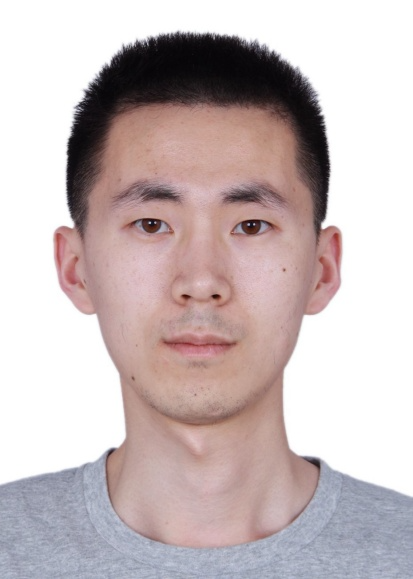
 Baoxin Wang
· 3 previous affiliations
- THiFly HealthSince 2016
- Researcher · Since 2016
- iFLYTEK ResearchCurrent
- Current
- Harbin Institute of Technology2010–2025
- PhD student · 2019–2025
- MS student · 2014–2016
- Undergrad student · 2010–2014
Research Overview
Baoxin Wang focuses on natural language processing, grammatical error correction, and neural text editing. Early work addressed knowledge graph embeddings and semantic error recognition in Chinese texts, leading to the development of specialized pre-trained models for efficient text modification. Recent efforts investigate retrieval-augmented language models and the application of artificial intelligence to scientific question answering and research support systems.
Research Trajectory
Baoxin Wang’s research trajectory begins with foundational work in knowledge representation and applied natural language processing, before concentrating heavily on the mechanics of text editing and grammatical error correction. Early contributions included participation in the development of domain-specific NLP systems, such as legal consultation platforms, followed by methodological work in knowledge graph embeddings. As first author, Wang proposed InterHT: Knowledge Graph Embeddings by Interaction between Head and Tail Entities, introducing distance-based methods that allow head and tail entities to interact more effectively, thereby increasing model capacity for link prediction tasks.
By 2022, Wang’s focus shifted toward the detection and correction of errors in Chinese text, a domain characterized by complex semantic and grammatical challenges. Recognizing that existing systems primarily addressed superficial spelling errors, Wang co-authored efforts to define and benchmark Chinese Semantic Error Recognition (CSER). This work highlighted the need for models capable of understanding deeper syntactic dependencies. To support this direction, Wang contributed to the creation of comprehensive datasets, notably serving as second author on CSED: A Chinese Semantic Error Diagnosis Corpus. This corpus provided high-quality annotations for both the recognition and correction of semantic anomalies that disrupt comprehension, establishing a necessary baseline for future diagnostic models.
A central technical challenge in this domain is the efficiency and precision of text modification. Sequence-to-sequence models are often computationally expensive, while sequence labeling struggles with multi-token insertions. Addressing this bottleneck, Wang led the development of TiBERT: A Non-autoregressive Pre-trained Model for Text Editing. By adjusting the length of hidden representations to dynamically insert and delete tokens, TiBERT offered a fast, non-autoregressive alternative specifically tailored for text editing tasks, demonstrating significant improvements in processing speed without sacrificing accuracy.
Building on this architecture, Wang’s subsequent work tackled the pervasive issue of over-correction—where models rewrite valid text, inadvertently altering the author's original meaning. This focus aligns closely with the broader research direction of Semantic Preservation in Neural Text Editing. To mitigate over-correction without relying on cumbersome model ensembles, Wang co-authored LM-Combiner: A Contextual Rewriting Model for Chinese Grammatical Error Correction. The LM-Combiner functions as a dedicated rewriting model trained via K-fold cross-inference to directly filter and correct the overzealous outputs of primary grammatical error correction systems, preserving the original semantic intent while maintaining high precision.
Concurrently, Wang addressed the data scarcity bottleneck in grammatical error correction. Contributing to the area of Synthesizing Realistic Mistakes for Robust Text Correction, Wang was second author on Improving Grammatical Error Correction via Contextual Data Augmentation. This research introduced a method combining rule-based substitution with model-based generation to create synthetic training data. By generating a richer context for extracted errors, the approach ensures that the synthetic data more accurately reflects real-world error distributions, thereby improving model performance during the fine-tuning phase.
Most recently, Wang has participated in broader applications of large language models, particularly in scientific reasoning and information retrieval. As a co-author on SCITAT: A Question Answering Benchmark for Scientific Tables and Text Covering Diverse Reasoning Types, Wang helped design a benchmark that challenges models to integrate information across complex scientific tables and prose. This work reflects a transition toward more sophisticated, multi-modal reasoning tasks within specialized academic domains.
Current Directions
Recent work investigates the reliability and application of large language models in complex, knowledge-intensive domains. The most recent papers in the evidence address the contextual faithfulness of retrieval-augmented generation (RAG) systems, particularly in long-form question-answering scenarios. This includes collaborative research on optimizing retrieval heads to help models explicitly discriminate between faithful and unfaithful generations, thereby reducing model-intrinsic hallucinations.
Additionally, Wang is contributing to the evaluation of AI-driven research support systems, exploring how language models can assist in hypothesis formulation, validation, and scientific question answering. This trajectory indicates a growing interest in ensuring that large-scale models remain accurate, verifiable, and practically useful for scientific literature analysis and complex reasoning tasks.
Profile updated
Loading new papers…
Other researchers whose papers cluster into the same research directions — a proxy for overlapping technical interests and shared intellectual neighborhoods.
See something wrong? Report a mistake