

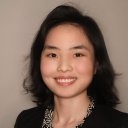
 Bailey Trang
· 8 previous affiliations
- Stanford MedicineSince 2024
- Graduate Research Assistant · Since 2024
- Netflix (United States)Since 2026
- Research Intern · Since 2026
- Stanford UniversityCurrent
- Current
- Doctor of Philosophy - PhD, Artificial Intelligence · 2024
- PhD student · From 2024
- National University of Singapore2023–2024
- Research Assistant · 2023–2024
- Researcher · 2024
- Tokyo Institute of Technology2022–2024
- MS student · 2022–2024
- AI Research Intern · 2021–2024
- FPT Software2021–2023
- Intern · 2021–2023
- University of Science2017–2021
- Undergrad student · 2017–2021
Research Overview
Bailey Trang focuses on causal reasoning, object-centric learning, and generative modeling using Generative Flow Networks (GFlowNets). Her trajectory spans early work in natural language processing to advanced multimodal architectures that emphasize modularity and causal discovery. Most recently, she investigates the application of GFlowNets for diverse conditional image generation and scalable causal inference in complex biological systems.
Research Trajectory
Trang's early research addressed challenges in natural language processing, specifically focusing on abstractive text summarization. In 2021, she developed Contour: Penalty and Spotlight Mask for Abstractive Summarization, a method designed to improve the transfer of crucial information, such as proper nouns, from source documents to summaries by penalizing inapplicable words and highlighting essential ones. Concurrently, she introduced Performance-Driven Reinforcement Learning Approach for Abstractive Text Summarization, a framework utilizing reinforcement learning to reconstruct training objectives and improve model flexibility across diverse datasets.
By 2023, her focus expanded into computer vision and multimodal architectures, with a strong emphasis on modularity and object-centric learning. She introduced Reusable Slotwise Mechanisms, a framework that models object dynamics in complex scenes by employing a central contextual information module alongside reusable mechanisms. This work aimed to generate more robust predictions of future object states. Continuing in this domain, she contributed to Spotlight Attention: Robust Object-Centric Learning With a Spatial Locality Prior, which incorporated a spatial locality prior to force neural network slots to compete for contiguous regions rather than scattered pixels. This research advanced the area of Dynamic Slot Allocation for Object Centric Learning and intersected with broader efforts in Depth Aware Spatial Reasoning for Scene Understanding and the research direction of The Computational Bottleneck of Bilevel Optimization.
Parallel to her work on object-centric models, Trang explored the role of causality in multimodal generalization. In Causal Reasoning through Two Cognition Layers for Improving Generalization in Visual Question Answering, she proposed a cognitive pathways architecture to capture diverse causal reasoning flows between the interpreting and answering stages of visual question answering. This approach aligned with broader research areas such as Decoupling Reasoning from Answer Extraction in Language Models and Automating Expert Specialization in Sparse Modular Networks.
More recently, Trang has focused on the application of Generative Flow Networks (GFlowNets) to complex generative and causal discovery tasks. She developed Causal Inference in Gene Regulatory Networks with GFlowNet: Towards Scalability in Large Systems, which introduced a scalable framework to learn causal structures in biological systems while accommodating cyclic feedback loops. This contribution significantly advanced work in the area of Causal Discovery in Cyclic Systems. Building on the capabilities of GFlowNets, she subsequently introduced Discovering Latent Graphs with GFlowNets for Diverse Conditional Image Generation in 2025. This framework decomposes ambiguous input prompts into diverse latent graphs, which are then processed by pretrained diffusion models to generate a wider array of semantically distinct images.
Current Directions
The most recent papers in the evidence indicate a strong focus on leveraging Generative Flow Networks (GFlowNets) for both generative modeling and causal inference. Trang is actively investigating how GFlowNets can be used to sample diverse, structured representations—such as latent graphs—to improve the diversity and semantic richness of conditional image generation. Additionally, her recent work addresses the scalability of causal discovery in high-dimensional biological data, particularly in systems characterized by cyclic dynamics and feedback loops. Across these domains, her research emphasizes modular architectures, causal reasoning, and the robust handling of uncertainty in complex, multimodal environments.
Profile updated
Loading new papers…
Other researchers whose papers cluster into the same research directions — a proxy for overlapping technical interests and shared intellectual neighborhoods.
See something wrong? Report a mistake