

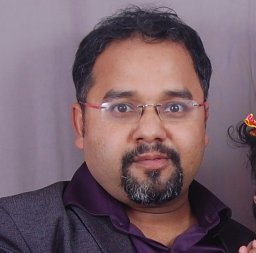
 Badri Narayana Patro
· 6 previous affiliations
- Microsoft (United States)Since 2022
- Senior Research Scientist · Since 2023
- Senior Reseach Scientist · 2022–2023
- KU Leuven2021–2022
- Postdoctoral Research Fellow · 2021–2022
- Postdoctoral Researcher · 2021
- Google (United States)2020–2021
- Postdoctoral Researcher · 2020–2021
- Postdoc · 2020
- Doctoral Researcher · 2015–2020
- Master of Technology (M.Tech.), Communication and signal processing · 2009–2012
Research Overview
Badri Narayana Patro focuses on multimodal learning, vision-language modeling, and efficient transformer architectures. His early trajectory explored visual question answering and attention mechanisms guided by probabilistic uncertainty. More recently, his research investigates hybrid state-space models and spectral attention networks to scale sequence modeling for high-resolution vision and time-series analysis.
Research Trajectory
His early research addressed computer vision systems for real-time video surveillance. In Design and implementation of novel image segmentation and BLOB detection algorithm for real-time video surveillance using DaVinci processor, he developed object segmentation and tracking algorithms optimized for hardware processors to handle practical challenges like occlusion, noise, and illumination changes.
During his doctoral studies, his focus shifted toward the intersection of vision and language, particularly visual question answering (VQA) and visual question generation (VQG). To address the disconnect between human visual intuition and model attention, he proposed exemplar-based methods in Differential Attention for Visual Question Answering, which utilized supporting and opposing exemplars to correlate model focus with human attention regions. He extended this multimodal context matching to generative tasks in Multimodal Differential Network for Visual Question Generation, leveraging image captions, tags, and spatial features to produce natural questions. This work aligned with broader efforts in the research direction of Diverse Text Generation via Variational Latent Spaces.
A major theme in this period was improving the interpretability and reliability of deep learning models through probabilistic methods. In U-CAM: Visual Explanation Using Uncertainty Based Class Activation Maps, he incorporated probabilistic deep learning to generate gradient-based certainty estimates alongside visual attention maps. This approach improved correlation with misclassified samples and advanced the research areas of Spatial Attention Guided by Predictive Uncertainty and The Computational Bottleneck of Stochastic Uncertainty Estimation. He further refined these mechanisms in Explanation vs Attention: A Two-Player Game to Obtain Attention for VQA, framing visual explanations and attention maps as competing players in an adversarial game to force them into alignment. This directly contributed to the area of Aligning Model Feature Attribution with Human Rationales and intersected with methods in Probabilistic Weight Representation in Deep Learning.
In recent years, while serving as a Senior Research Scientist at Microsoft, his research has pivoted toward scaling and optimizing transformer architectures for computer vision and long-sequence modeling. Recognizing the computational bottlenecks of standard self-attention, he evaluated memory, compute, and robustness trade-offs for industrial applications in efficient 360: efficient vision transformer. To address the quadratic complexity of attention without relying on lossy pooling operations, he explored spectral mixing techniques. In Scattering Vision Transformer: Spectral Mixing Matters, he introduced a spectrally scattering network to capture fine-grained image details efficiently.
This spectral approach was expanded in Spectral Convolutional Transformer: Harmonizing Real vs. Complex Multi-View Spectral Operators for Vision Transformer, which combined local convolutions with global Fourier-based token mixing. This line of inquiry culminated in SpectFormer: Frequency and Attention is what you need in a Vision Transformer, a hybrid architecture that strategically places spectral layers early in the network to capture high-frequency features like edges, reserving multi-headed self-attention for deeper global interactions. He has also applied these spectral-temporal concepts to domain-specific challenges, such as in Spectral-Temporal Attention for Robust Change Detection.
Parallel to his work on spectral transformers, he has extensively investigated State Space Models (SSMs) as efficient alternatives for long-context modeling. He detailed this paradigm shift in Mamba-360: Survey of State Space Models as Transformer Alternative for Long Sequence Modelling: Methods, Applications, and Challenges. Building on these insights, he and his collaborators developed Heracles: A Hybrid SSM-Transformer Model for High-Resolution Image and Time-Series Analysis, which merges the global context of SSMs via a real-valued Hartley transform with local convolutional precision and transformer token interactions. To address the stability issues that often plague SSMs at scale, he introduced SiMBA: Simplified Mamba-Based Architecture for Vision and Multivariate Time series, combining Mamba with an Einstein FFT for channel mixing.
Looking toward the continuous refinement of attention mechanisms, his recent collaborative work includes Self Supervision for Attention Networks, which proposes a technique to generate desirable attention maps by inducing self-supervision directly from the model's output across sampled input regions, removing the need for explicit human annotations.
Current Directions
The most recent papers in the evidence address the computational bottlenecks of scaling sequence models for high-resolution vision and multivariate time-series data. Current work investigates hybrid architectures that combine the strengths of State Space Models (SSMs), spectral (Fourier-based) layers, and traditional self-attention. By leveraging techniques like the Hartley transform and Einstein FFTs, these approaches aim to achieve linear or sub-quadratic complexity while maintaining the global token-interaction capabilities of standard transformers. Additionally, recent research explores self-supervised mechanisms to refine attention maps dynamically, improving the interpretability and performance of deep learning models without relying on external supervision.
Profile updated
Loading new papers…
Other researchers whose papers cluster into the same research directions — a proxy for overlapping technical interests and shared intellectual neighborhoods.
See something wrong? Report a mistake