

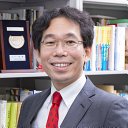
 Atsushi Yamashita
· 2 previous affiliations
- The University of TokyoSince 2011
- Full Professor · Since 2022
- Associate Professor · 2011–2022
- PhD student · 1998–2001
- MS student · 1996–1998
- Shizuoka University2001–2011
- Associate Professor · 2008–2011
- Assistant Professor · 2001–2008
Research Overview
Atsushi Yamashita focuses on robotic perception, 3D scene reconstruction, and human-machine interaction. His trajectory spans from early work in multi-robot motion planning and omnidirectional vision to advanced sensing in challenging environments, including underwater sonar and structural health monitoring. Recently, his research addresses complex visual localization, dynamic risk assessment for extreme environments, and mapping transparent objects using polarized light.
Research Trajectory
Yamashita’s early research established foundational methods in robotics and computer vision, particularly for complex physical interactions and environment modeling. In 2003, he developed a method for the Motion planning of multiple mobile robots for Cooperative manipulation and transportation, which divided the computational burden into a global path planner and a local manipulation planner to enable stable 3D transport. He subsequently expanded into multimodal sensing for infrastructure inspection. With collaborators, he introduced an automated Hammering Test with Image and Sound Signal Processing (2006), which fused stereo vision with acoustic signals to map 3D shapes and identify internal defects, contributing to the area of Extracting Structural Damage Signals from Environmental Noise.
His focus on robust perception continued with Three-Dimensional Environment Modeling from Images Acquired with an Omni-Directional Camera Mounted on a Mobile Robot by Structure from Motion (2007). This work leveraged the robot's movement as a virtual stereo baseline, advancing the broader direction of Robust Localization through Wide Field of View Visual SLAM. Addressing visual distortions in aquatic environments, he also proposed a method for the Three dimensional measurement of objects in liquid and estimation of refractive index of liquid by using images of water surface with a stereo vision system (2008), restoring images free from refractive effects to accurately measure submerged 3D shapes.
In the mid-2010s, Yamashita investigated the cognitive dimensions of human-machine interaction, specifically how humans perceive control during continuous tasks. He explored this in The Sense of Agency during Continuous Action: Performance Is More Important than Action-Feedback Association (2015), demonstrating that users prioritize overall success over precise action-feedback timing when judging their sense of agency. He further quantified this phenomenon in Measurement of the Perception of Control during Continuous Movement using Electroencephalography (2017), identifying neural signatures like P500 and alpha-mu rhythm suppression that track the sense of control. This research provided critical insights into the area of Intentional Binding and the Subjective Perception of Agency.
By 2023, Yamashita’s work heavily emphasized advanced perception systems, deep learning, and field robotics. He guided research on depth map accuracy by Applying Albedo Estimation and Implicit Neural Representations to Well-Posed Shape From Shading, using a learning-based encoder-decoder network to estimate surface albedo. In the domain of infrastructure and construction, he contributed to Pose Adjustment Considering Linear Cross-Section Continuity of Line-Structured Light-Based 3D Tunnel Measurements, utilizing UAVs and 2D-3D registration for long-section tunnel mapping. Similarly, he developed vision-based automation for the Position and Direction Measurement of Rock Bolt Hole Using Cross Line Laser and Camera.
His 2023 portfolio also includes significant methodological improvements in machine learning and sensor processing. He oversaw the development of Advanced Random Mix Augmentation : Data Augmentation Method for Improving Performance of Image Classification in Deep Learning Using Unduplicated Image Processing Combinations, which systematically eliminates redundancy in training samples. For agricultural robotics, his team improved Crop Detection Using Images and the Uniform Spacing in Crop Positions by applying genetic algorithms to geometric planting constraints. Additionally, he addressed sensor-specific challenges in Pose Estimation for Event Camera Using Charuco Board Based on Image Reconstruction and tackled missing elevation data in underwater robotics through Motion Degeneracy in Self-supervised Learning of Elevation Angle Estimation for 2D Forward-Looking Sonar.
Moving into 2025, Yamashita continues to solve complex perception and safety challenges in dynamic environments. He participated in research on Moving Object Detection from Moving Camera Using Focus of Expansion Likelihood and Segmentation, tackling the difficult problem of disentangling camera-induced ego-motion from actual object movement. In high-stakes field applications, he led the development of a Risk Analysis Methodology for the Design of a Monitoring System for Fuel Debris Retrieval Operations at the Fukushima Daiichi Nuclear Power Station, combining Objective Trees and Failure Mode and Effect Analysis to prioritize safety monitoring without historical failure data. Most recently, he introduced novel techniques for Mapping in Indoor Environments Including Transparent Objects Using Stereo Polarization Camera and Projector, addressing a persistent edge case in visual SLAM and 3D reconstruction.
Current Directions
The most recent papers in the evidence highlight a dual focus on robust visual perception in visually ambiguous environments and rigorous risk assessment for extreme robotics. Yamashita is actively investigating methods to map challenging indoor spaces, particularly those containing transparent objects, by leveraging polarized light and stereo projection. Concurrently, his work addresses the fundamental computer vision problem of detecting moving objects from moving platforms by modeling expansion likelihoods. Beyond perception, his current research encompasses structured safety engineering, developing hybrid risk analysis methodologies to ensure the safe deployment of monitoring systems in high-risk, data-sparse environments like nuclear decommissioning sites.
Profile updated
Loading new papers…
Other researchers whose papers cluster into the same research directions — a proxy for overlapping technical interests and shared intellectual neighborhoods.
See something wrong? Report a mistake