

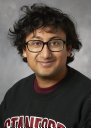
 Atish Agarwala
· 2 previous affiliations
- Google (United States)Since 2019
- Researcher · Since 2021
- Postdoc · 2019–2021
- Stanford University2013–2019
- PhD student · 2013–2019
Research Overview
Atish Agarwala focuses on the theoretical foundations of deep learning optimization, the dynamics of neural network training, and feature learning mechanisms. His trajectory spans the analysis of gradient descent at the edge of stability to the structural properties of neural feature alignment. Most recently, his work investigates high-dimensional scaling dynamics and the utility of per-example gradients in modern optimizers.
Research Trajectory
Agarwala’s early work examined the fundamental dynamics of optimization algorithms and their hyperparameters. With collaborators, he explored the area of The Noise Scale Coupling of Batch Size and Learning Rate in Temperature check: theory and practice for training models with softmax-cross-entropy losses (2023). This research revealed that the often-overlooked temperature hyperparameter in the softmax function is a primary driver of training dynamics, demonstrating that tuning the inverse temperature allows practitioners to control the model's transition into non-linear feature learning regimes.
Following this, Agarwala extensively investigated how optimization algorithms interact with the curvature of the loss landscape, contributing significantly to the research direction Gradient Descent at the Edge of Stability. In On the Interplay Between Stepsize Tuning and Progressive Sharpening (2023), he analyzed why classic automatic learning rate tuners like Armijo line-search often fail in deep learning. The study identified a feedback loop where Armijo-style tuning encourages progressive sharpening, ultimately stalling training, whereas Polyak stepsizes naturally operate at the edge of stability. He further proved that these dynamics are not exclusive to neural tangent kernel regimes; in A second order regression model shows edge of stability behavior (2023), he demonstrated that quadratic predictive models also exhibit both progressive sharpening and edge of stability behavior. Expanding on these geometric insights, SAM operates far from home: eigenvalue regularization as a dynamical phenomenon (2023) showed that Sharpness-Aware Minimization (SAM) actively suppresses high-curvature directions throughout the entire learning process via a modified edge of stability condition, rather than merely finding flat minima at the end of training.
In 2024, Agarwala’s research broadened to encompass the mechanics of feature extraction, leading investigations in the broader area of Neural Feature Alignment during Gradient Descent. He directed work on Feature learning as alignment: a structural property of gradient descent in non-linear neural networks, which introduced mapping with the average gradient outer product (AGOP) as a general mechanism for neural feature learning, clarifying the Neural Feature Ansatz (NFA). This structural understanding was analytically deepened in Gradient descent induces alignment between weights and the pre-activation tangents for deep non-linear networks (2024), where his group explained the theoretical origins of why network weights align with their pre-activation tangents during training.
Simultaneously, Agarwala continued to advance optimization theory. In High dimensional analysis reveals conservative sharpening and a stochastic edge of stability (2024), he provided a theoretical framework for the small-batch stochastic gradient descent regime, introducing the noise kernel norm to explain why Hessian eigenvalues grow more slowly at smaller batch sizes. Contributing to the area of Curvature Adaptive Step Sizes for Deep Learning, he collaborated on Stepping on the Edge: Curvature Aware Learning Rate Tuners (2024), which proposed a tuning method that prioritizes staying at the edge of stability over greedy loss reduction, naturally inducing beneficial behaviors like automatic warm-up.
Moving into 2025 and 2026, Agarwala has scaled these theoretical insights to analyze compute-optimal training and novel optimizer designs. He led the analysis in Scaling Collapse Reveals Universal Dynamics in Compute-Optimally Trained Neural Networks (2025), which intersects with the research area of Continuous Time Analysis of Stochastic Gradient Descent. He also directed research into non-diagonal preconditioning methods in High-dimensional isotropic scaling dynamics of Muon and SGD (2025), deriving risk recursion equations to understand the scaling rules of the Muon optimizer in high-dimensional regimes. Most recently, he collaborated on Per-example Gradients: a New Frontier for Understanding and Improving Optimizers (2026), demonstrating that accessing individual, per-example gradients is computationally feasible on modern hardware and revealing that optimizers like Adam perform optimally when driven by the mean squared gradient rather than gradient variance.
Current Directions
The most recent papers in the evidence address the scaling behavior and optimization mechanics of large neural networks. Recent work investigates universal dynamics in compute-optimally trained models and the high-dimensional scaling properties of non-diagonal preconditioners, specifically comparing the Muon optimizer to standard SGD. Additionally, this research explores the computational feasibility and theoretical advantages of utilizing per-example gradients, suggesting that fine-grained gradient statistics can challenge conventional wisdom and fundamentally improve the design of modern optimizers.
Profile updated
Loading new papers…
Other researchers whose papers cluster into the same research directions — a proxy for overlapping technical interests and shared intellectual neighborhoods.
See something wrong? Report a mistake