

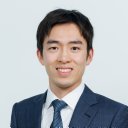
 Anyi Rao
· 5 previous affiliations
- Assistant Professor · Since 2024
- Current
- Stanford University2022–2024
- Postdoctoral Scholar · 2022–2024
- Research Intern · 2022
- Chinese University of Hong Kong2018–2022
- PhD student · 2018–2022
- Nanjing University2014–2018
- Undergrad student · 2014–2018
Research Overview
Anyi Rao focuses on human-AI collaborative creativity, generative models for visual media, and computational cinematography. His early work established foundational datasets and frameworks for semantic movie understanding, which evolved into developing highly controllable diffusion models and neural rendering techniques for video production. Currently, he investigates agentic workflows and temporally coherent architectures to enable complex, long-form cinematic generation.
Research Trajectory
Rao's early research explored robustness in natural language processing. In 2018, he introduced HotFlip: White-Box Adversarial Examples for Text Classification, a method for generating adversarial examples for text classifiers by using directional derivatives to efficiently flip discrete tokens, providing a mechanism to evaluate and defend NLP models.
Transitioning to computer vision and multimedia, his focus shifted toward semantic movie understanding. In 2020, he developed A Local-to-Global Approach to Multi-Modal Movie Scene Segmentation, scaling up scene segmentation by building the large-scale MovieScenes dataset to parse complex temporal structures and actor interactions. This effort was expanded in MovieNet: A Holistic Dataset for Movie Understanding, a massive multimodal dataset containing over a million manual annotations across 1,100 movies, designed to bridge raw pixels and complex storytelling.
By 2022, his work broadened to encompass diverse multimodal and rendering challenges. In the broader area of Cross-Modal Representation Learning for Chemistry, he participated in the development of A Molecular Multimodal Foundation Model Associating Molecule Graphs with Natural Language (MoMu), which bridges molecular graphs and text for retrieval and zero-shot generation. Returning to cinematic applications, he presented Shoot360: Normal View Video Creation from City Panorama Footage, a system that generates multi-shot normal view videos with specific cinematic styles from 360-degree recordings. He also contributed to the research direction of Continuous Level of Detail for Seamless Neural Rendering through BungeeNeRF: Progressive Neural Radiance Field for Extreme Multi-scale Scene Rendering, addressing the challenge of rendering scenes that scale from satellite overviews down to intricate building details.
A major theme of his trajectory emerged in 2023 with the precise control of generative models for visual media. He introduced Adding Conditional Control to Text-to-Image Diffusion Models (ControlNet), a neural network architecture that allows users to add fine-grained spatial conditioning—such as edges, poses, or depth maps—to large pretrained diffusion models without disrupting their underlying capabilities. Alongside this, he continued advancing video production tools with Dynamic Storyboard Generation in an Engine-based Virtual Environment for Video Production and A Coarse-to-Fine Framework for Automatic Video Unscreen, which automates high-quality foreground extraction without manual annotation. Concurrently, he applied deep learning to financial time-series in HireVAE: An Online and Adaptive Factor Model Based on Hierarchical and Regime-Switch VAE, utilizing a hierarchical Variational Autoencoder to adapt to shifting market conditions for stock return predictions.
In 2024, his research increasingly focused on animating static models and controlling video generation. He collaborated on AnimateDiff: Animate Your Personalized Text-to-Image Diffusion Models without Specific Tuning, a plug-and-play framework that trains a decoupled motion module to add consistent animation to stylized image generators. This was complemented by SparseCtrl: Adding Sparse Controls to Text-to-Video Diffusion Models, which enables video generation control using only a few sparse frames rather than dense sequences. In the area of Joint Optimization of Camera Poses and Neural Geometry, he developed Cinematic Behavior Transfer via NeRF-based Differentiable Filming, a reverse filming pipeline that extracts camera trajectories and character motions from a single shot for use in 3D virtual environments. He further bridged 3D game engines and diffusion models with CinePreGen: Camera Controllable Video Previsualization via Engine-powered Diffusion, allowing creators to generate video clips with complex cinematic camera movements.
Most recently, in 2025, his work has scaled to complex, long-form video generation and advanced editing. He oversaw the development of Hollywood Town: Long-Video Generation via Cross-Modal Multi-Agent Orchestration, introducing the OmniAgent framework to mimic a professional film crew for generating coherent, minute-scale videos. In the research direction Temporal Consistency in Generative Video Synthesis, his group presented Taming Flow-based I2V Models for Creative Video Editing (IF-V2V), an inversion-free framework that transforms flow-matching video generation models into high-quality editors. He also contributed to Composing Concepts from Images and Videos via Concept-prompt Binding (BiCo), a one-shot framework for copying specific visual concepts into a single coherent video. Finally, he synthesized recent trends in the field with Generative AI for Film Creation: A Survey of Recent Advances, analyzing the shift toward hybrid workflows that combine 2D diffusion and 3D techniques.
In 2026, Rao's lab tackled multi-turn consistency and fine-grained cinematic control across generative pipelines. To mitigate quality drift during sequential visual interactions, they developed MT Forcing: Towards Stable and Consistent Multi-Turn Image Editing with Autoregressive Diffusion, introducing single-turn distribution matching distillation and teacher-forcing guidance. Addressing similar multi-turn drift through improved training data, the group released MTEdit: Packed Trajectories Beat Rollouts for Multi-Turn Image Editing, which constructs extensive multi-turn trajectories via packed trajectory canvas generation alongside an evaluation benchmark. Contributing to Preserving Temporal Identity Consistency in Video Generation, they also introduced Making MLLM Latents Matter: Factor-Aware Predictive Learning for Cinematic Video Generation (FAPL), grounding video diffusion transformers in multimodal representations to enable factor-aware control over character, scene, action, and camera under sparse guidance.
Current Directions
Recent work investigates the orchestration of complex, long-form video generation and the precise editing of visual concepts. The most recent papers in the evidence address the limitations of current generative models by introducing multi-agent frameworks that mimic professional film production crews to maintain narrative consistency over longer sequences. Additionally, ongoing research focuses on multi-turn image editing consistency, factor-aware cinematic video control using multimodal model latents, and developing composition methods that bind specific visual concepts to text tokens within diffusion transformers.
Profile updated
Loading new papers…
Other researchers whose papers cluster into the same research directions — a proxy for overlapping technical interests and shared intellectual neighborhoods.
See something wrong? Report a mistake