

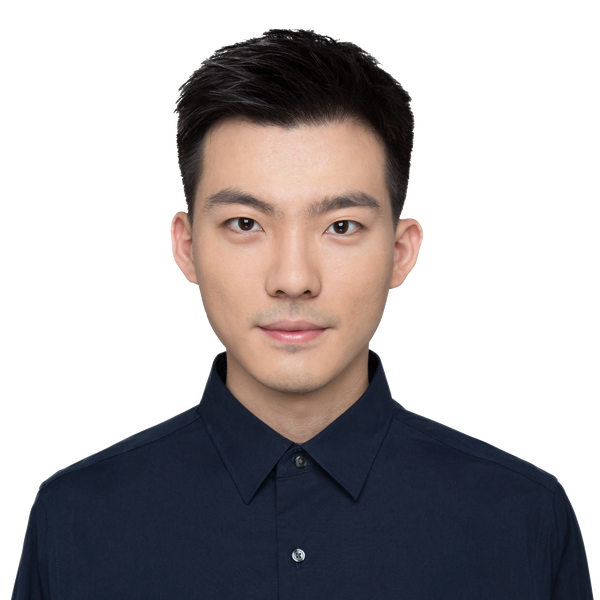
 Jiaqi Wang
· 3 previous affiliations
- Research Scientist · Since 2021
- Chinese University of Hong Kong2017–2021
- PhD student · 2017–2021
- Sun Yat-sen University2013–2017
- Undergrad student · 2013–2017
12 other authors named Jiaqi Wang: Jiaqi Wang (Auburn University · 37 papers), Jiaqi Wang (Harbin Institute of Technology Shenzhen Graduate School · Harbin Institute of Technology · 12 papers), Jiaqi Wang (Tencent (China) · 11 papers), Jiaqi WANG (Chinese University of Hong Kong · 11 papers), Jiaqi Wang (Beijing Jiaotong University · 4 papers), and 7 more
Research Overview
Jiaqi Wang focuses on visual perception, vision-language models, and the development of multimodal evaluation benchmarks. His early work addressed foundational challenges in object detection and image segmentation, establishing robust frameworks for dense prediction tasks. More recently, his research has shifted toward scaling large vision-language models, advancing high-resolution visual reasoning, and exploring reinforcement learning for generative model alignment.
Research Trajectory
Jiaqi Wang's early research addressed foundational mechanisms in computer vision, particularly in object detection and feature extraction. In 2019, he introduced Region Proposal by Guided Anchoring, a method that leverages semantic features to dynamically predict anchor locations and scales, offering a more efficient alternative to dense anchoring schemes. He also developed CARAFE: Content-Aware ReAssembly of FEatures, a lightweight and universal operator for feature upsampling that aggregates contextual information over a large receptive field for dense prediction tasks. During this period, he participated in building MMDetection: Open MMLab Detection Toolbox and Benchmark, an open-source platform that unified numerous detection frameworks to simplify benchmarking and model comparison.
Moving toward more complex data distributions and cross-modal tasks, his work began to tackle real-world dataset imbalances. He proposed Seesaw Loss for Long-Tailed Instance Segmentation to dynamically re-balance gradients between positive and negative samples, preventing tail categories from being overwhelmed by head classes. He then integrated linguistic features directly into hierarchical architectures with LAVT: Language-Aware Vision Transformer for Referring Image Segmentation, simplifying cross-modal fusion by shifting it from the decoder to the encoder.
By 2023, his collaborative efforts expanded into 3D vision, contributing to OmniObject3D: Large-Vocabulary 3D Object Dataset for Realistic Perception, Reconstruction and Generation. This large-scale dataset provided a realistic benchmark to advance the research direction of Scaling 3D Representations Beyond the Memory Wall. Concurrently, his focus increasingly shifted toward the architecture and evaluation of Vision-Language Models (VLMs). He participated in developing Prism: A Framework for Decoupling and Assessing the Capabilities of VLMs, which separates visual perception from textual reasoning to better isolate model bottlenecks, advancing the broader area of Decoupling Perception and Reasoning in Multimodal Models. As a principal investigator, he led the development of InternLM-XComposer2-4KHD: A Pioneering Large Vision-Language Model Handling Resolutions from 336 Pixels to 4K HD. This model utilized a dynamic patch division strategy to process extreme resolutions, contributing significantly to the field of The Visual Resolution Bottleneck in Multimodal Models.
In 2025, his research broadened across multiple modalities, focusing heavily on generative model alignment and rigorous evaluation. To better assess text-to-image models, his team introduced UniGenBench++: A Unified Semantic Evaluation Benchmark for Text-to-Image Generation, shifting the evaluation paradigm from basic visual fidelity to complex semantic reasoning and grammar. Addressing the challenge of reward hacking in generative alignment, he guided work on Pref-GRPO: Pairwise Preference Reward-based GRPO for Stable Text-to-Image Reinforcement Learning, which aligns with the research direction of Group Relative Policy Optimization for Large Reasoning Models. In the domain of high-resolution synthesis, he oversaw HiFlow: Training-free High-Resolution Image Generation with Flow-Aligned Guidance, mitigating structural breakdowns in upscaled diffusion models and advancing work in Coarse to Fine Generative Refinement.
He also explored efficient adaptation techniques, presenting Active Learning via Vision-Language Model Adaptation with Open Data, which leverages retrieval-based augmentation to improve active learning for VLMs. Extending his generative research into the audio domain, his group developed SongGen: A Single Stage Auto-regressive Transformer for Text-to-Song Generation, enabling the direct generation of mixed vocals and accompaniment from text descriptions. Further refining VLM alignment, he directed the creation of MIA-DPO: Multi-Image Augmented Direct Preference Optimization For Large Vision-Language Models, utilizing internal attention maps to reduce hallucinations in multi-image contexts without relying on expensive human annotations. He also advanced the area of Mitigating the Inference Latency of Chain of Thought by developing Unified Multimodal Chain-of-Thought Reward Model through Reinforcement Fine-Tuning, a reward model that employs long-form reasoning to evaluate visual understanding.
His most recent trajectory in 2026 emphasizes autonomous agents, temporal reasoning, and inference efficiency. He supervised DiCache: Let Diffusion Model Determine Its Own Cache, an adaptive caching strategy that accelerates diffusion models by autonomously managing feature reuse. In the audio domain, his team introduced STAR-Bench: Probing Deep Spatio-Temporal Reasoning as Audio 4D Intelligence, a benchmark designed to evaluate how models process sound dynamics across time and 3D space. He also led research on autonomous systems with SEAgent: Self-Evolving Computer Use Agent with Autonomous Learning from Experience, a framework enabling agents to master unfamiliar software through self-improving curricula. Finally, returning to video analysis, he guided the development of Advancing Complex Video Object Segmentation via Progressive Concept Construction, which integrates high-level conceptual priors from VLMs to improve tracking in unconstrained multi-scene videos.
Current Directions
The most recent papers in the evidence indicate a strong focus on multimodal alignment, autonomous agents, and spatio-temporal reasoning. Recent work investigates how to efficiently scale and align generative models, employing techniques like reinforcement learning with preference optimization and adaptive caching for diffusion models to improve both fidelity and inference speed. Another major theme is the development of self-evolving computer use agents that learn autonomously from experience without human-labeled data. Additionally, his current research addresses complex reasoning across modalities, including evaluating "audio 4D intelligence" to understand sound dynamics in 3D space and using large vision-language models to construct conceptual priors for robust video object segmentation.
Profile updated
Loading new papers…
Other researchers whose papers cluster into the same research directions — a proxy for overlapping technical interests and shared intellectual neighborhoods.
See something wrong? Report a mistake