

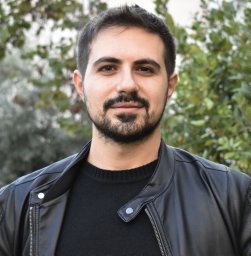
 Antonio Ferrara
· 2 previous affiliations
- Polytechnic University of BariSince 2016
- Assistant Professor (RUTD-a) · Since 2022
- Docente a contratto · 2023
- Doctor of Philosophy - PhD, Ingegneria informatica · 2018–2021
- Master's degree, Computer Engineering · 2016–2018
- Docente a contratto · 2021
1 other author named Antonio Ferrara: Antonio Ferrara (Intesa Sanpaolo (Italy) · Graz University of Technology · 9 papers)
Research Overview
Antonio Ferrara focuses on information retrieval, recommender systems, and the rigorous evaluation of machine learning models. His trajectory centers on developing comprehensive frameworks to ensure reproducibility and standardized benchmarking across traditional and deep learning recommendation algorithms. Most recently, his work addresses broader challenges in information retrieval evaluation and community-driven research initiatives.
Research Trajectory
Between 2021 and 2023, Antonio Ferrara’s published research primarily addressed the methodological and practical challenges of evaluating recommender systems. A central focus of his early trajectory was his participation in the development of the Elliot project, a comprehensive suite designed to standardize experimental pipelines. As a contributing co-author of Elliot: A Comprehensive and Rigorous Framework for Reproducible Recommender Systems Evaluation (2021), Ferrara helped build a system intended to alleviate the friction of recreating benchmarks, hyperparameter optimization routines, and evaluation procedures from scratch. This work highlighted the necessity of rigorous testing in an era characterized by an overwhelming number of proposed recommendation algorithms, splitting strategies, and metrics.
In parallel, Ferrara collaborated on extending these reproducibility efforts to multimedia domains. He was a co-author of V-Elliot: Design, Evaluate and Tune Visual Recommender Systems (2021), which provided a specialized framework for visual recommendation systems. By integrating state-of-the-art visual baselines and streamlining dataset preprocessing alongside visual feature loading, V-Elliot allowed researchers to easily train and test complex combinations of models. He further detailed the operational mechanics of these systems in How to Perform Reproducible Experiments in the ELLIOT Recommendation Framework: Data Processing, Model Selection, and Performance Evaluation (2021). The overarching goal of these contributions was to move the field away from isolated, point-estimate evaluations and toward exhaustive, standardized benchmarking—an approach that shares methodological synergies with the broader research direction of Robust Multi-Metric Evaluation for Algorithmic Fairness, ensuring that models are tested against a diverse array of metrics rather than a single scalar property.
In 2022, Ferrara continued to investigate the structural difficulties of comparative evaluation. He co-authored The Challenging Reproducibility Task in Recommender Systems Research between Traditional and Deep Learning Models, which examined the specific friction points encountered when benchmarking classic recommendation techniques against modern deep learning architectures. Throughout this period, his work as a middle author demonstrates a consistent participation in large-scale, collaborative efforts to improve the empirical foundations of recommender systems research.
Current Directions
The most recent work in the evidence, dating to 2023, suggests a broadening engagement with the information retrieval community at large. Ferrara served as the second author on the Report on the 13th Italian Information Retrieval Workshop (IIR 2023), documenting the state of the field across a wide array of topics including search and ranking, content analysis, natural language processing, and human factors.
Through this community-oriented work, Ferrara's focus encompasses the evaluation of complex retrieval environments, intersecting with active areas in the field such as the research theme of Unbiased Learning to Rank from Implicit Feedback. His trajectory reflects a sustained commitment to improving the rigor, transparency, and collaborative infrastructure of information retrieval and recommender systems research.
Profile updated
Loading new papers…
Other researchers whose papers cluster into the same research directions — a proxy for overlapping technical interests and shared intellectual neighborhoods.
See something wrong? Report a mistake