

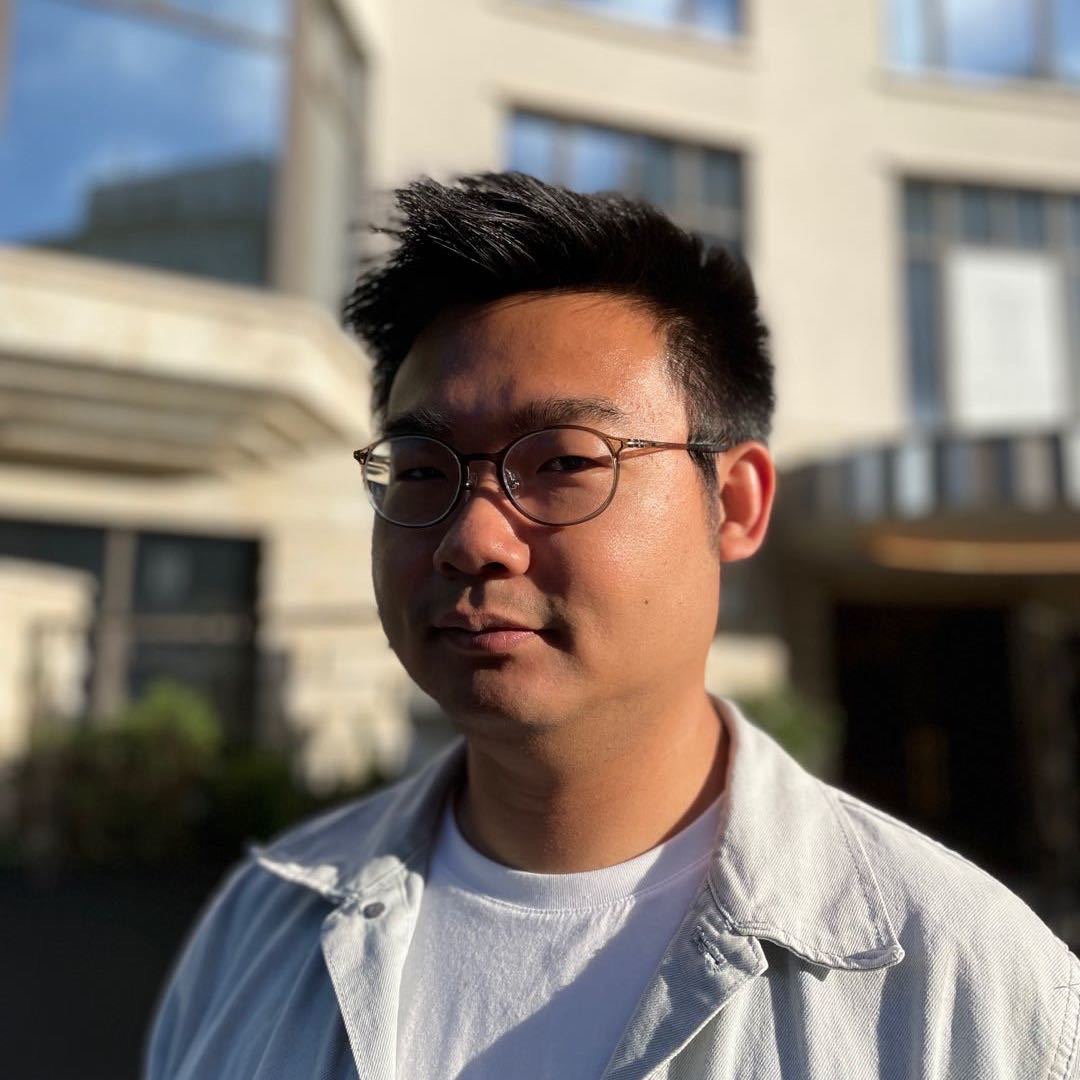
 Ansong Ni
· 4 previous affiliations
- Meta (United States)Since 2024
- Researcher · Since 2024
- Current
- Yale University2020–2024
- PhD student · 2020–2024
- Carnegie Mellon University2018–2020
- MS student · 2018–2020
- Nanjing University2014–2018
- Undergrad student · 2014–2018
Research Overview
Ansong Ni focuses on natural language processing, language-to-code generation, and the reasoning capabilities of large language models. His trajectory spans early work in semantic parsing and long-document summarization to recent advancements in teaching models to reason about formal languages and code execution. Currently, he investigates self-improving multi-agent systems and synthetic data generation.
Research Trajectory
Ni's early research explored software engineering and natural language processing, beginning with Cost-effective build outcome prediction using cascaded classifiers, which utilized machine learning to optimize continuous integration pipelines. Transitioning toward semantic parsing, he addressed the high cost of expert annotations in Merging Weak and Active Supervision for Semantic Parsing, developing methods to map natural language commands to executable representations using weaker learning signals. He also contributed to automated software maintenance with SOAR: A Synthesis Approach for Data Science API Refactoring, which streamlined the migration of evolving data science libraries. Concurrently, his work in NLP expanded to question answering and summarization. He investigated retrieval techniques in Mitigating False-Negative Contexts in Multi-document Question Answering with Retrieval Marginalization and developed accessible NLP tools, such as the comprehensive toolkit presented in SummerTime: Text Summarization Toolkit for Non-experts. This toolkit aligns with his broader interest in the research direction of Successive Halving for Efficient Resource Allocation.
A significant portion of Ni's subsequent work focused on the challenges of long-document and dialogue summarization. He collaborated on DYLE: Dynamic Latent Extraction for Abstractive Long-Input Summarization, a framework that treats extracted text snippets as dynamic latent variables to bridge selection and generation. Building on this, he introduced SummN: A Multi-Stage Summarization Framework for Long Input Dialogues and Documents, which recursively compresses text to handle arbitrarily long inputs, advancing the area of Hierarchical Recursive Summarization for Long Context. Further addressing the computational bottlenecks of long texts, he proposed the PageSum framework in Leveraging Locality in Abstractive Text Summarization, demonstrating that dividing documents based on the principle of locality can achieve strong performance with linear memory complexity.
As large language models (LLMs) became central to NLP, Ni's focus shifted toward formal reasoning and language-to-code generation. To improve multi-step logic, he explored the area of Preserving Reasoning Path Diversity in Language Models in Learning Math Reasoning from Self-Sampled Correct and Partially-Correct Solutions, which mitigates model bias by training on diverse, self-generated reasoning paths. In the domain of code generation, he addressed the pervasive issue of hallucinated code with LEVER: Learning to Verify Language-to-Code Generation with Execution, contributing to the research direction of Functional Correctness via Execution-Based Evaluation. Recognizing the need for rigorous assessment in this space, he helped develop comprehensive benchmarks in L2CEval: Evaluating Language-to-Code Generation Capabilities of Large Language Models and investigated the integrity of existing metrics in Quantifying Contamination in Evaluating Code Generation Capabilities of Language Models. He further bridged the gap between static code comprehension and runtime behavior with NExT: Teaching Large Language Models to Reason about Code Execution, a method for naturalized execution tuning.
Most recently, Ni—now a research scientist at Meta FAIR—has expanded his research into multi-agent systems, synthetic data generation, and preference modeling. He participated in the development of PrefPalette: Personalized Preference Modeling with Latent Attributes, which decomposes user preferences into interpretable dimensions. To support the massive scale required for modern LLM training, he collaborated on Matrix: Peer-to-Peer Multi-Agent Synthetic Data Generation Framework, a decentralized infrastructure for high-throughput synthetic data workflows. Leveraging this infrastructure, he introduced Collaborative Reasoner: Self-Improving Social Agents with Synthetic Conversations, enabling models to engage in multi-turn social collaboration, disagree with incorrect partners, and reach consensus through self-play.
Current Directions
The most recent work in the evidence points toward a strong focus on self-improving large language models and multi-agent collaboration. A primary theme is the use of synthetic data generation to scale the training of social agents, enabling models to engage in multi-turn deliberation, resolve disagreements, and reach accurate consensus without human intervention. To support these computationally intensive processes, current efforts also address the underlying infrastructure, exploring decentralized, peer-to-peer frameworks that can orchestrate thousands of concurrent multi-agent workflows. Additionally, there is an ongoing interest in transparent preference modeling, seeking to decompose human judgments into interpretable latent attributes to better align model behavior with diverse user communities.
Profile updated
Loading new papers…
Other researchers whose papers cluster into the same research directions — a proxy for overlapping technical interests and shared intellectual neighborhoods.
See something wrong? Report a mistake