

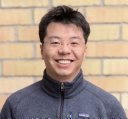
 Anqi Dong
· 2 previous affiliations
- Current
- Postdoc · 2024–2026
- University of California, Irvine2017–2023
- PhD student · 2017–2023
Research Overview
Anqi Dong focuses on control theory, optimal mass transport, and network science, with an emphasis on higher-order systems and optimization. His trajectory spans from foundational connections between shortest-path algorithms and regularized regression to the development of tensor-based methods for complex dynamical networks. Currently, his work addresses dynamic optimal transport and structural learning in hypergraphs.
Research Trajectory
The early arc of Anqi Dong’s research focused on fundamental network optimization and shortest path problems. In 2020, he introduced the Lasso formulation of the shortest path problem, establishing a mathematical connection between Dijkstra's algorithm and least angle regression (LARS). This foundational concept was later expanded in A lasso-alternative to Dijkstra's algorithm for identifying short paths in networks (2025). By reframing the classic network problem as a continuous $\ell_1$-regularized regression optimization problem, this work unlocked the use of distributed proximal solvers like ADMM for massive, dynamic networks, contributing to areas such as high-precision entropic optimal transport and shortest path search with negative edge weights.
A significant portion of his subsequent work has advanced the theory and application of Optimal Mass Transport (OMT). He extended OMT to account for physical constraints in Monge-Kantorovich optimal transport through constrictions and flow-rate constraints (2024), reformulating the problem to model toll stations and flow-rate limitations, which is highly relevant to routing with strict delivery and service time windows. He applied these principles to multi-agent systems in Task allocation for multi-agent systems via unequal-dimensional optimal transport (2025), developing a framework to match distributions of agents to tasks even when their spatial dimensions differ, thereby scaling multi-agent learning via mean field abstractions. Further integrating OMT with macroscopic traffic flow, he incorporated the traffic fundamental diagram as a convex inequality constraint in Fundamental diagram constrained dynamic optimal transport via proximal splitting methods (2025). This approach decoupled mass conservation from rigid velocity-density relations, advancing motion forecasting for heterogeneous traffic agents and scaling optimal transport to millions of samples.
Parallel to his work in physical transport, he has generalized transport algorithms for broader data assimilation tasks. In Data Assimilation for Sign-indefinite Priors: A generalization of Sinkhorn's algorithm (2025), he extended the classical Sinkhorn algorithm to handle sign-indefinite data arrays, enabling applications in gene regulatory networks and financial modeling, with implications for the empirical performance validation of extreme scale distributed systems. This algorithmic flexibility was also demonstrated in Network Learning with Directional Sign Patterns (2024), where he utilized a Sinkhorn-type algorithm to estimate interaction strengths from partial, directional node states, contributing to the broader research direction of Overcoming the Exponential Bottleneck in Tensor Decompositions.
As his focus expanded into higher-order networks and tensors, he addressed the stability of complex ecosystems in On Complexity of Stability Analysis in Higher-order Ecological Networks through Tensor Decompositions (2024), proposing a computationally efficient framework for calculating the Jacobian matrix in models with interactions beyond simple pairwise relationships. He also explored the Controllability and Observability of Temporal Hypergraphs (2024), developing new rank conditions to assess dynamic systems with changing higher-order relationships. Working with collaborators, he introduced a data-driven framework for tensor-based systems in Data-Driven Analysis of T-Product-Based Dynamical Systems (2024). This work provided efficient criteria for system identification and stability, intersecting with research directions such as Decoupling Tensor Operations via the Fourier Transform and Multilinear Structure Preservation in Tensor Learning.
In 2025 and 2026, his research increasingly incorporated machine learning techniques to analyze complex structures. He collaborated on identifying higher-order interactions from time-series data in Identification of Hypergraph Dynamics via Physics-Informed Neural Networks (2025), embedding governing dynamics into the loss function of neural networks. He also participated in applied deep learning research, such as medical image analysis in VSNet: Vessel Structure-aware Network for hepatic and portal vein segmentation (2025). Most recently, he contributed to graph neural network research in FSD-CAP: Fractional Subgraph Diffusion with Class-Aware Propagation for Graph Feature Imputation (2026), addressing the research direction of Learning on Graphs with Missing Node Attributes by localizing the data-filling process to small subgraphs to recover highly incomplete data. His ongoing interest in tensor methods is further reflected in his participation in Data-driven model order reduction via T-SVD (2026).
Current Directions
The most recent papers in the evidence indicate a strong focus on integrating machine learning with complex network and tensor structures. Recent work investigates the use of physics-informed neural networks to identify the dynamics of hypergraphs from time-series data, bridging continuous-time differential equations with deep learning architectures. Additionally, ongoing research addresses graph feature imputation, developing fractional subgraph diffusion frameworks to accurately recover missing node attributes in highly incomplete datasets. Parallel efforts continue to advance data-driven model order reduction using tensor singular value decomposition (T-SVD) and the application of proximal splitting methods to scale dynamic optimal transport for macroscopic traffic flow and multi-agent systems.
Profile updated
Loading new papers…
Other researchers whose papers cluster into the same research directions — a proxy for overlapping technical interests and shared intellectual neighborhoods.
See something wrong? Report a mistake