

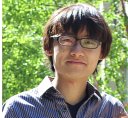
 Ang Chen
· 2 previous affiliations
- University of MichiganSince 2023
- Associate Professor · Since 2023
- Rice University2017–2023
- Assistant Professor · 2017–2023
Research Overview
Ang Chen focuses on computer systems, networking, and security, with an emphasis on programmable network infrastructure and cloud operations. His trajectory spans from developing runtime-programmable switches and in-network security mechanisms to optimizing data-intensive systems. Recently, his work has expanded into cloud AIOps and the deployment of autonomous agents for infrastructure management and machine learning workflows.
Research Trajectory
Chen’s early work concentrated on leveraging programmable data planes to enhance network performance and security. In 2020, he introduced NetWarden: Mitigating Network Covert Channels while Preserving Performance, a system that detects and mitigates data exfiltration without degrading high-speed network throughput. This work contributed significantly to the research direction of Line-Rate Security via Programmable Data Planes. That same year, he presented Contra: A Programmable System for Performance-aware Routing, which explored dynamic routing optimizations.
Continuing this focus on programmable infrastructure, Chen developed Bedrock: Programmable Network Support for Secure RDMA Systems (2022), extending hardware-accelerated security to remote direct memory access environments. He also introduced Runtime Programmable Switches (2022), detailing the FlexCore system. FlexCore enables the runtime programmability of network switches, allowing functions to be modified on-the-fly without interrupting traffic or violating consistency guarantees, thereby advancing the softwarization of mobile and IoT networks. Alongside these networking architectures, he explored hardware-native performance tuning in Bolt: Bridging the Gap between Auto-tuners and Hardware-native Performance (2022).
Around this time, Chen also began exploring the intersection of machine learning and low-level systems software. He participated in the development of Symbolic Distillation for Learned TCP Congestion Control (2022), a project that addressed the "black-box" nature of deep reinforcement learning in networking. The proposed two-stage solution distilled complex neural network policies into lightweight, interpretable symbolic expressions that could operate safely within the traditional TCP datapath. Returning to hardware acceleration, he subsequently published Unleashing SmartNIC Packet Processing Performance in P4 (2023), focusing on optimizing packet processing pipelines.
By 2024, Chen’s research expanded into cloud infrastructure management and disaggregated systems. He investigated semantic validation for cloud deployments in Unearthing Semantic Checks for Cloud Infrastructure-as-Code Programs (2024). He also collaborated on Disaggregating Embedding Recommendation Systems with FlexEMR (2024), which proposed an architecture separating memory-heavy embedding storage from compute-heavy neural network inference. By utilizing adaptive GPU caching and a multi-threaded RDMA engine, FlexEMR overcame severe network bottlenecks in recommendation systems.
In 2025 and 2026, Chen’s focus shifted heavily toward AI operations (AIOps), autonomous agents, and the systems required to support large-scale generative models. He led work on Automated Cloud Infrastructure-as-Code Reconciliation with AI Agents (2025), addressing the operational drift between version-controlled Infrastructure-as-Code and manual, out-of-band cloud console changes. He also contributed to SQUiD: Synthesizing Relational Databases from Unstructured Text (2025), a neurosymbolic framework that decomposes the generation of queryable databases into modular stages, allowing smaller models to achieve high accuracy. In the domain of model serving, he participated in TetriServe: Efficient DiT Serving for Heterogeneous Image Generation (2025), a specialized system that dynamically adjusts GPU parallelism at the denoising step level to improve service-level objective attainment for Diffusion Transformers.
Most recently, Chen has investigated the capacity of AI agents to manage complex, open-ended workflows. His group developed EXP-Bench: Can AI Conduct AI Research Experiments? (2026), an evaluation framework testing whether agents can design, implement, and debug full research pipelines. This work advances the broader area of Autonomous Environment Orchestration for LLM Agents. Concurrently, he collaborated on Efficient Distributed MLLM Training with Cornstarch (2026), which tackles the massive inefficiencies encountered when integrating vision encoders into standard text-only training pipelines. This research contributes to the emerging areas of Modality-Aware Distributed Training for Multimodal Models and Load Balancing for Long Context Transformers.
Current Directions
Chen’s most recent work investigates the intersection of artificial intelligence and systems infrastructure, with two primary themes visible in his 2025 and 2026 publications. The first is Cloud AIOps and agentic orchestration, where he explores how autonomous LLM agents can be deployed to reconcile cloud infrastructure drift and conduct complex, multi-step software engineering or research tasks. The second theme focuses on optimizing the underlying systems for large-scale generative AI. This includes developing specialized serving architectures for Diffusion Transformers that dynamically manage GPU parallelism, as well as designing efficient distributed training frameworks capable of handling the unique computational and load-balancing demands of Multimodal Large Language Models.
Profile updated
Loading new papers…
Other researchers whose papers cluster into the same research directions — a proxy for overlapping technical interests and shared intellectual neighborhoods.
See something wrong? Report a mistake