

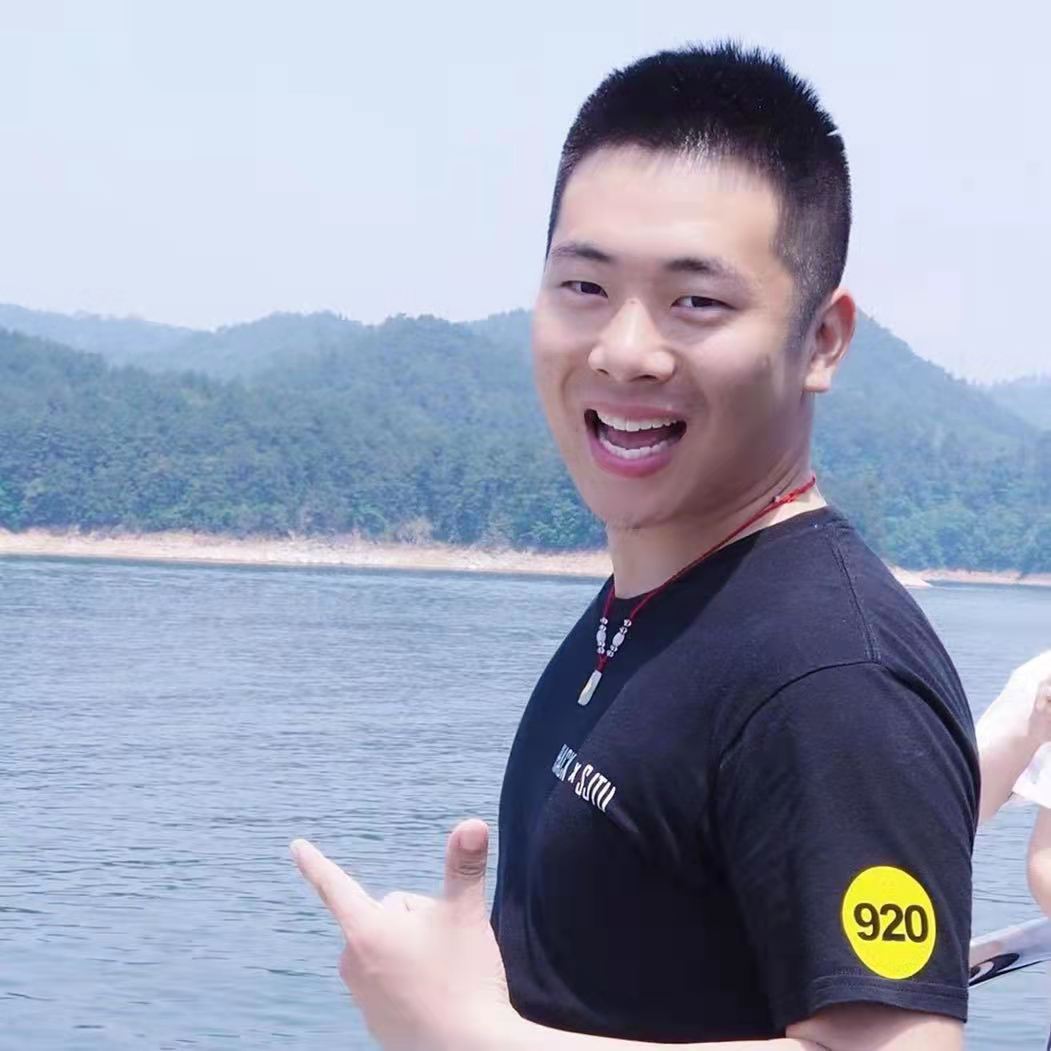
 Yibo Huang
· 6 previous affiliations
- Oracle (United States)Since 2025
- Senior Member of Technical Staff · Since 2025
- Tecent Cloud2024–2025
- Technical Consultant · 2024–2025
- University of Michigan2023–2025
- Research Fellow, Computer Science · 2023–2025
- Rice University2022–2023
- Postdoc Associate, CS Dept. · 2022–2023
- Postdoctoral Associate · 2023
- ByteDance (China)2020–2022
- High-speed Network Engineer · 2020–2022
- Researcher · 2022
- Fudan University2016–2021
- PhD student · 2016–2021
Research Overview
Yibo Huang focuses on machine learning systems, artificial intelligence networking, and distributed systems architecture. His trajectory spans hardware-software co-design and the optimization of remote direct memory access technologies to improve system scalability. Most recently, his work investigates resource disaggregation for recommendation models and the application of AI agents to automate scientific experimentation and cloud infrastructure management.
Research Trajectory
The early foundation of Yibo Huang’s recent work centers on optimizing cloud infrastructure and memory systems through advanced networking hardware. In 2023, he explored new paradigms for cloud administration in Simplifying Cloud Management with Cloudless Computing. Concurrently, he investigated hardware-software co-design for security applications, introducing Remote Direct Memory Introspection. This system leverages commodity RDMA network interface cards (NICs) and programmable P4 switches to offload security tasks directly to hardware. By doing so, the architecture enables high-frequency, real-time threat detection on baremetal servers without relying on a hypervisor, significantly reducing CPU overhead.
Building on this expertise in RDMA and network hardware, his research expanded into the broader area of The Architecture of Resource Disaggregation. A major contribution in this space is the development of FlexEMR, detailed in Disaggregating Embedding Recommendation Systems with FlexEMR. This architecture addresses the inefficiencies of monolithic servers by separating memory-heavy embedding storage from compute-heavy neural network inference. By integrating adaptive GPU caching, localized hierarchical pooling, and a contention-free multi-threaded RDMA engine, the system advances work in Bridging the Latency Gap in Disaggregated Memory Systems and the related field of Offloading Distributed Coordination to Programmable Network Hardware. He further refined these concepts in Towards Fully Disaggregated Recommendation Model Serving, demonstrating how the independent scaling of GPUs, CPUs, and DRAM can enhance failure isolation, improve resource utilization, and reduce operational costs.
Continuing to push the boundaries of network programmability and execution models, he contributed to Exposing RDMA NIC Resources for Software-Defined Scheduling and Remote Direct Code Execution in 2025. These papers explore deeper integration of network hardware capabilities into system scheduling and remote execution frameworks, aiming to extract maximum performance from datacenter interconnects.
In parallel, his trajectory has increasingly incorporated artificial intelligence to automate complex systems and scientific processes. He examined the modernization of cloud deployments in Automated Lifting for Cloud Infrastructure-as-Code Programs and explored the broader implications of autonomous systems in Cloud Infrastructure Management in the Age of AI Agents.
This interest in AI-driven automation extends into the research direction of Embodied AI for Closed Loop Scientific Discovery. With collaborators, he developed Curie: Toward Rigorous and Automated Scientific Experimentation with AI Agents, an AI agent framework featuring an "Experimental Rigor Engine." This engine is designed to validate plans and track progress systematically, substantially improving the ability of agents to answer complex experimental questions compared to prior baselines. Expanding on the evaluation of such autonomous systems, he participated in the design of EXP-Bench: Can AI Conduct AI Research Experiments?, a benchmark assessing whether AI agents can independently design experiments, implement code, debug environments, and draw valid scientific conclusions.
Current Directions
The most recent papers in the evidence indicate a dual focus on advanced network-system co-design and the application of large language model agents to complex workflows. One major current direction involves leveraging AI agents to automate rigorous scientific experimentation and cloud infrastructure management, exploring how autonomous systems can independently design, execute, and debug research pipelines. Concurrently, ongoing work in distributed systems continues to push the capabilities of programmable network hardware, investigating remote direct code execution and software-defined scheduling for RDMA NICs to further optimize resource disaggregation and datacenter efficiency.
Profile updated
Loading new papers…
Other researchers whose papers cluster into the same research directions — a proxy for overlapping technical interests and shared intellectual neighborhoods.
See something wrong? Report a mistake