

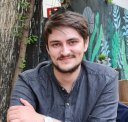
 Andrei Manolache
· 6 previous affiliations
- BitdefenderSince 2019
- Machine Learning Researcher · Since 2019
- Doctoral Student · Since 2022
- Max Planck Institute of BiochemistrySince 2025
- Visiting Researcher · Since 2025
- Doctor of Philosophy - PhD, Machine Learning · 2022
- University of Bucharest2016–2021
- Teaching Assistant · 2019–2021
- Undergrad student · 2016–2019
- NXP Semiconductors2018–2019
- Software Engineer - Vision & ADAS · 2019
- Operating Systems Intern · 2018–2019
Research Overview
Andrei Manolache focuses on geometric deep learning, graph neural networks, and anomaly detection. His trajectory spans from unsupervised anomaly detection in natural language to addressing fundamental structural bottlenecks in graph message passing. Most recently, his work investigates the optimization of equivariant neural networks and scalable multimodal representation learning for molecular and biological data.
Research Trajectory
Early in his career, Manolache developed methods for identifying anomalies and verifying authorship in natural language. He introduced DATE: Detecting Anomalies in Text via Self-Supervision of Transformers, an end-to-end deep learning method leveraging self-supervision to identify corrupted sentence parts. This system was later expanded in Deep Anomaly Detection in Text, demonstrating that training models on a pretext task of spotting specific text corruptions enables high precision in outlier detection.
He also explored authorship verification, addressing how models often rely on topic biases rather than true stylometry. In Transferring BERT-like Transformers' Knowledge for Authorship Verification, he demonstrated that masking named entities forces models to focus on style. This work contributed to the research direction of Sliding Window Strategies for Long Document Transformers and the broader effort to disentangle style from content. Expanding this to specialized domains, he introduced VeriDark: A Large-Scale Benchmark for Authorship Verification on the Dark Web, providing a resource for authorship attribution in short, sparse, and informal social media language.
His interest in robust evaluation extended to distribution shifts and anomaly detection benchmarks. With collaborators, he participated in creating AnoShift: A Distribution Shift Benchmark for Unsupervised Anomaly Detection, which provided a temporal network intrusion dataset to study concept drift mitigation. He also helped develop AD-NLP: A Benchmark for Anomaly Detection in Natural Language Processing, aiming to establish standardized evaluation protocols for anomaly detection across syntax and stylistics.
As his research progressed, Manolache shifted focus toward geometric deep learning, specifically addressing structural limitations in graph neural networks (GNNs). Standard message-passing neural networks often struggle with long-range dependencies due to over-squashing and structural bottlenecks. To address this, he contributed to the development of Probabilistically Rewired Message-Passing Neural Networks, which optimizes graph structures to mitigate these issues. This work advanced the broader area of Bypassing Information Bottlenecks in Graph Message Passing and the research direction of Decoupled Graph Structure Refinement and Rewiring. Building on this foundation, he explored Probabilistic Graph Rewiring via Virtual Nodes, introducing a method that adds virtual nodes as communication hubs to facilitate efficient global information propagation.
More recently, his work has expanded into equivariant neural networks and multimodal representation learning for molecular and biological systems. In the domain of molecular discovery, he proposed MolMix: A Simple Yet Effective Baseline for Multimodal Molecular Representation Learning, a transformer framework that unifies 1D, 2D, and 3D molecular representations, demonstrating that a unified architecture can outperform specialized aggregation methods.
Addressing the rigid constraints of equivariant models, he introduced Adaptive Constrained Equivariance (ACE) in Learning (Approximately) Equivariant Networks via Constrained Optimization. By treating symmetry as a negotiable constraint, this approach improves robustness on real-world data, advancing research directions such as Soft and Adaptive Equivariance for Imperfect Symmetries and Hierarchical Symmetry Relaxation in Deep Neural Networks. He further investigated the optimization of these networks in How the Optimizer Shapes Learned Solutions in Equivariant Neural Networks, showing that orthogonalizing updates with the Muon optimizer significantly enhances performance on 3D tasks.
In parallel, he has applied geometric deep learning to large-scale biological challenges. He contributed to Protein Fold Classification at Scale: Benchmarking and Pretraining, which introduced a massive benchmark and a self-supervised masked invariant autoencoder for modeling full-length multi-domain protein architectures. As a senior contributor, he guided the development of C-FREE in Learning the Neighborhood: Contrast-Free Multimodal Self-Supervised Molecular Graph Pretraining. This framework learns molecular representations by predicting local neighborhood embeddings without negative samples, offering a parameter-efficient alternative to massive foundation models. Finally, returning to his roots in anomaly detection but applying it to complex interconnected systems, he oversaw the creation of CHRONOGRAPH: A Real-World Graph-Based Multivariate Time Series Dataset, a resource designed for modeling cross-variable dependencies and unsupervised anomaly detection in production microservices.
Current Directions
The most recent papers in the evidence indicate a strong focus on the optimization and scalability of geometric deep learning models, particularly for 3D molecular and biological data. Current work investigates how to relax rigid mathematical constraints in equivariant neural networks to better handle imperfect, real-world symmetries and improve sample efficiency. Additionally, recent research explores contrast-free self-supervised pretraining and masked autoencoding techniques to efficiently scale representation learning for massive protein and molecular graph datasets, aiming to match or exceed the performance of larger foundation models with significantly fewer parameters.
Profile updated
Loading new papers…
Other researchers whose papers cluster into the same research directions — a proxy for overlapping technical interests and shared intellectual neighborhoods.
See something wrong? Report a mistake