

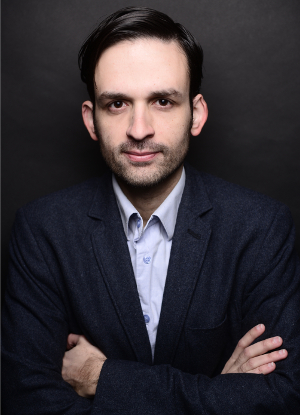
 Andre Freitas
· 7 previous affiliations
- AI Group Leader · Since 2021
- University of ManchesterSince 2017
- Senior Lecturer · Since 2021
- Current
- Associate Professor · 2017–2021
- Idiap Research InstituteSince 2021
- Researcher · Since 2021
- University of Passau2015–2017
- Postdoctoral Researcher · 2015–2017
- Amtera Semantic Systems2005–2016
- Co-Founder · 2005–2016
- Digital Enterprise Research Institute (DERI)2009–2015
- Doctor of Philosophy (Ph.D.), Computer Science · 2009–2015
- Bachelor's degree, Computer Science · 2001–2005
1 other author named Andre Freitas: André Freitas (1 paper)
Research Overview
Andre Freitas focuses on neuro-symbolic reasoning, mathematical language processing, and the integration of formal logic with neural architectures. His trajectory spans from early knowledge extraction systems to contemporary methods for grounding large language models in verifiable, multi-step inference. Currently, he investigates how to decouple formal reasoning from semantic priors to build reliable, domain-agnostic reasoning systems.
Research Trajectory
Early work investigated the extraction of structured knowledge from unstructured text. In Graphia: Extracting Contextual Relation Graphs from Text, he and his collaborators developed an information extraction pipeline designed to transform text into Structured Discourse Graphs represented in RDF. Unlike traditional tools that reduced sentences to simple triples, this approach preserved rich contextual information—such as time, location, and quantities—by linking extracted entities directly to the Linked Open Data cloud.
By the early 2020s, this focus on structured representation evolved into a broader investigation of explainable multi-hop inference, contributing to the research direction of Mitigating Semantic Drift in Multi-Step Reasoning Chains. The development of ExplanationLP in Explainable Inference Over Grounding-Abstract Chains for Science Questions framed science question answering as an abductive reasoning problem. By utilizing linear programming to identify the optimal explanatory subgraph, the work explicitly modeled both the grounding of abstract concepts to concrete terms and the chaining of general scientific knowledge, achieving competitive performance with fewer parameters while yielding interpretable explanations.
This trajectory increasingly emphasized the intersection of natural language and formal mathematics. The comprehensive overview Introduction to Mathematical Language Processing: Informal Proofs, Word Problems, and Supporting Tasks established foundational tasks for parsing and reasoning over mathematical text. Concurrently, efforts to bridge neural and symbolic methods led to Going Beyond Approximation: Encoding Constraints for Explainable Multi-hop Inference via Differentiable Combinatorial Solvers. This work addressed the non-differentiability of Integer Linear Programming (ILP) by integrating it with Transformer architectures, enabling end-to-end differentiable neuro-symbolic integration for complex multi-hop inference. To synthesize these emerging paradigms, he presented a comprehensive tutorial proposal, Reasoning with Natural Language Explanations, which argued that true artificial reasoning requires moving beyond black-box predictions toward rigorous, human-readable explanations grounded in linguistic theory and the philosophy of science. This perspective aligns closely with the broader area of Neurosymbolic Verification for Large Language Model Reasoning.
In 2025, his research expanded significantly into the mechanisms by which large language models (LLMs) process formal logic and semantics. One major theme involves enforcing explicit logical structures within neural representations. For instance, Quasi-symbolic Semantic Geometry over Transformer-based Variational AutoEncoder introduced a formal semantic geometrical framework to control language generation by theoretically framing sentence semantics as the composition of semantic role and word content features. Similarly, Learning to Disentangle Latent Reasoning Rules with Language VAEs: A Systematic Study explored using Language Variational Autoencoders to force models to follow explicit logic rather than relying on memorized patterns.
Another key focus has been the translation of natural language into machine-verifiable formats, advancing the research direction of Semantic Alignment for Machine Verifiable Logic. This is exemplified by MASA: LLM-Driven Multi-Agent Systems for Autoformalization, which orchestrated specialized agents for translation, critique, and refinement to convert mathematical language into formal code for theorem provers like Lean and Isabelle. Integrating Expert Knowledge into Logical Programs via LLMs applied this translation paradigm to industrial engineering, automating the conversion of technical manual constraints and operational ranges into symbolic logic. To further bridge the gap between neural flexibility and symbolic determinism, Adaptive LLM-Symbolic Reasoning via Dynamic Logical Solver Composition proposed dynamically combining LLMs with formal symbolic solvers, addressing the tendency of language models to hallucinate facts in complex reasoning chains.
A parallel line of recent inquiry investigates how LLMs handle logic when it conflicts with semantic priors or domain-specific knowledge. Contributing to the area of General Purpose Reasoning from Specialized Reinforcement Learning, Mitigating Content Effects on Reasoning in Language Models through Fine-Grained Activation Steering introduced K-CAST, an inference-time intervention that manipulates internal layers to decouple logical structure from content believability. The evaluation of formal linguistic properties in neural models was further probed in Montague semantics and modifier consistency measurement in neural language models. By testing models against metamorphic relations in embedding space, this study demonstrated that modern models often fail to capture formal adjective-noun modification rules, defaulting instead to simple vector averaging.
Finally, he has rigorously evaluated and adapted these reasoning capabilities in specialized domains. SylloBio-NLI: Evaluating Large Language Models on Biomedical Syllogistic Reasoning exposed the brittleness of top-tier models when performing zero-shot syllogistic reasoning over biological ontologies, noting extreme sensitivity to phrasing and failures on basic logical structures. Conversely, Dissecting Clinical Reasoning in Language Models: A Comparative Study of Prompts and Model Adaptation Strategies demonstrated that combining structured prompts with high-quality distilled data and lightweight fine-tuning allows compact models to achieve highly reliable clinical reasoning, closing the performance gap with frontier models.
Current Directions
The most recent papers in the evidence indicate a strong focus on bridging the gap between the flexible, pattern-matching capabilities of large language models and the rigorous determinism of formal logic. Recent work investigates autoformalization—translating natural language mathematics and industrial rules into machine-verifiable code—using multi-agent frameworks and dynamic solver composition. Additionally, current research addresses the fundamental brittleness of LLM reasoning by developing techniques to decouple logical validity from semantic believability. By utilizing fine-grained activation steering and latent variable models, these efforts aim to ensure that models can perform robust, domain-agnostic inference without being misled by their parametric knowledge. This includes stress-testing and adapting these neuro-symbolic approaches for high-stakes, specialized domains such as clinical and biomedical reasoning, where output reliability and formal correctness are critical.
Profile updated
Loading new papers…
Other researchers whose papers cluster into the same research directions — a proxy for overlapping technical interests and shared intellectual neighborhoods.
See something wrong? Report a mistake