

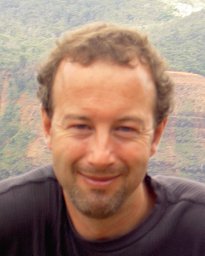
 Peter Clark
· 6 previous affiliations
- Senior Research Director · Since 2014
- Interim CEO · 2022–2023
- Vulcan Inc.2010–2013
- Senior Research Manager · 2010–2013
- Boeing (United States)1996–2010
- Associate Technical Fellow · 1996–2010
- The University of Texas at Austin1994–1996
- Research Scientist · 1994–1996
- University of Strathclyde1986–1991
- PhD, Computer Science · 1986–1991
- University of Edinburgh1984–1985
- Masters, Information Technology · 1984–1985
Research Overview
Peter Clark focuses on natural language reasoning, question answering, and the development of neuro-symbolic systems for scientific discovery. His trajectory spans early work in explanation-based machine learning to the creation of large-scale benchmarks and models that evaluate complex inference in language models. Currently, his research investigates autonomous data-driven discovery and the limits of social intelligence in frontier AI systems.
Research Trajectory
The trajectory begins with foundational contributions to machine learning and knowledge representation. In 1992, he introduced Lazy Partial Evaluation: An Integration of Explanation-Based Generalization and Partial Evaluation, a hybrid learning technique designed to optimize proof search by generalizing and storing explored proofs. This early interest in structured reasoning evolved into broader knowledge representation efforts, as seen in Project Halo: Towards a Digital Aristotle (2004), which outlined a long-term vision for AI systems capable of deep scientific reasoning and explicit knowledge processing. During this era, his research frequently touched upon the broader area of Bridging Textual Gaps with External Background Knowledge.
A major focus of his subsequent work has been the development of rigorous benchmarks and models for scientific question answering. He participated in the creation of the ARC dataset, detailed in Think you have Solved Question Answering? Try ARC, the AI2 Reasoning Challenge (2018), which challenged the field with grade-school science questions requiring multi-step inference rather than simple retrieval. Concurrently, he directed research into dynamic text comprehension, presenting Tracking State Changes in Procedural Text: a Challenge Dataset and Models for Process Paragraph Comprehension (2018). This work introduced the ProPara dataset to evaluate how well models infer implicit causal effects, advancing the research direction of Tracking Implicit Entity States in Procedural Text. These efforts culminated in a significant milestone for the Aristo Project. He led the work on From 'F' to 'A' on the N.Y. Regents Science Exams: An Overview of the Aristo Project (2020), demonstrating that an ensemble of large language models could achieve over 90% on an eighth-grade science exam, signaling a shift toward emergent scientific reasoning in natural language processing.
Building on the success of Aristo, his research explored how transformers could emulate formal logic. In Transformers as Soft Reasoners over Language (2020), he introduced RuleTakers, models trained to reason over natural language facts and rules, bypassing the need for formal logical representations. He also collaborated on UnifiedQA: Crossing Format Boundaries With a Single QA System (2020), which consolidated multiple QA formats into a single text-to-text framework. As models grew more capable, his focus expanded to include multimodal contexts and the evaluation of reasoning chains. He contributed to the ScienceQA benchmark in Learn to Explain: Multimodal Reasoning via Thought Chains for Science Question Answering (2022), which provided annotations for multi-hop reasoning across text and images. This work directly contributed to the research area of Multimodal Reasoning in Scientific Language Models. Throughout this period, his overarching themes aligned with the broader areas of Process Based Evaluation of Large Language Model Reasoning and External Memory Systems for Surgical Model Editing.
In 2024, his work heavily emphasized making AI reasoning more transparent, teachable, and grounded. He directed the development of TeachMe, detailed in Towards Teachable Reasoning Systems: Using a Dynamic Memory of User Feedback for Continual System Improvement, which augmented a frozen QA model with a dynamic memory to correct errors based on user feedback. He also oversaw Entailer: Answering Questions with Faithful and Truthful Chains of Reasoning, a system designed to generate reasoning chains that accurately reflect the model's internal beliefs. Further bridging neural and symbolic methods, he led the development of NELLIE: A Neuro-Symbolic Inference Engine for Grounded, Compositional, and Explainable Reasoning, which combined neural language modeling with Prolog-based inference to produce human-interpretable proof trees. Additionally, he supervised Learning to Reason via Program Generation, Emulation, and Search, introducing COGEX, a framework where models emulate the execution of Python pseudo-programs to solve complex reasoning tasks.
Most recently, his research has pivoted toward the automation of scientific discovery and the critical evaluation of frontier models. He directed the proof-of-concept system DATAVOYAGER in Data-driven Discovery with Large Generative Models (2024), which utilized a multi-agent architecture to autonomously formulate hypotheses and execute statistical plans. This was followed by the introduction of a comprehensive evaluation framework in DiscoveryBench: Towards Data-Driven Discovery with Large Language Models (2025), highlighting the current limitations of LLMs in complex data preparation. To improve how models organize and apply knowledge, he oversaw From Models to Microtheories: Distilling a Model's Topical Knowledge for Grounded Question-Answering (2025), a method for extracting compact, non-redundant principles from an LLM's latent knowledge. He also directed AutoDiscovery: Open-ended Scientific Discovery via Bayesian Surprise (2025), a framework that leverages measurable shifts in model beliefs to identify novel scientific insights without human guidance. Finally, in 2026, he collaborated on SimpleToM: Exposing the Gap between Explicit ToM Inference and Implicit ToM Application in LLMs. This work introduced a benchmark testing Theory of Mind in everyday scenarios, revealing significant shortfalls in how models apply social knowledge, highlighting his ongoing engagement with the research direction of The Fragility of Social Intelligence in Language Models.
Current Directions
Recent work investigates the capacity of large language models to act as autonomous agents for scientific discovery, as well as their limitations in complex social reasoning. A primary focus is the development of frameworks that enable open-ended, data-driven discovery, utilizing multi-agent architectures and concepts like Bayesian surprise to autonomously formulate hypotheses and execute statistical plans. Concurrently, ongoing research addresses the extraction of structured "microtheories" from latent model knowledge to improve grounded question answering. Finally, recent evaluations probe the boundaries of Theory of Mind in frontier models, exposing the gap between explicit knowledge retention and the implicit application of social intelligence in everyday scenarios.
Profile updated
Loading new papers…
Other researchers whose papers cluster into the same research directions — a proxy for overlapping technical interests and shared intellectual neighborhoods.
See something wrong? Report a mistake