

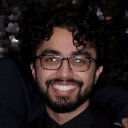
 Aman Bhargava
· 7 previous affiliations
- Bread Technologies, Inc.Since 2025
- co-founder, president, CTO · Since 2025
- Krembil Research Institute2021–2023
- Researcher · 2021–2023
- Doctor of Philosophy - PhD, Computation & Neural Systems · 2022
- University of Toronto2018–2022
- Bachelor of Applied Science - BASc, Engineering Science · 2018–2022
- Undergraduate Intern -- Transformers for Protein Engineering · 2021
- MannLab2019–2021
- Undergraduate Researcher · 2019–2021
- CareTrack2019–2021
- Co-Founder & CEO · 2019–2021
Research Overview
Aman Bhargava focuses on the mathematical and engineering foundations of intelligence, applying deep learning and information theory to understand how simple components form complex, intelligent systems. His trajectory spans theoretical neuroscience, signal processing, and computational biology, investigating mechanisms of representation and learning in both artificial and biological networks. Currently, his work addresses the emergence of disentangled world models in neural architectures and the application of spatial omics to tumor immunology.
Research Trajectory
Bhargava’s early research investigated signal processing techniques for brain-computer interfaces. In 2021, he explored the classification of event-related potentials, specifically focusing on improving the robustness of models under varied conditions. This work led to Adaptive Chirplet Transform-Based Machine Learning for P300 Brainwave Classification, which introduced an algorithm coupling an adaptive chirplet transform with an artificial neural network to enhance P300 brainwave classification for human-computer communication.
Following this, his focus expanded toward fundamental learning mechanisms in artificial systems. In 2022, he investigated alternative optimization strategies for neural networks, proposing a novel gradient-free training method. The resulting study, Gradient-Free Neural Network Training via Synaptic-Level Reinforcement Learning, treated individual synapses as independent reinforcement learning agents. This approach enabled the simultaneous training of thousands of parameters using a single, universal policy, offering a pathway to train complex, non-differentiable networks while achieving performance comparable to traditional gradient descent on benchmark tasks.
A major theme in Bhargava’s subsequent work is the theoretical foundation of how neural networks build internal models of the world. He has investigated how artificial and biological agents develop interpretable, disentangled representations that are crucial for out-of-distribution generalization. In Parallel Decision-Making yields Disentangled World Models: Impact and Implications, he and his collaborators framed multi-task decision-making through the lens of Bayesian filtering. They demonstrated that when agents solve multiple tasks in parallel, disentangled representations emerge naturally in architectures like Recurrent Neural Networks (RNNs) and Transformers. This provided a compelling explanation for how biological brains might learn such representations, while also suggesting new methodologies for building more robust artificial intelligence systems.
He formalized these empirical observations the following year in Disentangling Representations through Multi-task Learning. This research provided a mathematical guarantee—a "Disentangled Representation Theorem"—showing that optimal performance on multi-task evidence accumulation forces a system to implicitly represent the underlying independent factors of variation in its environment. By proving that Transformers are particularly adept at this process, this theoretical contribution intersects with the broader research direction of Continuous Attractor Manifolds for Parametric State Tracking and advances the area of Task Arithmetic in Orthogonal Parameter Subspaces.
Parallel to his theoretical work on intelligence, Bhargava has applied deep learning to complex problems in computational biology and tumor immunology. In 2025, he contributed to the development of Morpheus, a deep-learning framework designed to analyze spatial proteomic maps of tumors. This work is detailed in Identifying perturbations that boost T-cell infiltration into tumours via counterfactual learning of their spatial proteomic profiles. By employing counterfactual learning, the framework identifies the minimal molecular interventions—such as specific chemokine and checkpoint combinations—required to transform an immune-excluded "cold" tumor into an immune-active "hot" state, a finding that was subsequently validated through in vitro experiments. This research contributes significantly to the field of Overcoming Spatial Context Loss in Tissue Architecture.
Further expanding on this framework, the study 1131 Spatially-guided therapy predictions with morpheus demonstrated how treating image perturbations as therapeutic interventions through counterfactual optimization can identify combinatorial targets for immunotherapy. These biological applications intersect with several critical research areas, including Bridging the Gap Between In Vitro and In Vivo Models, the study of Vascular Normalization to Overcome Immunotherapy Resistance, and broader Strategies to Overcome T Cell Exclusion in Solid Tumors.
Current Directions
The most recent papers in the evidence indicate a dual focus on the mathematical theory of deep learning and its application to spatial biology. On the theoretical front, Bhargava continues to investigate how complex neural architectures naturally develop structured, disentangled abstractions of their environments when optimized for multi-task evidence accumulation. This involves formalizing the mathematical guarantees behind representation learning and understanding how simple computational components yield intelligent, generalizable behavior. Concurrently, his applied research addresses the tumor microenvironment, utilizing counterfactual optimization and deep learning on spatial omics data to predict therapeutic interventions. This interdisciplinary approach aims to bridge theoretical machine learning with actionable insights in immunology and computational biology.
Profile updated
Loading new papers…
Other researchers whose papers cluster into the same research directions — a proxy for overlapping technical interests and shared intellectual neighborhoods.
See something wrong? Report a mistake