

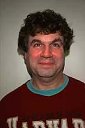
 Allen Tannenbaum
· 2 previous affiliations
- Stony Brook UniversitySince 2013
- Full Professor · Since 2013
- Current
- Georgia Institute of Technology1999–2013
- Professor · 1999–2013
Research Overview
Allen Tannenbaum focuses on the application of geometric and systems-theoretic methods to computer vision, medical image analysis, and control. His work is characterized by the use of partial differential equations (PDEs), algebraic geometry, and differential invariants to solve problems in image processing, target tracking, and bioinformatics. As a Distinguished Professor Emeritus at Stony Brook University, his research has spanned several decades, evolving from foundational studies in mathematical systems theory to modern computational frameworks for optimal transport and distributed filtering.
Research Trajectory
The early stages of Tannenbaum’s career were rooted in the mathematical foundations of systems theory and control, with a particular emphasis on the use of algebraic and differential geometry. During the early 1990s, he transitioned these mathematical tools into the domain of computer vision, specifically investigating how geometric invariants could be used to process visual data. This period was marked by the development of invariant heat-type curve flows, which provided a framework for image smoothing and scale-space representation that remained consistent under various transformation groups. This work laid the groundwork for Mitigating Noise Sensitivity in Higher-Order Geometric Estimation, where differential metrics such as curvature and torsion were utilized to identify structural features in images regardless of rotation or scaling.
By the late 1990s and early 2000s, Tannenbaum’s focus shifted toward active vision and shape analysis. He explored the use of curvature-driven flows for active contours (snakes), which became a standard method for image segmentation. During this time, he also addressed the problem of representing complex 3D structures through Skeletal Representations for Complex 3D Topologies. By formalizing the "topological skeleton" or medial axis, his research enabled the analysis of branching structures like blood vessels and neural networks. This work necessitated a focus on Mesh Quality Sensitivity in Numerical Solvers, ensuring that the underlying meshes used in these simulations maintained the integrity required for solving complex PDEs.
In the mid-2000s, Tannenbaum’s research expanded into practical applications of active vision for autonomous systems and medical imaging. He developed geometric observers for tracking dynamically evolving curves, which allowed for visual tracking without the need for highly accurate 3D models of the environment. This methodology was applied to aerial vehicles and munitions operating in uncertain or adversarial 3D environments. Concurrently, he applied these geometric principles to medical image analysis, focusing on multimodal deformable registration. This work often involved Conformal Surface Parameterization, which allowed for the mapping of irregular biological manifolds, such as the human brain cortex, into more manageable computational domains.
In the latter part of his career, Tannenbaum became a key contributor to the field of Optimal Mass Transport (OMT). He developed efficient algorithms for generalizing OMT to matrix-valued and vector-valued densities, which found immediate application in diffusion tensor imaging and color image processing. His recent work has focused on Efficient Multi-marginal Optimal Transport, addressing the computational challenges of matching multiple distributions simultaneously. He has also explored the use of Gaussian Proxies for Efficient Distributional Inference, combining OMT with kernel methods to provide robust distances between complex probability distributions in machine learning contexts.
Current Directions
Tannenbaum’s most recent research continues to refine the intersection of optimal transport and stochastic systems. A significant current focus is the development of distributed nonlinear filtering techniques. By utilizing triangular transport maps, he has proposed methodologies for estimating global state variables across networks of local sensors, with applications in satellite pose estimation and other complex tracking problems. This work integrates dimensionality reduction and consensus algorithms with measure transportation, offering a path toward more scalable and robust filtering in high-dimensional state spaces.
Furthermore, his work in bioinformatics and medical imaging remains active, particularly in the use of OMT for analyzing biological datasets. By treating data distributions as masses to be moved with minimum effort, his recent frameworks allow for more precise alignment and comparison of multi-modality imaging data. This trajectory represents a culmination of his career-long effort to bring rigorous geometric and physical principles to bear on the most challenging problems in visual and systems computing.
Representative Work
Formulating invariant heat-type curve flows In this 1993 paper, Tannenbaum and his collaborator describe a geometric method for formulating planar curve evolution equations that are invariant under specific transformation groups. By drawing on the classical theory of differential invariants, they constructed geometric analogues of the heat equation. These flows were used to define invariant scale-spaces, providing a principled mathematical approach to image processing that preserves essential geometric features while removing noise.
Differential Invariants and Curvature Flows in Active Vision Published in 1997, this work serves as a primary synthesis of Tannenbaum’s early contributions to active vision. He discusses the application of differential invariants and curvature-driven flows to three core areas: invariant flows, active contours, and L1-based methods for optical flow and stereo. The paper demonstrates how these key problems in computer vision can be solved using evolutions derived naturally from geometric and physical principles, rather than ad-hoc heuristics.
Knowledge-based segmentation of SAR images As the senior author of this 2002 study, Tannenbaum introduced a Bayesian approach for the segmentation of Synthetic Aperture Radar (SAR) images. The method incorporates a priori knowledge about targets, shadows, and background terrain, using anisotropically smoothed posterior probabilities for Maximum A Posteriori (MAP) classification. This work demonstrated how statistical learning could be integrated with geometric smoothing to address the high noise levels typical of SAR data.
Geometric Observers for Dynamically Evolving Curves In this 2008 paper, Tannenbaum (serving as senior author) proposed a deterministic observer design for visual tracking based on non-parametric implicit level-set curve descriptions. The design utilizes a continuous-discrete framework where system dynamics are continuous and measurements are discrete. By augmenting the state space with velocities for every point on the estimated curve, the observer provides a robust geometric formulation for tracking objects in video sequences without relying on rigid templates.
An Efficient Algorithm for Matrix-Valued and Vector-Valued Optimal Mass Transport This 2018 publication represents a significant contribution to the computational side of Optimal Mass Transport. Tannenbaum and his team developed an algorithm based on sequential quadratic programming to solve recent generalizations of OMT for matrix and vector densities. By approximating the Hessian of the cost and solving weighted Poisson equations, the algorithm achieves fast convergence, enabling the practical application of OMT to diffusion tensor imaging and multi-modality medical image registration.
Optimal Transport for Kernel Gaussian Mixture Models In this 2023 work, Tannenbaum (senior author) introduced a framework that combines OMT with kernel methods to measure distances between complex probability distributions. By representing distributions as Gaussian Mixture Models within a kernel space, the research provides a novel way to handle the intractability of calculating exact Wasserstein distances between large point clouds. This work bridges classical transport theory with modern machine learning requirements for efficient distributional inference.
Profile updated
Loading new papers…
Other researchers whose papers cluster into the same research directions — a proxy for overlapping technical interests and shared intellectual neighborhoods.
See something wrong? Report a mistake