

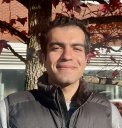
 Alireza Salemi
· 6 previous affiliations
- University of Massachusetts AmherstSince 2022
- Research Assistant · Since 2022
- Doctor of Philosophy - PhD, Computer Science · 2022
- Student Researcher · 2025
- Google DeepMind (United Kingdom)2024–2025
- Student Researcher · 2024–2025
- Data Science Intern · 2023
- Sotoon2021–2022
- Data Scientist · 2021–2022
- University of Tehran2017–2022
- Undergrad student · 2017–2022
Research Overview
Alireza Salemi focuses on natural language processing, information retrieval, and retrieval-augmented generation. His work explores how large language models can be personalized to individual users and enhanced through multi-agent architectures. Currently, he investigates long-term memory capabilities and context management to improve the reasoning and reliability of generative models over extended interactions.
Research Trajectory
Salemi’s research initially addresses the intersection of information retrieval and user-centric text generation, particularly focusing on the research direction of Scaling Personalization to Long-Term User History. A core challenge in this domain is enabling large language models (LLMs) to generate responses that align with an individual user's implicit preferences, background knowledge, and writing style without requiring computationally expensive fine-tuning.
To systematically measure how well models adapt to user-specific information needs—and to navigate related challenges in the area of Erasing Memorized Data from Large Language Models—he and his collaborators introduced LaMP-QA: A Benchmark for Personalized Long-form Question Answering. This work provides a foundational dataset covering diverse topics and demonstrates that incorporating user history via planning-based approaches significantly improves answer quality over generic models. Building on this evaluation framework, he developed ExPerT: Effective and Explainable Evaluation of Personalized Long-Form Text Generation. Because evaluating personalized text is notoriously difficult without the original user, ExPerT serves as an explainable reference-based evaluation system that extracts atomic aspects from text to assess alignment with a user's content preferences and stylistic nuances.
To improve the generation process itself, Salemi proposed Reasoning-Enhanced Self-Training for Long-Form Personalized Text Generation (REST-PG). This framework trains language models to explicitly generate reasoning paths over personal data before producing a final response. Further advancing inference-time personalization, he contributed to Pathways of Thoughts: Multi-Directional Thinking for Long-form Personalized Question Answering. This method models the reasoning process as a multi-directional decision tree, allowing the model to dynamically choose between reasoning, clarifying, and revising to better align with implicit user preferences.
As language models are increasingly deployed in complex, data-rich environments, Salemi's focus expanded to multi-agent architectures and the broader area of Aligning Retrieval with Language Model Utility. In the context of navigating massive, heterogeneous data lakes, he developed the LLM-based Multi-Agent Blackboard System for Information Discovery in Data Science. Inspired by classic AI blackboard architectures, this system replaces rigid command structures with a collaborative environment where specialized agents autonomously volunteer information. This approach significantly improves performance on complex data science problems and contributes to the area of Reducing Contextual Noise for Robust Reasoning. He applied similar multi-agent principles to retrieval-augmented generation, advancing work in the area of Fusion in Decoder for Large Scale Retrieval Augmentation, in CIIR@LiveRAG 2025: Optimizing Multi-Agent Retrieval Augmented Generation through Self-Training. This framework utilizes specialized agents for planning, searching, and reasoning, optimized through a self-training paradigm with reward-guided trajectory sampling to enhance inter-agent collaboration.
Most recently, Salemi has investigated how language models handle extended interactions, contributing to the research direction of Active Context Management for Long Horizon Agents. In Beyond a Million Tokens: Benchmarking and Enhancing Long-Term Memory in LLMs, he and his co-authors introduced BEAM, a massive benchmark for evaluating memory across coherent conversations up to 10 million tokens. To address the reasoning gaps observed in standard long-context models, they proposed LIGHT, a cognitive-inspired framework that integrates episodic retrieval, working memory, and a persistent scratchpad for salient facts.
Current Directions
Recent work investigates the cognitive architectures required to sustain reasoning over extremely long contexts. The most recent papers in the evidence address the limitations of standard "long-context" language models, which often degrade in performance as dialogues extend into millions of tokens. To solve this, Salemi is exploring structured memory systems that separate episodic retrieval, working memory, and persistent factual storage, allowing models to maintain coherence over extended horizons. Additionally, his ongoing research emphasizes multi-agent coordination for retrieval-augmented generation. By designing frameworks where specialized language models autonomously delegate tasks, plan searches, and share information, his work aims to build more robust and scalable systems for complex information discovery.
Profile updated
Loading new papers…
Other researchers whose papers cluster into the same research directions — a proxy for overlapping technical interests and shared intellectual neighborhoods.
See something wrong? Report a mistake