

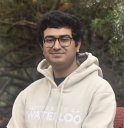
 Nandan Thakur
6 previous affiliations
- University of Waterloo2021–2026
- Graduate Researcher · 2021–2026
- Intern · 2024
- Vectara2024
- Intern · 2024
- Google (United States)2022–2023
- Student Researcher · 2022–2023
- Intern · 2022
- Technische Universität Darmstadt2019–2021
- NLP Research Assistant · 2019–2021
- B.E. (Hons.), Electronics and Instrumentation Engineering · 2014–2018
Research Overview
Nandan Thakur focuses on information retrieval, the construction of realistic evaluation benchmarks, and the standardization of retrieval-augmented generation (RAG) systems. His early work addressed zero-shot generalization and domain adaptation in dense retrieval models, as well as multilingual search capabilities. Currently, his research emphasizes automated relevance assessment and the development of high-fidelity, scalable evaluation protocols for large language models.
Research Trajectory
Thakur's early research focused on improving the training and evaluation of dense retrieval models. In 2021, he developed Augmented SBERT: Data Augmentation Method for Improving Bi-Encoders for Pairwise Sentence Scoring Tasks, which introduced data augmentation techniques to enhance bi-encoder performance. Recognizing the limitations of existing evaluation frameworks, he subsequently introduced BEIR: A Heterogeneous Benchmark for Zero-shot Evaluation of Information Retrieval Models. This comprehensive benchmark revealed that many neural information retrieval models struggled to generalize across diverse domains, highlighting the robust baseline performance of traditional algorithms like BM25. This work contributed to broader efforts in Scaling Transformers for Long Form Document Understanding and the research direction of Scalable Relevance Assessment for Information Retrieval Evaluation. Building on these insights, he proposed GPL: Generative Pseudo Labeling for Unsupervised Domain Adaptation of Dense Retrieval in 2022. By leveraging synthetic query generation and cross-encoder pseudo-labels, this unsupervised method adapted dense retrieval models to specialized domains without human-labeled data, advancing the area of Automated Data Synthesis with Large Language Models alongside techniques for Domain Adaptation through Synthetic Data Generation and Robust Zero-Shot Generalization for Neural Retrieval.
Expanding his focus to cross-lingual and specialized search contexts, Thakur collaborated on MIRACL: A Multilingual Retrieval Dataset Covering 18 Diverse Languages (2023). This large-scale resource provided over 726,000 relevance judgments across diverse language families, supporting monolingual retrieval tasks and advancing the broader area of Shared Semantic Spaces for Language Agnostic Retrieval. He continued to investigate the robustness of neural models in specialized domains with Systematic Evaluation of Neural Retrieval Models on the Touché 2020 Argument Retrieval Subset of BEIR (2024), analyzing why traditional lexical models often outperform neural architectures in argument retrieval, a challenge tied to The Unjudged Document Problem in Retrieval Evaluation. Addressing the intersection of multilingual search and generative models, he led the development of "Knowing When You Don't Know": A Multilingual Relevance Assessment Dataset for Robust Retrieval-Augmented Generation. This work introduced the NoMIRACL dataset to evaluate how large language models handle irrelevant search results, highlighting significant hallucination rates and contributing to methods for Reducing Contextual Noise for Robust Reasoning.
In his recent work, Thakur has concentrated heavily on the evaluation and refinement of Retrieval-Augmented Generation (RAG) systems, particularly through the research direction of Automated Relevance Assessment with Large Language Models. He built FreshStack: Building Realistic Benchmarks for Evaluating Retrieval on Technical Documents, a holistic framework that automatically constructs challenging evaluation datasets from fast-growing technical domains using a fusion of retrieval techniques, which touches upon the area of Adaptive Weighting for Heterogeneous Model Ensembles. To address the high costs of manual RAG assessment, he refactored traditional evaluation methodologies in The Great Nugget Recall: Automating Fact Extraction and RAG Evaluation with Large Language Models. This framework, AutoNuggetizer, extracts atomic facts to achieve high correlation with expert judgments, advancing Scalable Evaluation of Generative Models with LLM Judges and Closing the Granularity Gap in Automated Evaluation. He collaborated to extend this approach in Chatbot Arena Meets Nuggets: Towards Explanations and Diagnostics in the Evaluation of LLM Responses, breaking down responses to provide diagnostic transparency for side-by-side model comparisons, aiding in Mitigating Systematic Biases in LLM-as-a-Judge and Modular Error Attribution in Multi-stage Generative Pipelines.
Further standardizing these methodologies, Thakur evaluated the viability of frontier models as judges in Support Evaluation for the TREC 2024 RAG Track: Comparing Human versus LLM Judges. By demonstrating that AI-assisted post-editing aligns closely with independent human assessments, this work supported the creation of Hybrid Human-AI Pipelines for Scalable Reasoning Benchmarks and contributed to the broader area of Standardized Evaluation Protocols for Machine Learning Research. He also introduced MIRAGE-Bench: Automatic Multilingual Benchmark Arena for Retrieval-Augmented Generation Systems, which utilizes a lightweight surrogate judge trained on heuristic features to evaluate multilingual RAG systems cost-effectively, addressing Bridging the Linguistic Gap in Multilingual Models and Pairwise Evaluation Arenas for Generative Models. Finally, recognizing that dataset noise limits model performance, he designed Fixing Data That Hurts Performance: Cascading LLMs to Relabel Hard Negatives for Robust Information Retrieval. This RLHN framework employs a cascade of LLMs to identify and correct mislabeled examples, demonstrating that Automated Dataset Refinement with Large Language Models can yield significant performance gains while treating Data Quality as a Scaling Multiplier.
Current Directions
The most recent papers in the evidence address the scalable evaluation and data refinement of Retrieval-Augmented Generation (RAG) systems. Current work investigates the use of large language models as automated judges to assess relevance and factual support, replacing or augmenting expensive human annotation pipelines. This includes developing "nugget-based" frameworks that decompose generated responses into atomic facts for diagnostic transparency, as well as training lightweight surrogate models to evaluate multilingual RAG outputs cost-effectively. Additionally, recent research focuses on automated dataset refinement, utilizing cascading LLM architectures to identify and relabel hard negatives in massive information retrieval datasets, emphasizing data quality over sheer volume for robust model training.
Profile updated
Loading new papers…
Other researchers whose papers cluster into the same research directions — a proxy for overlapping technical interests and shared intellectual neighborhoods.
See something wrong? Report a mistake