

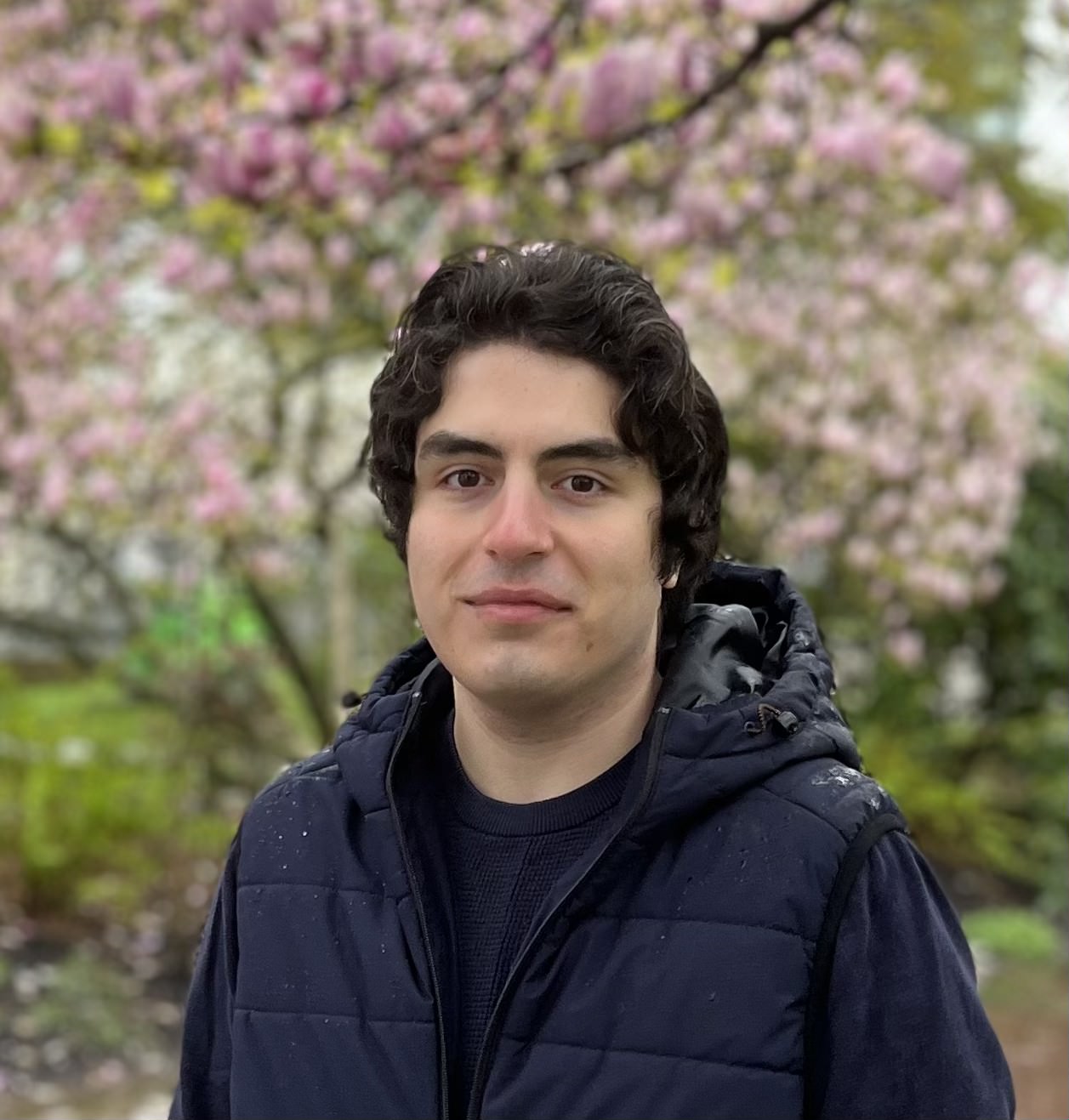
 Ali Behrouz
· 6 previous affiliations
- Google (United States)Since 2024
- Staff Research Scientist · Since 2026
- Current
- Research Intern · 2024–2026
- Intern · From 2024
- Cornell UniversitySince 2023
- Doctor of Philosophy - PhD, Computer Science · 2023–2027
- Current
- Graduate Research Assistant · 2024
- Research Fellowship · 2023–2024
- Cornell TechSince 2023
- PhD student · 2023–2027
- University of British Columbia2020–2023
- Teaching Assistant · 2021–2023
- Master of Science - MSc, Computer Science · 2020–2023
- Sharif University of Technology2015–2020
- Teaching Assistant · 2015–2020
- Summer Research Intern · 2019
Research Overview
Ali Behrouz focuses on deep learning architectures, graph machine learning, and computational neuroscience. His early work addressed scalable community detection in multilayer networks and the analysis of dynamic brain connectomes. More recently, his research investigates sub-quadratic sequence modeling and state space models, developing efficient memory mechanisms to overcome the computational bottlenecks of standard attention architectures.
Research Trajectory
The early trajectory of this research focused on graph mining and the structural analysis of complex networks. In 2022, work in this domain yielded FirmCore Decomposition of Multilayer Networks, which introduced a flexible framework for identifying dense communities. By relaxing the requirement that nodes be well-connected across all layers, this approach significantly accelerated the analysis of massive networks. This was complemented by FirmTruss Community Search in Multilayer Networks, an algorithm designed to find personalized, cohesive communities that maintain high density while minimizing network diameter.
In 2023, the focus expanded to computational neuroscience, specifically engaging with the area of Overcoming Temporal Averaging Bias in Functional Brain Networks. The publication of Learning Temporal Higher-order Patterns to Detect Anomalous Brain Activity addressed critical limitations in traditional pairwise interaction models. By capturing higher-order dependencies within functional brain networks, this work provided a more robust mechanism for identifying anomalous neurological patterns.
By 2024, the research shifted toward the structural efficiency of deep learning models, particularly advancing the research direction of Selective State Space Models for Linear Complexity Sequence Modeling. In MambaMixer: Efficient Selective State Space Models with Dual Token and Channel Selection, a dual selection mechanism was designed to mix information across both tokens and channels, achieving Transformer-level performance on vision and time-series tasks while maintaining linear computational complexity. This architectural paradigm was subsequently adapted for graph topologies in Graph Mamba: Towards Learning on Graphs with State Space Models. Utilizing a bidirectional selective scan and a novel neighborhood tokenization strategy, this model mitigated the over-squashing issues typical of traditional graph neural networks without incurring the quadratic costs of graph transformers. Concurrently, Chimera: Effectively Modeling Multivariate Time Series with 2-Dimensional State Space Models introduced a 2D state space model capable of simultaneously capturing dependencies across time and distinct variables for forecasting and classification tasks.
In 2025, the work increasingly targeted the broader area of Sub-Quadratic Sequence Modeling for Long Contexts and the field of Overcoming the Quadratic Bottleneck in Self Attention. A major contribution was Titans: Learning to Memorize at Test Time, which proposed treating attention as short-term memory while utilizing a dynamic neural network as long-term memory. By employing a gradient-based surprise metric to update weights during inference, the architecture effectively memorizes massive contexts. To make the training of these dynamic memory modules computationally viable, TNT: Improving Chunkwise Training for Test-Time Memorization resolved the inefficiencies associated with frequent updates on small data segments.
This test-time memorization approach was also applied to time series analysis in Leto: Modeling Multivariate Time Series with Memorizing at Test Time, which combined in-context memory with cross-variate attention to handle non-stationary environments. Exploring the theoretical and structural design of these systems, Nested Learning: The Illusion of Deep Learning Architectures analyzed hierarchical search spaces and dynamic memory orchestration. Additionally, Best of Both Worlds: Advantages of Hybrid Graph Sequence Models bridged graph and sequence paradigms by introducing a hierarchical affinity clustering tokenization strategy, combining the linear efficiency of state space models with global reasoning capabilities.
Most recently, in 2026, the research has focused heavily on the challenge of The Memory Bottleneck of Fixed-Size Recurrent States. Memory Caching: RNNs with Growing Memory introduced a technique allowing recurrent neural networks to cache checkpoints of their hidden states, enabling model capacity to scale with sequence length. This conceptual framework was expanded in It's All Connected: A Journey Through Test-Time Memorization, Attentional Bias, Retention, and Online Optimization, which reinterpreted sequence models as associative memory modules performing online optimization, yielding new architectures optimized for long-context retrieval. Building on these foundations, ATLAS: Learning to Optimally Memorize the Context at Test Time deployed a sliding-window update rule and second-order optimization to allow recurrent models to memorize context at scales of up to 10 million tokens.
Current Directions
The most recent papers in the evidence address the fundamental limitations of sequence modeling, specifically focusing on scaling recurrent neural networks and state space models to handle ultra-long contexts. Recent work investigates dynamic memory architectures that update their internal weights at test time, allowing models to memorize and retrieve information without the quadratic computational costs of standard attention mechanisms. This includes developing sliding-window update rules, memory caching techniques, and hybrid frameworks that combine the efficiency of linear models with the global reasoning capabilities of Transformers. By framing sequence modeling as an online optimization problem, these current directions aim to build high-capacity, sub-quadratic architectures capable of processing millions of tokens across both natural language and multivariate time series domains.
Profile updated
Loading new papers…
Other researchers whose papers cluster into the same research directions — a proxy for overlapping technical interests and shared intellectual neighborhoods.
See something wrong? Report a mistake