

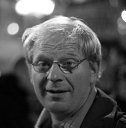
 Alexei A Efros
· 6 previous affiliations
- International Computer Science InstituteSince 2017
- Professor · Since 2017
- Graduate Student · 1997–2003
- University of California, BerkeleySince 2013
- Professor · Since 2017
- Associate Professor · 2013–2017
- Doctor of Philosophy (Ph.D.), Computer Science · 1997–2003
- Carnegie Mellon University2004–2013
- Associate Professor · 2009–2013
- Assistant Professor · 2004–2009
- Visiting Scientist · 2009
- University of Oxford2003–2004
- Postdoctoral Fellow · 2003–2004
- University of Utah1993–1997
- Undergrad student · 1993–1997
Research Overview
Alexei A Efros focuses on computer vision, generative image synthesis, and self-supervised visual representation learning. His trajectory spans early work in non-parametric texture synthesis to the development of prominent frameworks for image-to-image translation and visual correspondence. Recently, his research investigates test-time adaptation, visual prompting, and novel generative architectures that overcome the latency of iterative diffusion models.
Research Trajectory
The early work of Efros centered on fundamental problems in image generation and texture modeling. He introduced a non-parametric method for texture generation in Texture Synthesis by Non-parametric Sampling (1999), utilizing Markov random fields to grow images pixel by pixel while preserving local structural coherence.
In the following years, his focus expanded to scene understanding and the critical evaluation of computer vision methodologies. With collaborators, he explored the extraction of 3D geometric structure from cluttered natural scenes by learning appearance-based models of geometric classes in Geometric Context from a Single Image (2005). Later, he participated in a systematic analysis of object recognition benchmarks in Unbiased look at dataset bias (2011), highlighting how standard datasets often function as closed worlds rather than representative samples of visual reality.
As deep learning transformed computer vision, his group began investigating self-supervised learning to scale visual perception without manual annotation. In Unsupervised Visual Representation Learning by Context Prediction (2015), his lab demonstrated that predicting the relative spatial positions of image patches could serve as a powerful supervisory signal for learning object representations. This interest in automatic visual learning extended to Colorful Image Colorization (2016), where color hallucination from grayscale images was framed as a classification task, utilizing class-rebalancing to produce vibrant, realistic outputs without human intervention.
Between 2016 and 2017, his research heavily emphasized generative adversarial networks (GANs) and image-to-image translation. He guided work on constraining image edits to a learned natural image manifold in Generative Visual Manipulation on the Natural Image Manifold (2016), contributing to the research direction of Deterministic Latent Inversion for Semantic Manipulation. This generative focus expanded significantly when his lab oversaw the development of conditional adversarial networks for paired translation tasks in Image-to-Image Translation with Conditional Adversarial Networks (2017). Addressing the limitation of requiring paired training data, his group subsequently introduced a cycle consistency loss to enable unpaired translation in Unpaired Image-to-Image Translation Using Cycle-Consistent Adversarial Networks (2017), allowing models to map between visual domains using distinct, unaligned image sets.
Investigating how deep networks perceive images, he participated in evaluating deep features against human judgments in The Unreasonable Effectiveness of Deep Features as a Perceptual Metric (2018), which demonstrated the utility of classification networks for perceptual quality assessment. In the video domain, he led research on motion transfer, using pose as an intermediate representation to map performances between subjects and ensure temporal consistency in Everybody Dance Now (2019). He also returned to self-supervision, utilizing temporal cycle-consistency in unlabeled video to learn visual correspondence for tracking and segmentation in Learning Correspondence From the Cycle-Consistency of Time. (2019).
His recent trajectory explores flexible model adaptation, in-context learning, and mid-level scene representations. He directed research on adapting pre-trained models via Visual Prompting via Image Inpainting (2022), treating novel task adaptation as a hole-filling problem using masked autoencoders. In parallel, he investigated test-time adaptation to distribution shifts using self-supervision in Test-Time Training with Masked Autoencoders (2022). He also explored unsupervised scene modeling, proposing a spatially disentangled representation using depth-ordered feature blobs in BlobGAN: Spatially Disentangled Scene Representations (2022). Continuing his work on generative architectures, his group recently proposed the Idempotent Generative Network (2024), a model designed to balance the single-step generation capabilities of GANs with the high sample quality of diffusion models, avoiding the latter's iterative inference latency.
Current Directions
The most recent work in the evidence addresses the efficiency, flexibility, and latency bottlenecks of generative visual models. A primary focus is on developing unified generalist architectures and overcoming the iterative inference latency inherent to diffusion models, aiming for high-quality, single-step image synthesis. Additionally, recent themes emphasize test-time adaptation and visual in-context learning, exploring how masked autoencoders and inpainting techniques can adapt pre-trained models to novel distributions and tasks on the fly without task-specific finetuning. Unsupervised scene decomposition also remains an active area, utilizing spatially disentangled representations to improve occlusion reasoning and attribute control in generative models.
Profile updated
Loading new papers…
Other researchers whose papers cluster into the same research directions — a proxy for overlapping technical interests and shared intellectual neighborhoods.
See something wrong? Report a mistake