

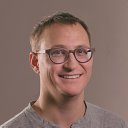
 Alexandre Gramfort
· 7 previous affiliations
- Ingénieur des Mines · Since 2006
- Meta (United States)Since 2022
- AI/ML Research Scientist · Since 2022
- Current
- Full Professor · 2017–2022
- Télécom Paris2006–2017
- Assistant Professor · 2012–2017
- PhD, Signal and Image Processing · 2006–2009
- Institut Mines-Télécom2012–2017
- Assistant Professor · 2012–2017
- Scientific Consultant · 2012–2017
- École Polytechnique2001–2005
- BS, Applied Maths, Computer Science · 2001–2005
Research Overview
Alexandre Gramfort focuses on statistical machine learning, signal processing, and optimization, with primary applications in neuroscience and biosignal analysis. His trajectory spans foundational work in sparse learning and independent component analysis to recent advancements in domain adaptation for electroencephalography. Currently, he investigates optimal transport and temporal normalization to improve cross-subject generalization in predictive models.
Research Trajectory
In his academic and industrial roles, including his position as a senior research scientist manager at Meta Reality Labs and his prior work as a research director at Inria, Gramfort's broader research portfolio encompasses foundational contributions to the area of Spatially Constrained Sparse Learning for Neuroimaging. He has also driven algorithmic improvements in the research direction of Dynamic Safe Screening for Sparse Optimization and the related area of Safe Screening and Working Sets for Sparse Optimization. His work explores Subsampled and Sketched Newton Methods for scalable learning, alongside neuroscientific investigations in the area of Capturing Non-Sinusoidal Morphology in Brain Rhythms and the broader direction of Neural Alignment Between Large Language Models and the Human Brain.
Beginning in 2023, Gramfort and his collaborators addressed the significant challenge of cross-subject and cross-device variability in biosignals. He introduced Convolutional Monge Mapping Normalization (CMMN) in Convolutional Monge Mapping Normalization for learning on biosignals. This technique adapts the power spectrum density of signals to a Wasserstein barycenter estimated on training data. A closely related publication, Convolution Monge Mapping Normalization for learning on sleep data, demonstrated how this closed-form optimal transport technique boosts sleep-staging model accuracy at test time without retraining.
Concurrently, his group advanced blind source separation techniques by developing MultiView Independent Component Analysis with Delays (MVICAD). Detailed in an initial preprint, MultiView Independent Component Analysis with Delays, and subsequently published at MLSP as Multiview Independent Component Analysis with Delays, this framework extends traditional ICA by allowing latent sources to be shared across different views (such as different subjects) up to unknown, view-specific temporal latencies.
In 2024, Gramfort continued to tackle domain adaptation for heterogeneous sensor data. He guided the development of Spatio-Temporal Monge Alignment (STMA), presented in Multi-Source and Test-Time Domain Adaptation on Multivariate Signals using Spatio-Temporal Monge Alignment and its companion report Multi-Source and Test-Time Domain Adaptation on Multivariate Signals using Spatio-Temporal Monge Alignment. STMA maps the cross-power spectrum density of multivariate signals to a Wasserstein barycenter, enabling robust multi-source domain adaptation. Further addressing heterogeneous EEG datasets, he contributed to Physics-informed and Unsupervised Riemannian Domain Adaptation for Machine Learning on Heterogeneous EEG Datasets, which utilizes field interpolation to map varying EEG channels to fixed anatomical positions. Additionally, he developed Mixing model Stiefel Adaptation (MSA) in Weakly supervised covariance matrices alignment through Stiefel matrices estimation for MEG applications, a technique that leverages unlabeled target data and Stiefel matrices to align signal covariances in a Riemannian framework.
In 2025, the MVICAD framework was expanded in MVICAD2: Multi-View Independent Component Analysis with Delays and Dilations. This unsupervised learning approach accounts for both temporal shifts and dilations (stretching or compressing of signals) across different views, improving the recovery of shared brain activity. That same year, Gramfort participated in a large-scale community effort, the EEG Foundation Challenge: From Cross-Task to Cross-Subject EEG Decoding, which provided a massive dataset to spur the development of foundation models capable of zero-shot task transfer for brain-computer interfaces.
By 2026, his research into signal normalization culminated in PSDNorm: Temporal Normalization for Deep Learning in Sleep Staging. Presented at ICLR, PSDNorm is a deep learning layer that aligns feature maps to a running average power spectrum using optimal transport, yielding highly data-efficient sleep staging. He also collaborated on Multi-View Causal Discovery without Non-Gaussianity: Identifiability and Algorithms, which introduced the Linear Multi-View Acyclic Model (LiMVAM) to identify causal directions in linear, Gaussian data by leveraging cross-view correlations.
Current Directions
The most recent papers in the evidence address the creation of robust, scalable machine learning architectures specifically designed for the complexities of physiological time series. A primary focus is the development of specialized neural network layers, such as temporal normalization techniques that account for auto-correlations and spectral content to improve data efficiency in tasks like sleep staging.
Additionally, recent work investigates advanced multi-view learning frameworks. By modeling biological variations—such as temporal delays and dilations across different subjects—these unsupervised methods aim to better isolate shared latent sources and identify causal relationships in multi-view data without relying on strict non-Gaussian assumptions. Finally, Gramfort is involved in community-wide efforts to transition brain-computer interfacing toward foundation models capable of zero-shot generalization across diverse tasks and subjects.
Profile updated
Loading new papers…
Other researchers whose papers cluster into the same research directions — a proxy for overlapping technical interests and shared intellectual neighborhoods.
See something wrong? Report a mistake