

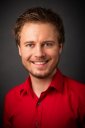
 Alexander Ziller
· 4 previous affiliations
- Technical University of MunichSince 2014
- Postdoctoral Scientist · Since 2025
- Promotion · 2020–2024
- Master, Robotics, Cognition & Intelligence · 2017–2019
- Undergrad student · 2014–2017
- OpenMined2020–2021
- Research Scientist · 2020–2021
- Student exchange, Computer Science · 2017
- BMW Group (Germany)2010–2013
- KFZ-Mechatroniker (Fachrichtung: Kommunikationstechnik) · 2010–2013
Research Overview
Alexander Ziller focuses on privacy-preserving machine learning, differential privacy in deep learning architectures, and secure medical image analysis. His trajectory spans the development of federated learning frameworks for clinical data to foundational improvements in differentially private neural network design. Recently, his work investigates empirical privacy auditing and the evaluation of synthetic data generation to reconcile theoretical privacy guarantees with practical utility.
Research Trajectory
Alexander Ziller’s early research concentrated on establishing secure frameworks for medical imaging. In 2020, he introduced PriMIA in Privacy-preserving medical image analysis, advancing the area of Mitigating the Computational Overhead of Encrypted Machine Learning. This software framework enabled secure federated learning and encrypted inference for clinical tasks, demonstrating performance competitive with non-private methods. He further validated this open-source framework in a remote inference scenario with End-to-end privacy preserving deep learning on multi-institutional medical imaging. Shifting toward the underlying mechanics of differential privacy (DP), he developed the Tritium framework in An automatic differentiation system for the age of differential privacy. By treating sensitivity analysis as a global optimization problem over a computational graph, this work tightened privacy bounds and accelerated computation, contributing to the direction of Optimizing Dynamic Computational Graphs for Machine Learning.
In 2022, his focus expanded to encompass both theoretical privacy definitions and structural adaptations for DP in neural networks. He formulated an axiomatic definition of privacy based on quantifiable information flows in Privacy: An Axiomatic Approach, synthesizing social science concepts with contemporary privacy-enhancing technologies. He also extended DP to complex-valued functions, introducing the complex Gaussian mechanism in Complex-valued deep learning with differential privacy. Crucially, he began addressing the severe accuracy drops typically associated with DP training by rethinking neural network architectures, a core focus in the area of Neural Architecture Design for Differential Privacy. In Differentially private training of residual networks with scale normalisation, he introduced ScaleNorm, an architectural modification that fixes scale mixing in ResNets, advancing the broader direction of Normalization Strategies for Differentially Private Deep Learning. He continued this architectural optimization with SmoothNets: Optimizing CNN architecture design for differentially private deep learning, demonstrating that favoring network width over depth and dense connections over simple residuals significantly improves robustness to gradient noise.
Returning to clinical applications in 2023, he participated in developing lightweight frameworks for volumetric data in Explainable 2D Vision Models for 3D Medical Data, which adapted pre-trained 2D models using an attention-pooling mechanism to process 3D medical images efficiently. Concurrently, he tackled the "utility tax" of Differentially Private Stochastic Gradient Descent (DP-SGD). He collaborated on Bias-Aware Minimisation: Understanding and Mitigating Estimator Bias in Private SGD, contributing to the area of Mitigating Gradient Clipping Bias in Differentially Private Learning. He then demonstrated that large-scale medical models could be trained privately without catastrophic accuracy loss in Private, fair and accurate: Training large-scale, privacy-preserving AI models in radiology, leveraging transfer learning and techniques from the direction of Independent Normalization for Private Deep Learning. He also began challenging worst-case privacy assumptions, showing in Reconciling AI Performance and Data Reconstruction Resilience for Medical Imaging that realistic threat models allow for larger privacy budgets that still effectively block reconstruction attacks.
This theme of reconciling privacy and utility matured throughout 2024. He provided formal upper bounds on reconstruction success under realistic adversarial settings in Bounding Reconstruction Attack Success of Adversaries Without Data Priors. He further expanded on the tension between patient privacy and model performance in Reconciling privacy and accuracy in AI for medical imaging, re-evaluating the threat models used to define privacy in medical AI. To ensure these privacy techniques did not amplify demographic biases, he evaluated models on massive clinical datasets in Preserving fairness and diagnostic accuracy in private large-scale AI models for medical imaging, confirming that while difficult diagnoses are sensitive to privacy constraints, overall fairness can be maintained.
Most recently, in 2025, his research has focused on auditing privacy mechanisms, evaluating synthetic data, and addressing model reliability. He participated in analyzing predictive multiplicity in high-stakes medical AI in On Arbitrary Predictions from Equally Valid Models, showing how small ensembles and abstention strategies can mitigate arbitrary predictions. His work introduced a novel auditing method in Visual Privacy Auditing with Diffusion Models, using diffusion models to reconstruct training images from noisy gradients to visualize actual data leakage risks. Finally, he rigorously evaluated post-hoc privacy filters for synthetic medical images in Sensitivity, Specificity, and Consistency: A Tripartite Evaluation of Privacy Filters for Synthetic Data Generation, revealing significant unreliability in current tools designed to prevent synthetic data from mimicking real patients.
Current Directions
Recent work investigates the practical auditing of privacy mechanisms and the reliability of machine learning models in clinical settings. The most recent papers in the evidence address the gap between mathematical privacy bounds and actual data leakage by employing diffusion models to visually audit privacy risks. Additionally, this research evaluates the efficacy of post-hoc privacy filters for synthetic data generation, highlighting vulnerabilities in current methods for protecting patient identities. Alongside privacy, current efforts also explore predictive multiplicity in medical AI, developing ensemble and abstention strategies to prevent arbitrary diagnostic predictions from equally valid models.
Profile updated
| Paper | Venue | Year |
|---|---|---|
| Preserving fairness and diagnostic accuracy in private large-scale AI models for medical imagingGitHubtayebiarasteh/ | Communications | 2024 |
Loading new papers…
Other researchers whose papers cluster into the same research directions — a proxy for overlapping technical interests and shared intellectual neighborhoods.
See something wrong? Report a mistake