

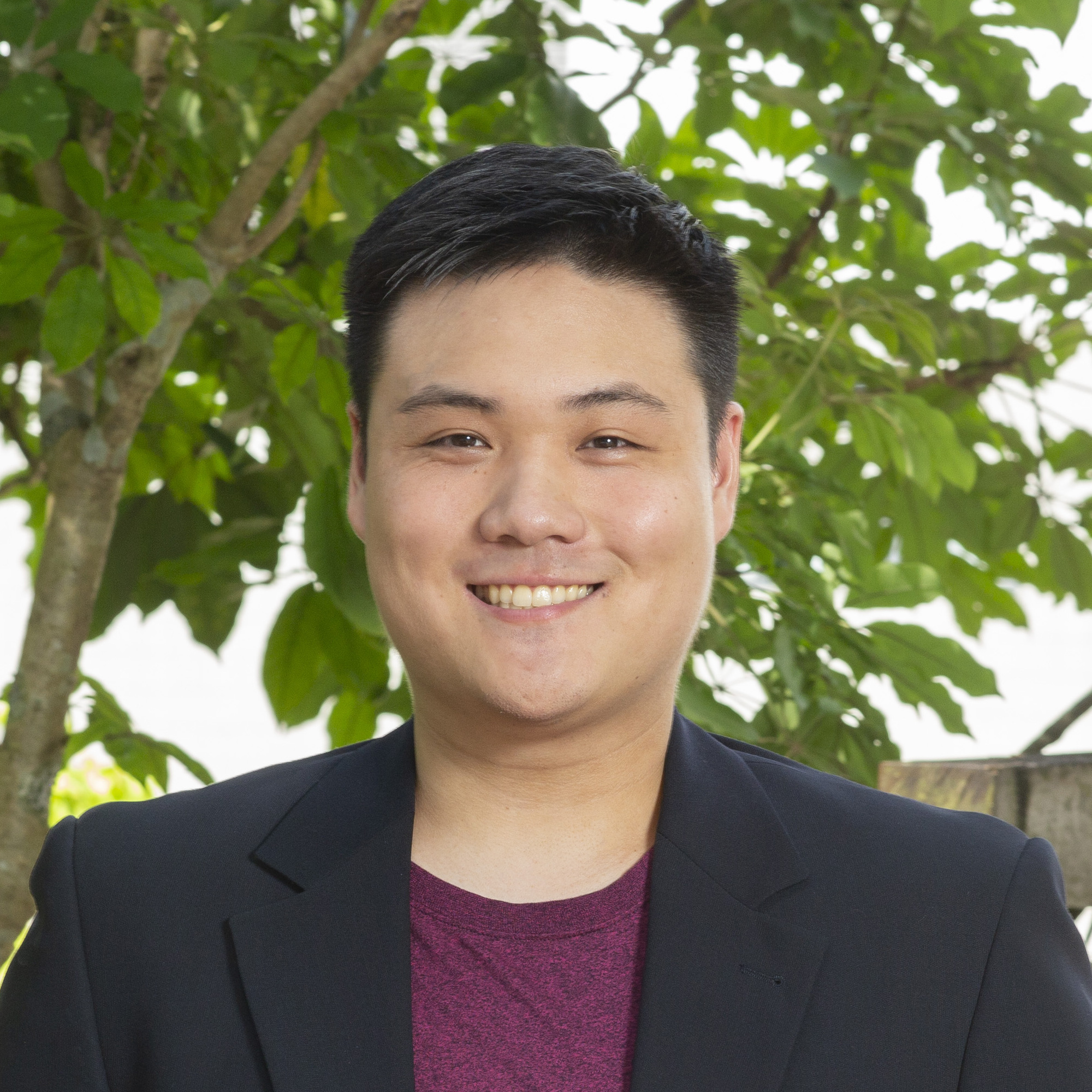
 Alexander Zhou
· 3 previous affiliations
- Hong Kong Polytechnic UniversitySince 2024
- Assistant Professor · Since 2024
- PhD student · 2019–2024
- The University of Queensland2014–2019
- Undergrad student · 2014–2019
Research Overview
Alexander Zhou focuses on graph mining, network community discovery, and graph representation learning. His early work developed scalable algorithms for identifying cohesive structures like cliques, trusses, and butterflies in complex, uncertain, and dynamic networks. More recently, his research has expanded to include the rigorous evaluation of graph neural networks and multi-agent reinforcement learning frameworks.
Research Trajectory
Alexander Zhou’s research trajectory begins with a strong focus on structural graph mining and community detection, progressively expanding to accommodate complex network topologies such as bipartite, uncertain, dynamic, and signed graphs. His early work addressed the identification of cohesive subgraphs. He introduced methods for Finding Maximal Stable Cores in Social Networks (2018), establishing a foundation in structural network analysis. During this period, he also collaborated on approaches for handling continuous, high-velocity data in Streaming Session-based Recommendation (2019), which utilized attention mechanisms to model user intent in streaming scenarios. Returning to core graph structures, he developed algorithms for Finding Large Diverse Communities on Networks: The Edge Maximum k*-Partite Clique (2020), contributing to the broader research direction of Scalable Optimization for Network Community Discovery.
Between 2021 and 2023, Zhou extensively investigated bipartite networks, particularly focusing on fundamental graphlets like butterflies and bicliques. He proposed techniques for Butterfly Counting on Uncertain Bipartite Networks (2021) and later expanded this research in Butterfly counting and bitruss decomposition on uncertain bipartite graphs (2023). In the latter, he introduced exact baselines alongside sampling frameworks to efficiently estimate uncertain butterfly structures across entire networks. In parallel, his research group developed methods for Efficient Personalized Maximum Biclique Search (2022), while he also contributed to collaborative efforts on Towards Distributed Bitruss Decomposition on Bipartite Graphs (2022).
As his work evolved, Zhou began addressing the challenges of dynamic and signed networks. He co-developed incremental algorithms and a novel D-Index structure for Maximal D-truss Search in Dynamic Directed Graphs (2023), enabling the efficient maintenance of cohesive communities in constantly changing environments. He also investigated structural balance in networks with both positive and negative edges, contributing to Maximum Balanced (k, ε)-Bitruss Detection in Signed Bipartite Graph (2023). This interest in signed networks culminated in Positive Communities on Signed Graphs That Are Not Echo Chambers: A Clique-Based Approach (2024), where he designed community detection methods that specifically avoid isolating users in homogeneous "echo chambers," balancing the need for positive connections with structural diversity.
In 2024, Zhou also advanced the study of temporal graphs, collaborating on an Efficient Index for Temporal Core Queries over Bipartite Graphs. This work introduced a DAG-like hierarchy to precisely capture the temporal containment of core structures, significantly improving query times and reducing space complexity.
Most recently, Zhou's trajectory has broadened to include representation learning and multi-agent systems. He participated in a comprehensive evaluation of graph-level tasks in Revisiting Graph Neural Networks on Graph-level Tasks: Comprehensive Experiments, Analysis, and Improvements (2025). This research proposed a unified evaluation framework to address inconsistencies in benchmarking, intersecting with research areas such as Learning on Graphs with Scarce Labels and Self-Supervised Pre-training for Graph Neural Networks. In 2026, he contributed to MARS-SQL: A Multi-Agent Reinforcement Learning Framework For Text-To-SQL, a project that frames database querying as an interactive dialogue, aligning with the broader area of Reinforcement Learning for Sample Efficient Reasoning.
Current Directions
The most recent papers in the evidence indicate a shift in Zhou's research toward the evaluation and application of advanced machine learning models, particularly Graph Neural Networks (GNNs) and reinforcement learning systems. Recent work investigates the standardization of GNN evaluations for graph-level tasks, aiming to improve the generalizability and reliability of models used for molecular property prediction and subgraph counting. Additionally, his recent collaborative efforts address complex reasoning tasks, such as Text-to-SQL translation, by employing multi-agent reinforcement learning frameworks that learn from execution feedback rather than relying solely on one-shot translation.
Profile updated
Loading new papers…
Other researchers whose papers cluster into the same research directions — a proxy for overlapping technical interests and shared intellectual neighborhoods.
See something wrong? Report a mistake