

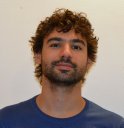
 Alessandro Benfenati
1 previous affiliation
- University of Milan2023–2026
- Assistant Professor · 2023–2026
Research Overview
Alessandro Benfenati focuses on mathematical modeling and optimization for inverse problems, particularly in image restoration and medical imaging. His trajectory spans from early work in kinetic theory and non-Euclidean optimization to the integration of deep learning priors into variational frameworks. Currently, he investigates the singular Riemannian geometry of deep neural networks and develops automated regularization techniques for complex imaging tasks.
Research Trajectory
Alessandro Benfenati’s early research explored the mathematical modeling of complex systems before transitioning into optimization and inverse problems. His initial work included Nonlinear microscale interactions in the kinetic theory of active particles (2013), which examined how nonlinearities emerge in proliferative-destructive processes within living and social systems. Shortly thereafter, his focus shifted toward computational imaging and the mathematical challenges of restoring data corrupted by noise. In 2015, he investigated parameter estimation techniques for regularized inversion, detailing a discrepancy principle for Kullback–Leibler divergence in Numerical Methods for Parameter Estimation in Poisson Data Inversion. That same year, he addressed the specific challenge of high-contrast astronomical imaging in Inexact Bregman iteration for deconvolution of superimposed extended and point sources, proposing a Tikhonov-like regularization approach to separate bright point sources from diffuse background structures.
Building on these foundational optimization techniques, Benfenati developed new algorithmic frameworks for non-smooth, constrained convex optimization. In Scaling Techniques for ε-Subgradient Methods (2016), he introduced a variable metric framework that combined dynamic scaling matrices with adaptive stepsize strategies, demonstrating significant computational speedups for tasks like image deblurring. This work contributed to the broader area of Geometry Aware Optimization via Relative Smoothness.
In the early 2020s, Benfenati began integrating deep learning into his applied imaging research, particularly in the agricultural and environmental domains. With collaborators, he explored automated disease detection in Unsupervised deep learning techniques for powdery mildew recognition based on multispectral imaging (2021), advancing the research direction of Integrating Non-Visible Spectral Bands for Robust Visual Representations. To address the scarcity of annotated agricultural data, he participated in developing a "Leaf-to-Leaf" generative framework in A deep learning generative model approach for image synthesis of plant leaves (2022). By combining a Residual Variational Autoencoder with a conditional GAN, this system synthesized highly realistic training data, aligning with the area of Generative Synthesis for Structural and Anatomical Data Augmentation.
Beginning in 2023, Benfenati initiated a major theoretical arc aimed at understanding the internal mechanics of deep learning models through the lens of differential geometry. This effort established his focus on the research direction of Singular Riemannian Geometry of Deep Neural Networks. The foundation of this framework was laid in A singular Riemannian geometry approach to Deep Neural Networks I. Theoretical foundations (2023), which modeled neural networks as sequences of smooth maps between manifolds and investigated the degenerate metrics induced by pull-backs. He immediately expanded on this by developing algorithms to reconstruct and navigate sets of inputs that map to the same output, detailed in A singular Riemannian geometry approach to deep neural networks II. Reconstruction of 1-D equivalence classes (2023). The framework was subsequently extended to handle modern architectures like convolutional and residual networks in A singular Riemannian Geometry Approach to Deep Neural Networks III. Piecewise Differentiable Layers and Random Walks on-dimensional Classes (2024). Most recently, this geometric approach was applied to attention mechanisms in Unveiling Transformer Perception by Exploring Input Manifolds (2025), introducing algorithms to systematically navigate the input space of Transformers based on their perceived equivalence classes.
In parallel with his theoretical work on network geometry, Benfenati has continued to advance the state of the art in inverse problems by fusing classical variational methods with modern deep priors. In the medical domain, he addressed severely ill-conditioned reconstruction challenges in A Modular Deep Learning-based Approach for Diffuse Optical Tomography Reconstruction (2024). A central theme of his recent work is the elimination of manual parameter tuning in image restoration, contributing significantly to the area of Automated Regularization Tuning for Inverse Problems. He reformulated the traditional Plug-and-Play framework as a constrained optimization problem in Constrained Plug-and-Play Priors for Image Restoration (2024), linking regularization strength directly to estimated noise levels. He applied a similar constrained approach to the Regularization by Denoising (RED) algorithm in Constrained Regularization by Denoising With Automatic Parameter Selection (2024).
His recent publications reflect a mature synthesis of model-based and learning-based techniques, a transition he contextualized in the overview paper Variational Image Regularisation in the Era of Deep Learning: From Model-Based to Deep Priors and Back (2025). Returning to the challenges of non-Gaussian noise, he introduced a fast, closed-form variable-splitting framework in Plug and Play Splitting Techniques for Poisson Image Restoration (2025). He has also addressed the practical limitations of unsupervised deep priors; in Early stopping strategies in Deep Image Prior (2025), he developed a neural architecture search approach and a custom no-reference metric to prevent the semi-convergence issues typical of DIP methods. Further pushing the boundaries of generative priors, he collaborated on RELD: Regularization by Latent Diffusion Models for Image Restoration (2025), which integrates latent diffusion models into variational optimization loops to achieve high perceptual quality at reduced computational costs.
Current Directions
Based on his most recent work, Benfenati’s current research is driven by two primary themes. The first is the geometric interpretability of deep neural networks. By modeling networks as mappings between Riemannian manifolds, he is developing rigorous mathematical tools to understand how complex architectures—including CNNs, ResNets, and Transformers—perceive their input spaces. This involves computing equivalence classes to determine which distinct inputs a model treats identically, offering a novel pathway for analyzing model robustness and decision boundaries.
The second major direction focuses on hybrid frameworks for inverse problems that combine the physical guarantees of variational optimization with the expressive power of deep generative models. Recent papers investigate constrained formulations of Plug-and-Play and Regularization by Denoising (RED) algorithms that automatically tune regularization parameters based on physical noise levels. Additionally, he is exploring the use of advanced generative models, such as Latent Diffusion Models and Deep Image Priors, within these optimization loops, developing strategies like early stopping metrics and latent-space optimization to make these powerful priors computationally efficient and mathematically stable for tasks like Poisson image restoration and Diffuse Optical Tomography.
Profile updated
| Title | Venue | Year |
|---|---|---|
| A Relaxed Gradient Step Denoiser for Splitting Methods in Poisson Inverse Problems | arXiv | 2026 |
| RELD: Regularization by Latent Denoising | IEEE Signal Processing Letters | 2026 |
| Plug and Play Splitting Techniques for Poisson Image Restoration | J. Math. Imaging Vis | 2025 |
| Unsupervised noisy image segmentation using Deep Image Prior | Mathematics | 2025 |
| Learnable Priors Support Reconstruction in Diffuse Optical Tomography | Photonics | 2025 |
| A Modular Deep Learning-based Approach for Diffuse Optical Tomography Reconstruction | Numerical | 2025 |
| Variational Image Regularisation in the Era of Deep Learning: From Model-Based to Deep Priors and Back | J. Math. Imaging Vis | 2025 |
| Unveiling Transformer Perception by Exploring Input Manifolds | NeurIPS | 2025 |
| Early stopping strategies in Deep Image Prior | Soft Comput | 2025 |
| RELD: Regularization by Latent Diffusion Models for Image Restoration | arXiv | 2025 |
Loading new papers…
Other researchers whose papers cluster into the same research directions — a proxy for overlapping technical interests and shared intellectual neighborhoods.
See something wrong? Report a mistake