

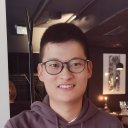
 Xiuheng Wang
· 4 previous affiliations
- South China University of TechnologySince 2026
- Associate Professor · Since 2026
- Université de Lorraine2024–2026
- Postdoc · 2024–2026
- Université Côte d'Azur2021–2024
- PhD student · 2021–2024
- MS student · 2018–2021
- Undergrad student · 2014–2018
Research Overview
Xiuheng Wang focuses on statistical signal processing, hyperspectral imaging, and optimization on Riemannian manifolds. His early work developed hybrid physics-based and data-driven models for image restoration and spectral unmixing. More recently, his research investigates distributed optimization and change point detection in non-Euclidean spaces, addressing complex parameter estimation problems in dynamic environments.
Research Trajectory
Wang’s early research concentrated on hyperspectral image (HSI) processing, exploring ways to enhance spatial resolution and separate mixed pixels into component materials. In 2020, he contributed to the Reconstruction of Hyperspectral Data From RGB Images With Prior Category Information, utilizing categorical priors to guide the recovery of spectral data. He subsequently addressed spectral unmixing by participating in the development of A Plug-and-Play Priors Framework for Hyperspectral Unmixing, which integrated flexible regularizers to improve unmixing performance. Advancing this methodology, he introduced a two-stream neural network approach in Hyperspectral Image Super-Resolution via Deep Prior Regularization With Parameter Estimation. This work automatically balanced physical degradation models with learned priors, contributing significantly to the research direction of Automated Regularization Tuning for Inverse Problems and the broader area of Hybrid Physics-Based Deep Learning for Image Restoration.
In 2023, Wang further formalized the intersection of physical principles and deep learning. He co-authored Integration of Physics-Based and Data-Driven Models for Hyperspectral Image Unmixing: A summary of current methods, providing a comprehensive framework for analyzing how modern neural networks can overcome the limitations of traditional physics-based unmixing. Building on his expertise in inverse problems, he developed Tuning-Free Plug-and-Play Hyperspectral Image Deconvolution With Deep Priors. By employing the alternating direction method of multipliers (ADMM) and a flexible blind 3D denoiser, this algorithm mitigated blurring and noise without requiring manual parameter tuning, advancing the area of Unified Spatial-Spectral Modeling for Hyperspectral Image Restoration. During this period, he also addressed realistic image acquisition conditions in Deep Hyperspectral and Multispectral Image Fusion With Inter-Image Variability, formulating the fusion of heterogeneous data sources as a maximum a posteriori optimization problem with an iteratively reweighted scheme.
Concurrently, Wang expanded his methodological focus to include statistical detection and non-Euclidean geometry. He explored online density-ratio estimation in Change Point Detection with Neural Online Density-Ratio Estimator. This interest in sequential data analysis evolved into a focus on curved geometries, leading to Non-parametric Online Change Point Detection on Riemannian Manifolds. This research contributed to the direction of Optimization and Learning on Positively Curved Manifolds, aligned with techniques in the area of Efficient Riemannian Optimization via First Order Retractions, and intersected with the broader area of Detecting Gradual Distribution Shifts in Data Streams. These dual tracks of his research—image recovery and statistical detection—were synthesized in his 2024 doctoral thesis, Joint modeling and learning approaches for hyperspectral imaging and changepoint detection. (Approches conjointes de modélisation et d'apprentissage pour l'imagerie hyperspectrale et la détection de changements). Applying his expertise in spatial-temporal coherence to new domains, he also collaborated on Leveraging the spatio-temporal coherence of DAS data for detection and classification, which utilized covariance matrices to improve the processing of Distributed Acoustic Sensing data beyond traditional trace-by-trace methods.
Wang's most recent trajectory emphasizes distributed systems and high-dimensional tensor optimization. In 2025, he introduced Riemannian Diffusion Adaptation for Distributed Optimization on Manifolds. This fully intrinsic diffusion strategy alternates between local stochastic gradient steps and neighbor communication on tangent spaces, matching the stability of centralized solutions for tasks like distributed principal component analysis. Extending his work in hyperspectral imaging, he co-authored the 2026 preprint Anisotropic Tensor Deconvolution of Hyperspectral Images. This parameter-parsimonious framework recasts massive image recovery problems into small-scale parameter estimation tasks by representing 3D data cubes as low-rank tensors, achieving dramatic reductions in memory usage while maintaining reconstruction quality.
Current Directions
Recent work investigates parameter-parsimonious frameworks for high-dimensional image recovery and distributed optimization strategies on curved geometries. The most recent papers in the evidence address the representation of 3D data cubes as low-rank tensors to drastically reduce memory usage and model parameters during deconvolution. Additionally, ongoing research focuses on fully intrinsic diffusion adaptation for decentralized optimization, enabling multiple agents to reach consensus on Riemannian manifolds for complex inference tasks.
Profile updated
Loading new papers…
Other researchers whose papers cluster into the same research directions — a proxy for overlapping technical interests and shared intellectual neighborhoods.
See something wrong? Report a mistake