


This study, recently presented by researchers from the University of Regensburg and Heinrich Heine University Düsseldorf, dives into the "human side" of the Automatic Speech Recognition (ASR) accuracy gap. By focusing on speakers of Newcastle English (Geordies), the paper explores how regional identity and social stereotypes influence our interactions with Voice AI.
TL;DR
The paper identifies a "two-way sociolinguistic bias" in Voice AI: users feel compelled to suppress their regional accents to be understood by machines, while simultaneously stereotyping regional synthetic voices as "warm but unprofessional." The findings suggest that linguistic inclusion in AI requires more than just adding new accents; it requires addressing the underlying social hierarchies embedded in speech technology.
What Problem Does This Paper Address?
While it is well-documented that ASR systems perform poorly for regional dialects, most research treats this as a purely engineering challenge (e.g., lack of training data). This paper addresses the sociolinguistic consequences of these technical failures.
Specifically, the authors investigate:
- Linguistic Accommodation: How do users modify their speech when they perceive that a Voice Assistant (VA) is struggling to understand them?
- Social Perception: How do users evaluate the personality, authority, and professionalism of a VA based on its accent (Geordie vs. Standard Southern British English)?
Methods
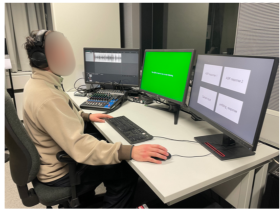
The researchers employed a Wizard-of-Oz (WoZ) experimental design. In this setup, 58 participants from Newcastle interacted with what they believed was an autonomous VA. In reality, a human "wizard" controlled the system's responses to ensure the interaction didn't break down due to technical errors, allowing the study to focus purely on user perception.
Participants were split into two groups: one interacting with a Geordie-accented VA and another with a Standard Southern British English (SSBE) VA. Following the interaction, the researchers conducted semi-structured interviews and used mixed-effects binomial logistic regression models to analyze reported speech adaptation strategies.
Datasets
The study did not rely on standard public ASR benchmarks. Instead, it generated a novel qualitative and quantitative dataset through:
- Controlled interactions with 58 native Newcastle English speakers.
- Pre-recorded system responses from a bidialectal voice actor (capable of both Geordie and SSBE).
- Transcribed semi-structured interviews covering accent attitudes, place orientation, and prior experiences with commercial VAs like Alexa or Siri.
Key Insights and Ideas
- The "Telephone Voice" for AI: Users don't just speak more clearly to AI; they perform a "standardized" persona. Participants reported adopting Americanized, "posh," or Southern accents because they assumed the AI was built for those varieties.
- The Warmth-Authority Trade-off: A Geordie-speaking AI was described as "friendly," "comforting," and "like family." However, the same participants worried that a regional voice would lack the authority needed for high-stakes tasks, such as providing medical advice.
- Authenticity vs. Performance: Interestingly, even though a native Geordie recorded the regional VA, some participants felt it sounded "stereotypical" or "forced." This highlights that "authenticity" in synthetic speech is a moving target influenced by user expectations of how a machine should sound.
- Burden of Success: The study highlights that the burden of a successful interaction currently rests on the user, who must diagnose the AI's limitations and suppress their own linguistic identity to achieve a result.
Key Results
- Perceived Authority: A staggering 94.7% of participants believed a Geordie-speaking VA would be taken less seriously or perceived as less credible than a mainstream-accented one.
- Voice Characterization: The Geordie VA was primarily associated with "familiarity" and "warmth," while the SSBE VA was characterized as "neutral," "clear," and "professional," but lacked personal connection.

- Accommodation Strategies: The most common strategy for being understood by AI was standardizing speech/accent (26% probability), followed by enunciation and slowing down. Notably, "speaking louder"—a common human response to being misunderstood—was the least reported strategy, suggesting users recognize the problem is linguistic, not acoustic.
Limitations and Future Work
The authors acknowledge that these findings are based on metalinguistic reports—what users say they do—rather than direct acoustic measurements of their speech during the experiment.
Future research directions include:
- Acoustic Analysis: Measuring actual changes in pitch, tempo, and vowel quality to see if users' reported "standardization" matches their physical speech output.
- Disentangling Acoustics from Accent: Determining if perceptions of "authority" are tied strictly to the dialect or to other acoustic properties (like vocal fry or pitch range) that might have varied between the two voice conditions.
- User-Centric Design: The authors argue that for AI to be truly inclusive, engineers must prioritize technologies that recognize regional speech without requiring users to change who they are, rather than just focusing on making the AI output regional accents.
Summary updated