


TL;DR
This paper introduces a fast, $O(N^4)$ complexity method for the rigid rotational alignment of 3D voxel maps using the sliced Wasserstein distance. By mathematically transforming 3D volumes into tensors of 1D quantile functions, the authors reduce a complex optimal transport problem to a standard Euclidean alignment task, making robust shape comparison as efficient as traditional correlation-based methods.
What Problem Does This Paper Address?
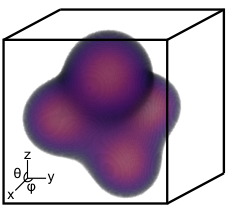
Aligning 3D density maps—finding the rotation that best matches one volume to another—is a fundamental task in fields like structural biology (cryo-EM) and computer vision. Traditionally, this is done using Euclidean distance or correlation. However, these metrics are "brittle": they struggle with heterogeneity, where shapes are similar but not identical due to deformations or structural variations.
Optimal Transport (OT) metrics, like the Wasserstein distance, are much more robust to such geometric changes. The catch? They are computationally crushing. A naive 3D Wasserstein calculation for an $N \times N \times N$ grid takes $O(N^9)$ operations. For rotational alignment, where you might check $N^3$ possible rotations, the complexity balloons to $O(N^{12})$, making it unusable for high-resolution data.
Methods
The authors bridge the gap between robustness and speed using two main ideas:
- Sliced Wasserstein Distance (SWD): Instead of solving a full 3D OT problem, SWD projects the 3D densities onto many 1D lines (slices) passing through the origin. The distance is then the average of the 1D Wasserstein distances across all slices.
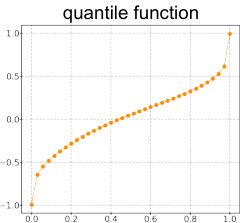
- The Quantile Trick: A beautiful property of 1D Wasserstein distance is that it's exactly equal to the $L^2$ (Euclidean) distance between the quantile functions of the distributions.
The authors prove that aligning two volumes in SWD is equivalent to aligning two "helper tensors" of these 1D quantile functions in Euclidean distance. This is the paper's "aha" moment. It allows them to use existing, highly optimized voxel-based alignment algorithms (like those based on spherical harmonics) to solve the OT problem.
Their pipeline involves:
- 3D NUFFT: Efficiently computing projections (Radon transform) of the voxel grid.
- Quantile Transformation: Converting these projections into a "quantile tensor."
- Fast Rotational Matching: Using a spherical harmonic basis to find the optimal rotation in $O(N^4)$ time.
Datasets
The method was evaluated on:
- ModelNet10: A standard computer vision dataset of voxelized CAD models (e.g., chairs, beds, desks) used to test alignment of diverse shapes.
- EMDB (Electron Microscopy Data Bank): Real-world 3D density maps of biological molecules (like proteins) to test performance on high-resolution, noisy scientific data.
- Simulated Heterogeneous Data: A dataset with 50 discrete states of simulated molecular motion to specifically test "conformational heterogeneity" (deformations).
Key Insights and Ideas
- Reduction to Euclidean Alignment: The most significant insight is that robust OT-based alignment doesn't require a new optimization engine. By pre-transforming the data into quantile tensors, you can "trick" standard fast alignment tools into minimizing the Wasserstein distance.
- Stability Theorems: The authors provide formal proofs (Theorems 5.1 and 5.2) showing that SWD is stable under translation and general deformations. This provides a theoretical guarantee that the metric won't fluctuate wildly when shapes are slightly warped.
- Voxel-Native: Unlike many other OT methods that require converting voxels to point clouds (which is lossy and expensive), this method operates directly on the voxel grid.
Key Results
- Speed: For $128^3$ volumes, their method (FSW3D) is roughly 16 times faster than competing OT-based methods like BOTalign (7.6s vs 128s).
- Accuracy: On cryo-EM data, FSW3D with local refinement achieved alignment errors of less than 0.25 degrees, significantly more accurate and with lower variance than previous state-of-the-art OT methods.
- Robustness: In the ModelNet10 tests, SWD-based alignment correctly matched significantly more models than standard Euclidean distance, particularly in categories with high shape variability.
- Translation Equivariance: The authors demonstrated that SWD responds linearly to shifts in the data, whereas Euclidean distance is highly non-linear and "saturates" quickly, making it a poor signal for optimization.
Limitations and Future Work
- Positivity and Mass: The current formulation assumes input volumes are strictly non-negative and normalized to the same total mass. Real-world data is often noisy and may have negative values (e.g., mean-subtracted maps), which requires further handling.
- No "True" Alignment: For non-identical shapes, there is no single "correct" alignment. The authors note that different metrics might be preferred depending on whether the goal is to align specific features or the overall mass.
- Future Directions: The authors suggest that the algorithm is highly parallelizable and a GPU implementation could offer even greater speedups. They also propose exploring different grid schemes and frequency-marching techniques to further improve robustness.
Summary updated