


- Entering the Wonderland of Precision
Introduction
The quest for the "Ultimate Display" in medicine—a concept first proposed by Ivan Sutherland in 1965—has seen significant progress with the advent of Augmented Reality (AR) and Mixed Reality (MR). This perspective paper evaluates the Apple Vision Pro (AVP) as a potential realization of this vision, comparing its high-end specifications against established industry leaders such as the HoloLens 2 and Magic Leap 2. The authors argue that the AVP’s superior resolution and advanced sensor fusion could finally bridge the gap between experimental AR and reliable clinical practice.
Overcoming Traditional Barriers in Medical AR
Despite decades of research, AR adoption in clinical settings has been hindered by three primary challenges:
- The "Switching Focus" Problem: Surgeons must often divert their gaze from the surgical field to 2D monitors to view critical imaging data, which disrupts hand-eye coordination and increases cognitive load.
- Precision Gaps: Many existing headsets lack the sub-millimeter tracking accuracy required for high-stakes procedures like orthopedic screw placement or deep brain stimulation.
- The Human Barrier: Traditional headsets create a physical and psychological divide between the clinician and the patient, potentially eroding empathy and communication.
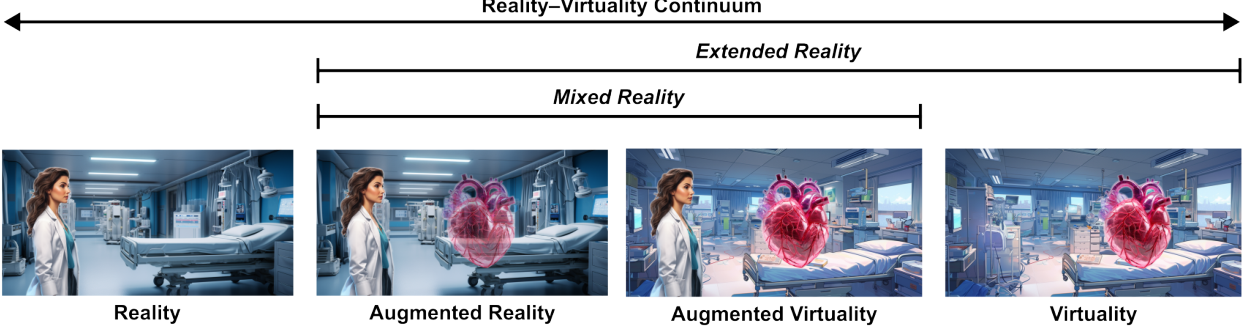
The AVP addresses these issues through its shift toward high-fidelity Video See-Through (VST) technology rather than the Optical See-Through (OST) approach used by predecessors. This allows for "Diminished Reality" (DR)—the ability to digitally remove distracting real-world objects from the surgeon's view.
 *[Apple Vision Pro for Healthcare: "The Ultimate Display"?
- Entering the Wonderland of Precision, page 3](/pdf/art_2783c5bd664c4a79a00b1c414554dcb5#page=3)*
Hardware Benchmarking and Clinical Implications
A side-by-side specification comparison reveals the AVP's technical dominance. With approximately 23 million pixels (3800 x 3000 per eye), it significantly outperforms the HoloLens 2 (2048 x 1080) and Magic Leap 2 (1440 x 1760). This resolution is vital for clinical tasks requiring the legibility of fine text in Electronic Health Records (EHRs) or the visualization of intricate anatomical structures.
Furthermore, the AVP's sensor suite—comprising 12 cameras and LiDAR—is hypothesized to provide the "inside-out" tracking precision necessary for surgical navigation. The dual-chip architecture (M2 and R1) minimizes latency, a critical factor in reducing motion sickness during prolonged use or patient rehabilitation.
Humanizing the Clinical Interface
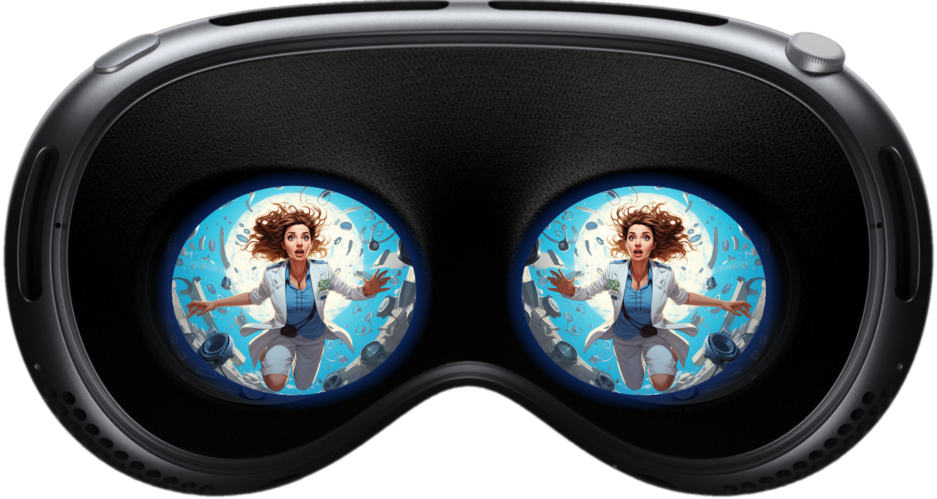
One of the AVP's most unique features, "EyeSight" (or Virtual Eyes), is identified here as a significant clinical asset. By projecting a digital representation of the clinician's eyes onto the external display, it mitigates the sense of alienation patients may feel when treated by a provider wearing a bulky headset. This "humanizing" element is crucial for maintaining the patient-provider bond in high-stress medical environments.
 *[Apple Vision Pro for Healthcare: "The Ultimate Display"?
- Entering the Wonderland of Precision, page 1](/pdf/art_2783c5bd664c4a79a00b1c414554dcb5#page=1)*
Discussion: The Path to Clinical Standard
While the AVP offers transformative potential, several bottlenecks remain. The 2-hour battery life and front-heavy ergonomics (~500g) may lead to fatigue during long surgical interventions. Moreover, the AVP is not yet a certified medical device; its clinical utility must be validated through rigorous trials with hard clinical endpoints.
Despite these limitations, the AVP's price point ($3,499) is a fraction of the cost of traditional medical navigation systems, which can reach millions of dollars. This cost-effectiveness, combined with its superior fidelity, positions the AVP as a strong candidate for moving immersive technology from the research lab to the operating room standard.
Summary updated