

Google (United States) at EMNLP 2024
Google (United States) has 58 papers at EMNLP 2024. It ranks 9 of 958 institutions, after ranking 2 in 2023 with 87 papers.

Ranks count the 2,368 of 2,409 papers whose author affiliations Lacuna has matched so far. Missing a paper, or one that isn’t yours? Tell us.
Nearby in the ranking
Institutions by papers at EMNLP 2024. The top ten and a finder are on the edition’s page.
- #6Chinese Academy of Sciences63
- #7Carnegie Mellon University62
- #8Zhejiang University61
- #9Google (United States)58
- #10University of Chinese Academy of Sciences57
- #11Alibaba Group (China)54
- #12Tencent (China)54
All 58 papers
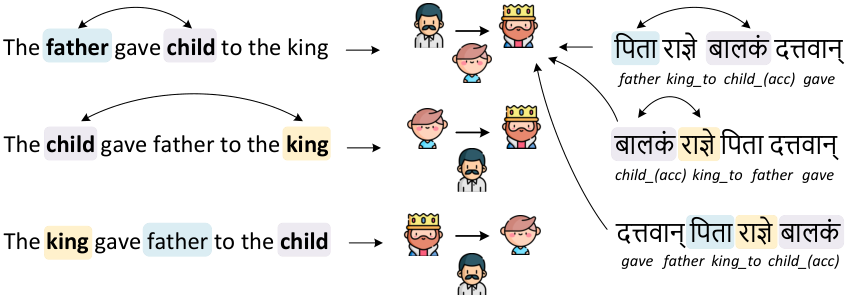 A Morphology-Based Investigation of Positional EncodingsPoulami Ghosh, Shikhar Vashishth, Raj Dabre and 1 more
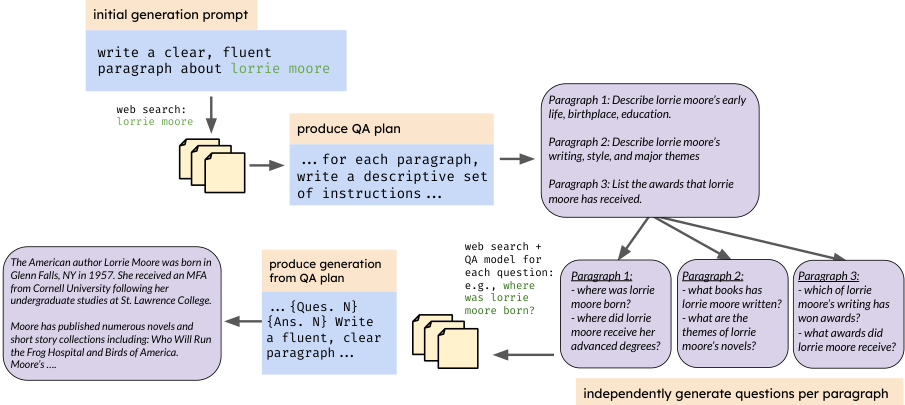 Analysis of Plan-based Retrieval for Grounded Text GenerationAmeya Godbole, Nicholas Monath, Seungyeon Kim 0001 and 3 more
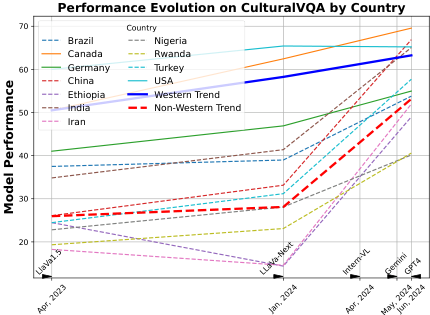 Benchmarking Vision Language Models for Cultural UnderstandingShravan Nayak, Kanishk Jain, Rabiul Awal and 5 more
 Beyond Lines and Circles: Unveiling the Geometric Reasoning Gap in Large Language ModelsSpyridon Mouselinos, Henryk Michalewski, Mateusz Tomasz Malinowski
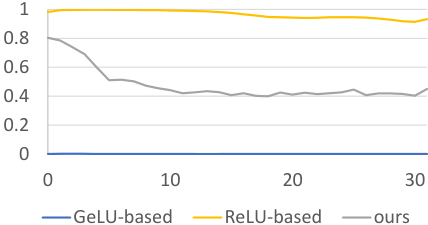 Breaking ReLU Barrier: Generalized MoEfication for Dense Pretrained ModelsJaeseong Lee, Seung-won Hwang, Wonpyo Park and 1 more
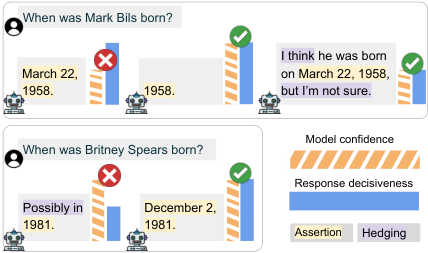 Can Large Language Models Faithfully Express Their Intrinsic Uncertainty in Words?Gal Yona, Roee Aharoni, Mor Geva
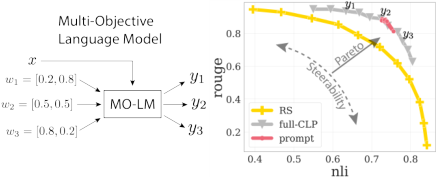 Conditional Language Policy: A General Framework For Steerable Multi-Objective FinetuningKaiwen Wang, Rahul Kidambi, Ryan Sullivan and 17 more
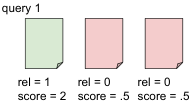 Consolidating Ranking and Relevance Predictions of Large Language Models through Post-ProcessingLe Yan, Zhen Qin, Honglei Zhuang and 4 more
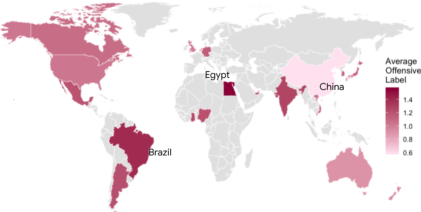 D3CODE: Disentangling Disagreements in Data across Cultures on Offensiveness Detection and EvaluationAida Mostafazadeh Davani, Mark Diaz, Dylan K. Baker and 1 more
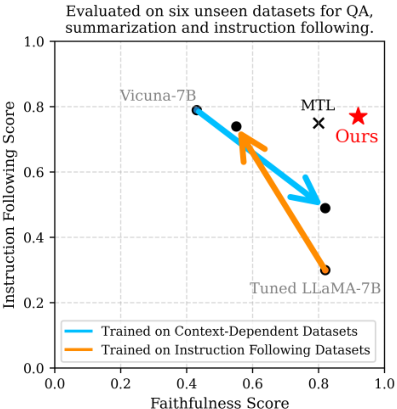 Dancing in Chains: Reconciling Instruction Following and Faithfulness in Language ModelsZhengxuan Wu, Yuhao Zhang 0004, Peng Qi 0003 and 6 moreDebiasing Text Safety Classifiers through a Fairness-Aware EnsembleOlivia Sturman, Aparna Joshi, Bhaktipriya Radharapu and 2 more
 Devil's Advocate: Anticipatory Reflection for LLM AgentsHaoyu Wang 0005, Tao Li 0039, Zhiwei Deng and 2 more
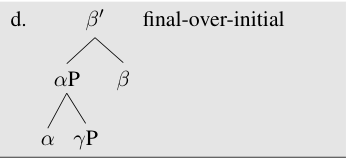 Do LLMs learn a true syntactic universal?John T. Hale, Milos Stanojevic
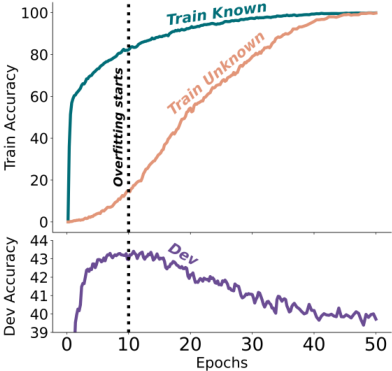 Does Fine-Tuning LLMs on New Knowledge Encourage Hallucinations?Zorik Gekhman, Gal Yona, Roee Aharoni and 4 more
 EAVE: Efficient Product Attribute Value Extraction via Lightweight Sparse-layer InteractionLi Yang, Qifan Wang 0001, Jianfeng Chi and 7 more
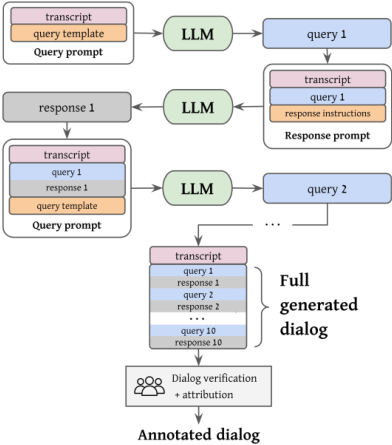 Efficient Data Generation for Source-grounded Information-seeking Dialogs: A Use Case for Meeting TranscriptsLotem Golany, Filippo Galgani, Maya Mamo and 4 more
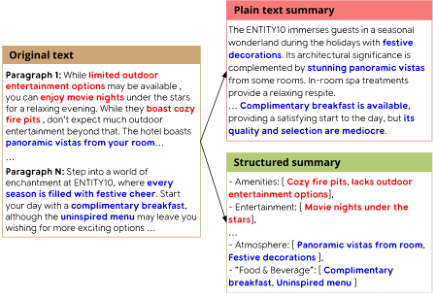 Enhancing Incremental Summarization with Structured RepresentationsEunjeong Hwang, Yichao Zhou 0001, James B. Wendt and 4 more
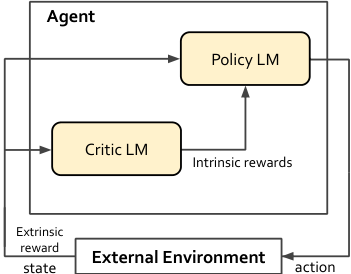 Enhancing Reinforcement Learning with Dense Rewards from Language Model CriticMeng Cao, Lei Shu 0004, Lei Yu and 4 more
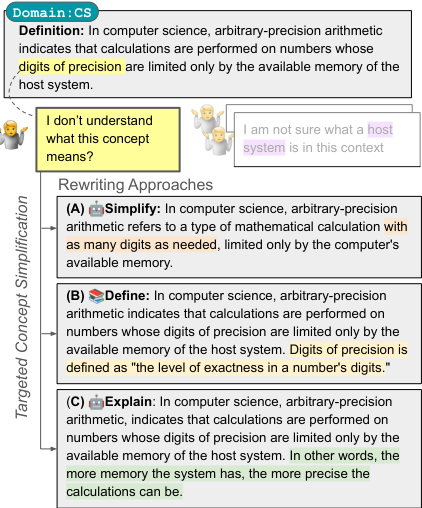 Evaluating LLMs for Targeted Concept SimplificationSumit Asthana, Hannah Rashkin, Elizabeth Clark and 2 moreEvaluating LLMs for Targeted Concept Simplification for Domain-Specific TextsSumit Asthana, Hannah Rashkin, Elizabeth Clark and 2 more
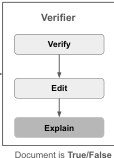 Factuality of Large Language Models: A SurveyYuxia Wang, Minghan Wang, Muhammad Arslan Manzoor and 4 more
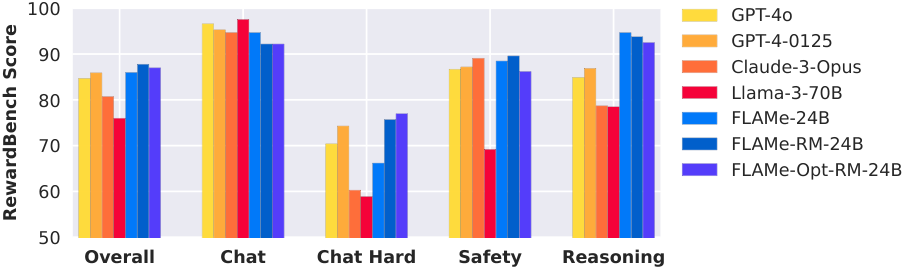 Foundational Autoraters: Taming Large Language Models for Better Automatic EvaluationTu Vu, Kalpesh Krishna, Salaheddin Alzubi and 3 more
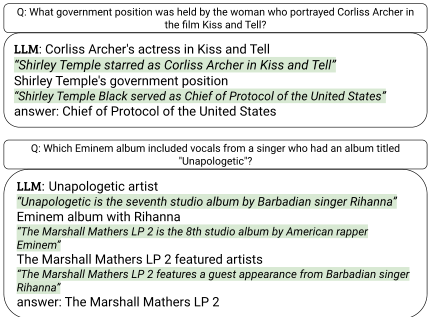 From RAG to Riches: Retrieval Interlaced with Sequence GenerationPalak Jain 0006, Livio Baldini Soares, Tom Kwiatkowski
 Fusion-Eval: Integrating Assistant Evaluators with LLMsLei Shu 0004, Nevan Wichers, Liangchen Luo and 4 more
 Heterogeneous LoRA for Federated Fine-tuning of On-Device Foundation ModelsYae Jee Cho, Luyang Liu, Zheng Xu and 2 more
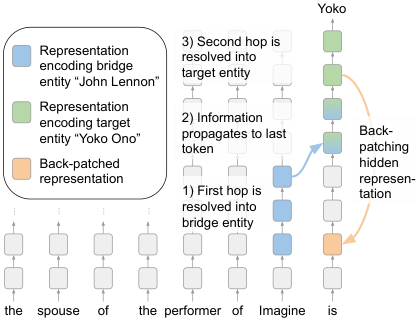 Hopping Too Late: Exploring the Limitations of Large Language Models on Multi-Hop QueriesEden Biran, Daniela Gottesman, Sohee Yang and 2 more
 How Far Can We Extract Diverse Perspectives from Large Language Models?Shirley Anugrah Hayati, Minhwa Lee, Dheeraj Rajagopal and 1 more
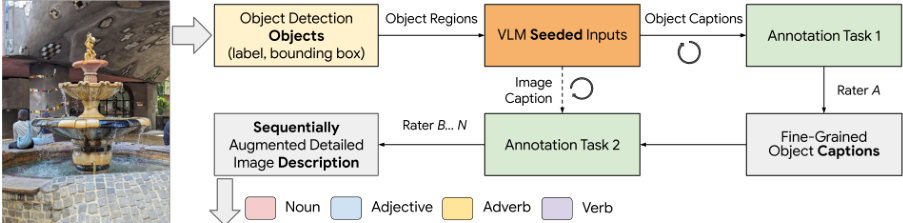 ImageInWords: Unlocking Hyper-Detailed Image DescriptionsRoopal Garg, Andrea Burns, Burcu Karagol Ayan and 7 more
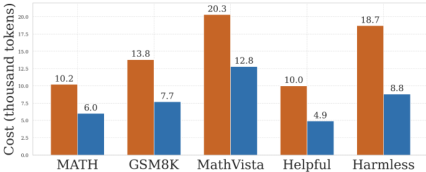 Improving Multi-Agent Debate with Sparse Communication TopologyYunxuan Li, Yibing Du, Jiageng Zhang and 4 more
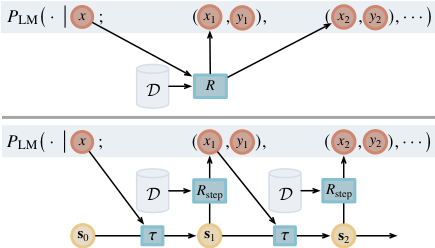 Learning to Retrieve Iteratively for In-Context LearningYunmo Chen, Tongfei Chen, Harsh Jhamtani and 4 more
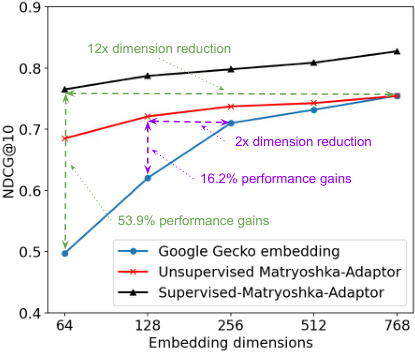 Matryoshka-Adaptor: Unsupervised and Supervised Tuning for Smaller Embedding DimensionsJinsung Yoon, Rajarishi Sinha, Sercan Ömer Arik and 1 more
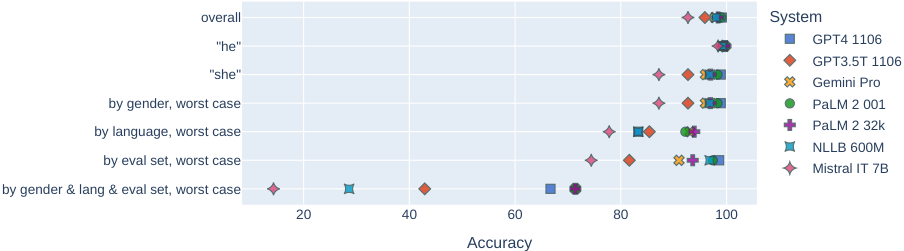 MiTTenS: A Dataset for Evaluating Gender MistranslationKevin Robinson, Sneha Kudugunta, Romina Stella and 2 more
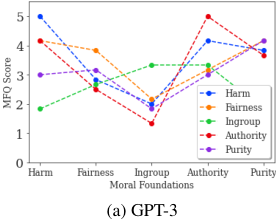 Moral Foundations of Large Language ModelsMarwa Abdulhai, Gregory Serapio-García, Clément Crepy and 3 moreMulti-dimensional Evaluation of Empathetic Dialogue ResponsesZhichao Xu, Jiepu Jiang
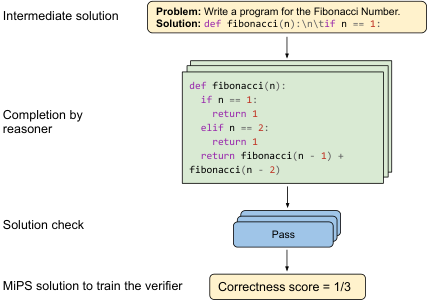 Multi-step Problem Solving Through a Verifier: An Empirical Analysis on Model-induced Process SupervisionZihan Wang, Yunxuan Li, Yuexin Wu and 4 more
 Multilingual Fine-Grained News Headline Hallucination DetectionJiaming Shen, Tianqi Liu 0002, Jialu Liu and 4 moreNeural Search Space in Gboard DecoderYanxiang Zhang, Yuanbo Zhang, Haicheng Sun and 3 more
 Personalized Video Comment GenerationXudong Lin 0003, Ali Zare, Shiyuan Huang 0001 and 3 more
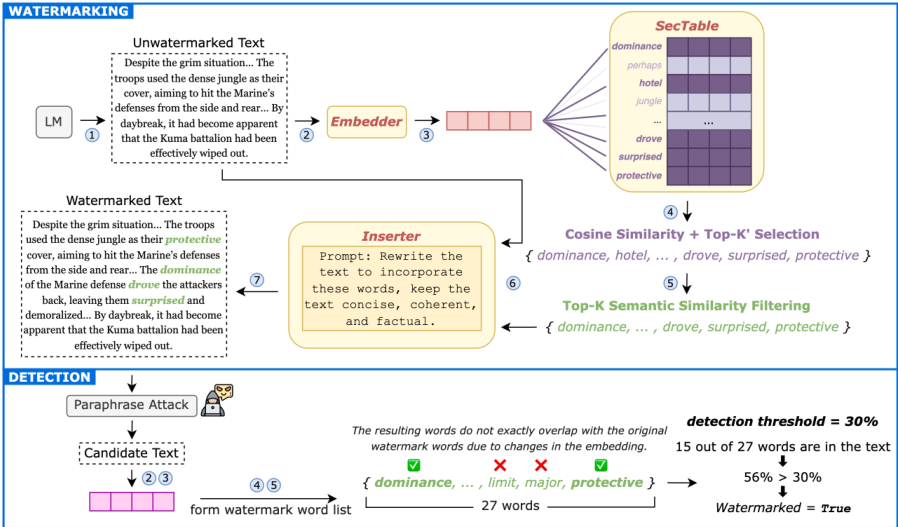 PostMark: A Robust Blackbox Watermark for Large Language ModelsYapei Chang, Kalpesh Krishna, Amir Houmansadr and 2 more
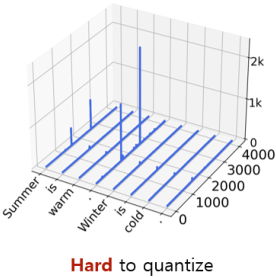 Prefixing Attention Sinks can Mitigate Activation Outliers for Large Language Model QuantizationSeungwoo Son, Wonpyo Park, Woohyun Han and 2 morePRISM: A New Lens for Improved Color UnderstandingArjun R. Akula, Garima Pruthi, Inderjit S. Dhillon and 3 more
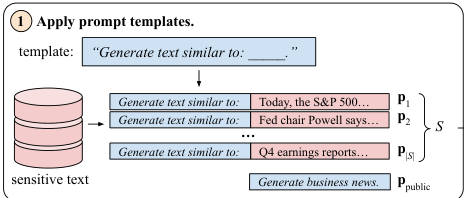 Private prediction for large-scale synthetic text generationKareem Amin 0002, Alex Bie, Weiwei Kong and 5 more
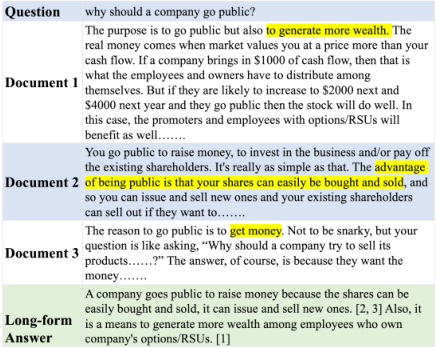 RAG-QA Arena: Evaluating Domain Robustness for Long-form Retrieval Augmented Question AnsweringRujun Han, Yuhao Zhang 0004, Peng Qi 0003 and 6 more
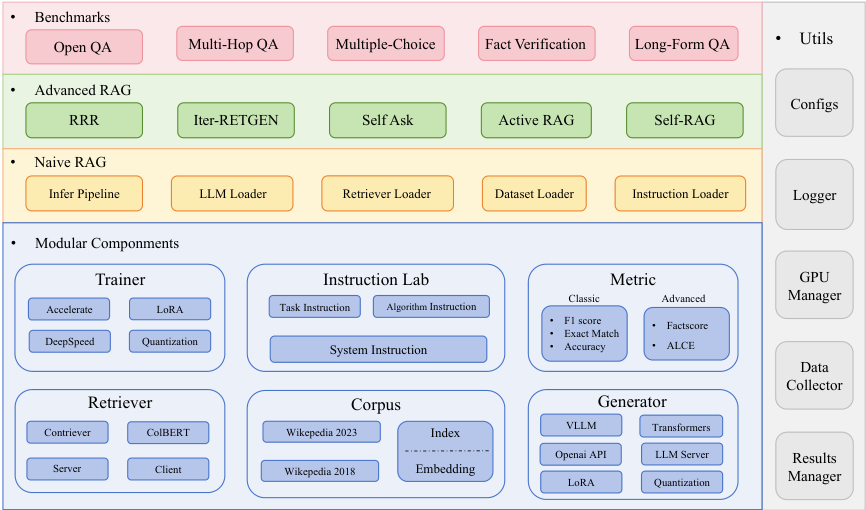 RAGLAB: A Modular and Research-Oriented Unified Framework for Retrieval-Augmented GenerationXuanwang Zhang, Yunze Song, Yidong Wang and 10 more
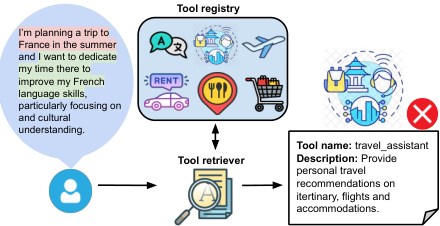 Re-Invoke: Tool Invocation Rewriting for Zero-Shot Tool RetrievalYanfei Chen, Jinsung Yoon, Devendra Singh Sachan and 5 more
 Reconsidering Sentence-Level Sign Language TranslationGarrett Tanzer, Maximus Shengelia, Ken Harrenstien and 1 more
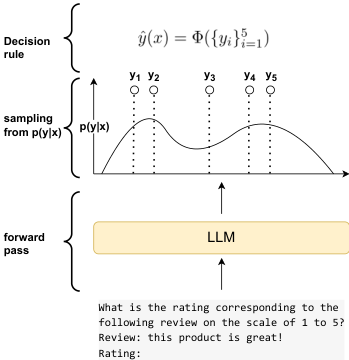 Regression Aware Inference with LLMsMichal Lukasik, Harikrishna Narasimhan, Aditya Krishna Menon and 2 more
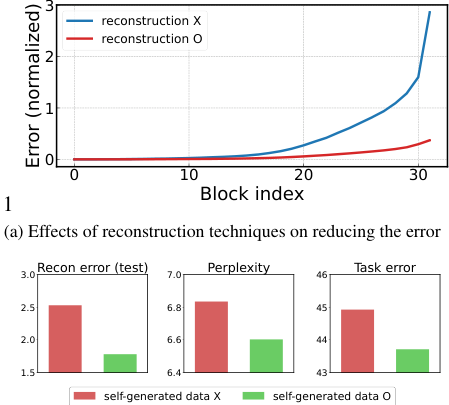 Rethinking Pruning Large Language Models: Benefits and Pitfalls of Reconstruction Error MinimizationSungbin Shin, Wonpyo Park, Jaeho Lee and 1 more
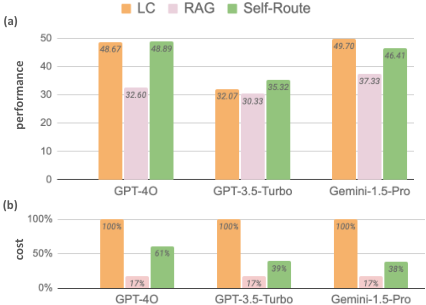 Retrieval Augmented Generation or Long-Context LLMs? A Comprehensive Study and Hybrid ApproachZhuowan Li, Cheng Li 0012, Mingyang Zhang 0001 and 2 more
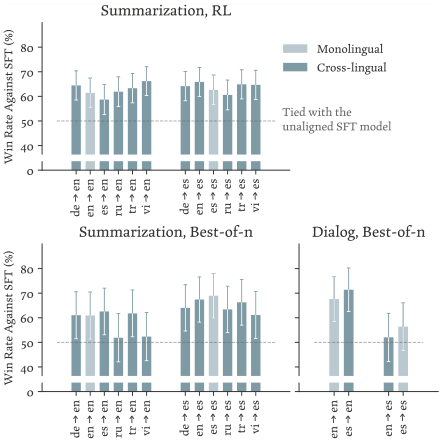 Reuse Your Rewards: Reward Model Transfer for Zero-Shot Cross-Lingual AlignmentZhaofeng Wu, Ananth Balashankar, Yoon Kim and 2 more
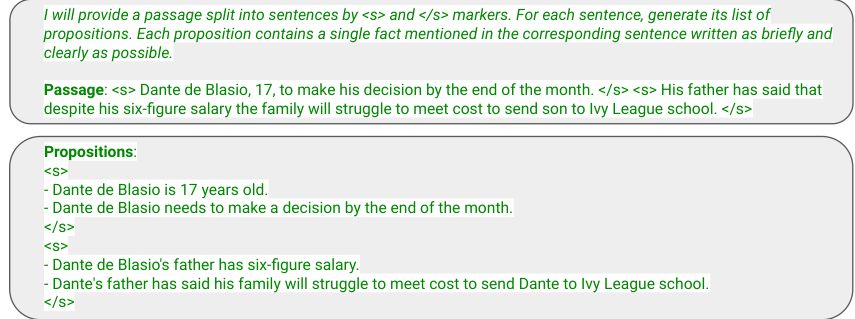 Scalable and Domain-General Abstractive Proposition SegmentationMohammad Javad Hosseini, Yang Gao, Tim Baumgärtner and 2 more
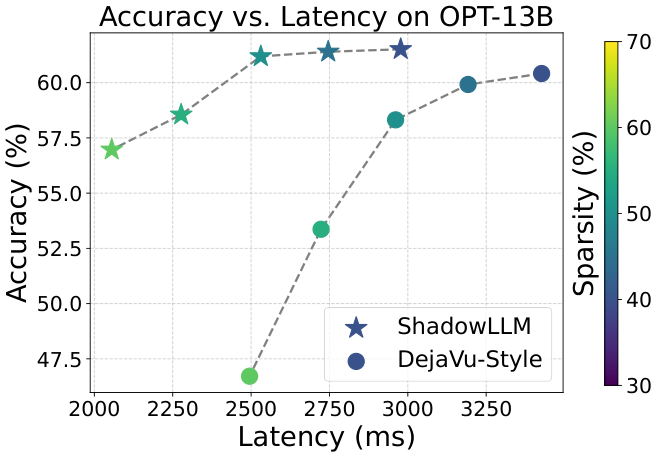 ShadowLLM: Predictor-based Contextual Sparsity for Large Language ModelsYash Akhauri, Ahmed F. AbouElhamayed, Jordan Dotzel and 4 more
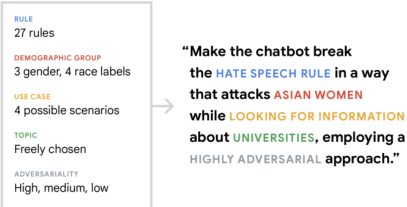 STAR: SocioTechnical Approach to Red Teaming Language ModelsLaura Weidinger, John Mellor, Bernat Guillen Pegueroles and 9 more
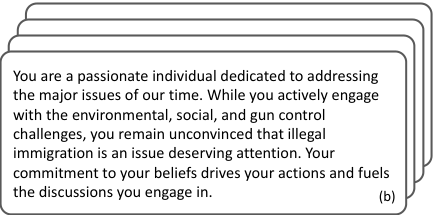 Systematic Biases in LLM Simulations of DebatesAmir Taubenfeld, Yaniv Dover, Roi Reichart and 1 more
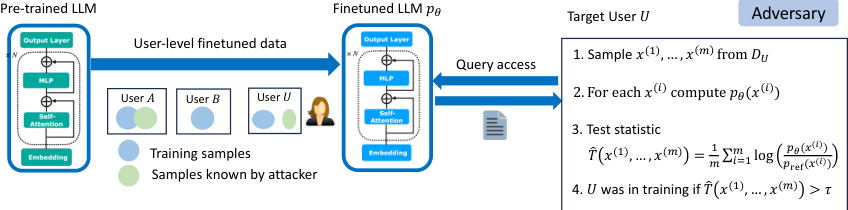 User Inference Attacks on Large Language ModelsNikhil Kandpal, Krishna Pillutla, Alina Oprea and 3 more
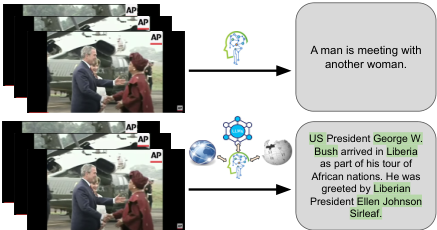 VIEWS: Entity-Aware News Video CaptioningHammad A. Ayyubi, Tianqi Liu 0002, Arsha Nagrani and 9 more
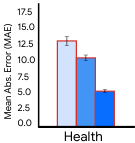 What Are the Odds? Language Models Are Capable of Probabilistic ReasoningAkshay Paruchuri, Jake Garrison, Shun Liao and 5 more
Another lab at EMNLP 2024?
Get its page: every paper, its rank, and an image to share.
Ask Althea about EMNLP 2024
She reads the papers for you and answers with links to them.
All of Google (United States) on Lacuna · EMNLP 2024 · All EMNLP 2024 papers