

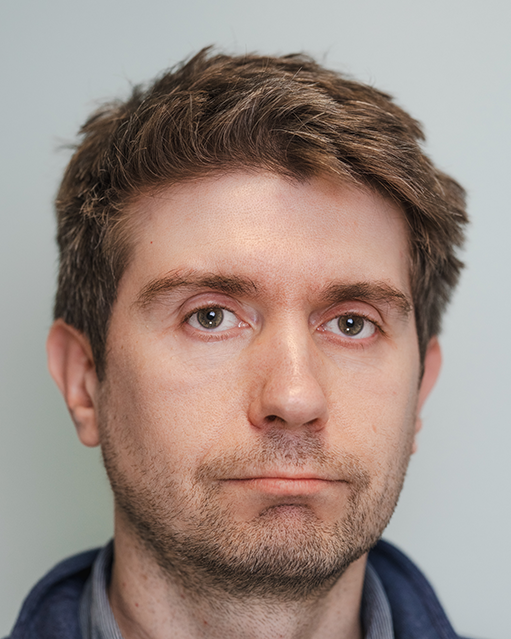
 Zoran Tiganj
· 6 previous affiliations
- Indiana UniversitySince 2020
- Assistant Professor · Since 2020
- Boston University2013–2019
- Postdoc · 2013–2019
- Postdoc · 2011–2012
- Postdoc · 2011–2012
- PhD student · 2008–2011
- University of Zagreb2002–2008
- MS student · 2002–2008
Research Overview
Zoran Tiganj focuses on the computational basis of cognition, developing neural-level models of memory, perception, and learning. His work bridges biological observations of how the brain represents time and space with the design of artificial agents. Recently, his research emphasizes integrating scale-invariant temporal memory and logarithmic compression into deep reinforcement learning and transformer architectures.
Research Trajectory
Early in his career, Tiganj focused on methodological improvements for analyzing neural data. He developed A non-parametric method for automatic neural spike clustering based on the non-uniform distribution of the data (2011), providing a robust, greedy clustering approach for sorting neural spikes by leveraging the inherent unimodal distribution of neural signals.
This foundational work in neural decoding naturally progressed into theoretical modeling of how the brain encodes fundamental dimensions. He participated in proposing A Unified Mathematical Framework for Coding Time, Space, and Sequences in the Hippocampal Region (2014), which conceptualized how the medial temporal lobe encodes both spatial location and elapsed time as special cases of a broader computation. This led to deeper investigations into the area of Mapping Computational Principles to Biological Neural Architectures. In Efficient Neural Computation in the Laplace Domain (2015), he and his collaborators demonstrated how Weber-Fechner scaling—a representational motif for time, space, and numerosity—can be implemented using Laplace transforms to support flexible, cross-modal cognitive computation.
Tiganj then applied these computational theories directly to biological recordings to understand temporal coding in the mammalian brain. He investigated Sequential Firing Codes for Time in Rodent Medial Prefrontal Cortex (2016), identifying "time cells" that fire sequentially during delay intervals. Extending this research to non-human primates, he analyzed a Compressed Timeline of Recent Experience in Monkey Lateral Prefrontal Cortex (2018), showing that working memory maintains a sense of elapsed time through sequences of neurons that represent a temporally compressed record of the past. Returning to theoretical models of these phenomena, he guided work on Evidence Accumulation in a Laplace Domain Decision Space (2018), proposing that the brain maintains a distributed representation of evidence using the Laplace transform, unifying decision-making and spatial navigation mechanisms. Further exploring temporal coding, he contributed to the discovery of A temporal record of the past with a spectrum of time constants in the monkey entorhinal cortex (2020), where neurons exhibited varying relaxation rates after stimulus onset, allowing the decoding of time since an event.
This biological understanding of time scales directly informed his transition into artificial intelligence, specifically driving the research direction of Logarithmic Compression for Scale Invariant Temporal Memory. He helped develop DeepSITH: Efficient Learning via Decomposition of What and When Across Time Scales (2021), a deep network architecture using Scale-Invariant Temporal History modules to extract temporal relationships over a wide range of scales, avoiding the vanishing gradient problems typical of standard recurrent networks.
By 2025, his work heavily focused on integrating these biologically inspired temporal models into modern machine learning architectures. He introduced Gradual Forgetting: Logarithmic Compression for Extending Transformer Context Windows, which applies scale-invariant temporal filters to mimic human memory, achieving strong perplexity results by compressing the distant past. Similarly, he oversaw the development of the Time-Local Transformer, which constrains transformers to process sequential data using a dynamically updated context rather than accessing the entire input history. He also investigated how standard architectures naturally develop cognitive properties. In Emergence of Episodic Memory in Transformers: Characterizing Changes in Temporal Structure of Attention Scores During Training, his team demonstrated that models like GPT-2 develop human-like episodic memory biases, such as primacy and recency, driven primarily by induction heads.
Alongside language models, Tiganj applied these principles to reinforcement learning and spatial navigation. He led research on Deep Reinforcement Learning with Time-Scale Invariant Memory (2025), creating agents capable of learning temporal relationships effectively across both short and long horizons. He also explored the biological origins of these representations in Self-supervised learning of scale-invariant neural representations of space and time, showing how autoencoder networks can naturally produce scale-invariant time and place cells consistent with Weber's law. Finally, he formalized these mechanisms in a Computational Model for Episodic Timeline Based on a Spectrum of Synaptic Decay Rates, detailing how temporally organized memories of the recent past can persist in neural activity.
Current Directions
The most recent papers in the evidence address the intersection of cognitive science and deep learning, focusing on embedding biologically plausible memory constraints into artificial architectures. Recent work investigates how models can maintain scale-invariant representations of time and space, enabling them to handle long-horizon dependencies without exhaustive computational overhead. This includes modifying transformer architectures to utilize logarithmic compression and dynamically updated contexts, as well as analyzing how standard models naturally develop human-like episodic memory biases such as primacy and recency. Additionally, ongoing research explores the application of time-scale invariant memory to deep reinforcement learning, aiming to create agents that generalize and learn temporal relationships more robustly across varying time scales.
Profile updated
Loading new papers…
Other researchers whose papers cluster into the same research directions — a proxy for overlapping technical interests and shared intellectual neighborhoods.
See something wrong? Report a mistake