

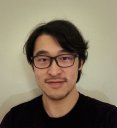
 Zonglin Yang
· 5 previous affiliations
- MiromindSince 2026
- Principal Researcher · Since 2026
- Current
- National Technological University2021–2025
- PhD student · 2021–2025
- Cornell Tech2019–2020
- MS student · 2019–2020
- Undergrad student · 2014–2018
Research Overview
Zonglin Yang focuses on large language models for scientific discovery, automated hypothesis generation, and natural language reasoning. His early work explored temporal commonsense and inductive reasoning in language models, establishing a foundation for complex inference. Currently, he investigates how AI agents can autonomously retrieve inspirations, synthesize literature, and iteratively generate actionable scientific hypotheses.
Research Trajectory
His early research investigated structured reasoning and temporal alignment in natural language processing. In 2020, he explored temporal reasoning in text, introducing a time-aware pre-training approach to improve event duration prediction in Improving Event Duration Prediction via Time-aware Pre-training. This interest in structured reasoning evolved into investigating how language models handle logical inference. In Language Models as Inductive Reasoners, he shifted the focus of inductive reasoning from formal logic to natural language representations, developing a framework that allows pretrained models to induce rules directly from natural language facts.
This foundation in complex reasoning naturally transitioned into the domain of scientific discovery, where hypothetical induction is a core cognitive task. He initiated the MOOSE series to formalize and automate this process. The foundational paper, Large Language Models for Automated Open-domain Scientific Hypotheses Discovery, introduced a dataset for social science academic hypothesis discovery, moving beyond constrained, closed-domain settings to generate valid and novel hypotheses.
To map the broader landscape of this emerging field, he synthesized existing methodologies in LLM4SR: A Survey on Large Language Models for Scientific Research. This comprehensive review analyzed AI capabilities across the research lifecycle, contributing to the broader research area of Automated Knowledge Synthesis from Scientific Literature and highlighting the challenge of Balancing Novelty and Grounding in Automated Hypothesis Generation. Addressing the novelty aspect directly, he developed a framework in Harnessing Large Language Models for Scientific Novelty Detection that distills idea-level knowledge to bridge the gap between surface textual similarity and deep conceptual originality.
To rigorously evaluate these capabilities, he introduced ResearchBench: Benchmarking LLMs in Scientific Discovery via Inspiration-Based Task Decomposition. This large-scale benchmark decomposed the discovery process into retrieval, composition, and ranking tasks across multiple disciplines. This work also advanced the methodological area of Temporal Isolation for Contamination-Free Language Model Evaluation to ensure models were genuinely discovering conceptual connections rather than recalling training data.
The MOOSE series subsequently expanded into the natural sciences, specifically chemistry, focusing heavily on the research direction of Automated Discovery through Cross-Domain Analogical Reasoning. In MOOSE-Chem: Large Language Models for Rediscovering Unseen Chemistry Scientific Hypotheses, he presented a multi-agent framework that autonomously retrieved literature inspirations to successfully replicate core innovations of recent chemistry papers published after the models' training cutoff. Recognizing that broad research directions must be refined into actionable plans, he extended this with MOOSE-Chem2: Exploring LLM Limits in Fine-Grained Scientific Hypothesis Discovery via Hierarchical Search, framing fine-grained hypothesis discovery as an optimization problem and proposing a hierarchical heuristic search to navigate the complex landscape of experimental planning.
Moving toward empirical validation, his work began integrating simulated experimental feedback. In MOOSE-Chem3: Toward Experiment-Guided Hypothesis Ranking via Simulated Experimental Feedback, he addressed the bottleneck of hypothesis ranking in cost-intensive domains by proposing a simulator that models hypothesis performance, prioritizing ideas based on prior test feedback. Most recently, while working as a research scientist at MiroMind, he tackled the computational bottlenecks of training models for discovery. In MOOSE-Star: Unlocking Tractable Training for Scientific Discovery by Breaking the Complexity Barrier, he decomposed the discovery search space to reduce complexity from exponential to logarithmic, enabling scalable training for hypothesis generation.
Current Directions
Recent work investigates the integration of empirical feedback and scalable training methodologies to create autonomous scientific discovery systems. A primary focus is the area of Closed-Loop Iterative Scientific Discovery with Language Models, where language models do not merely generate static hypotheses but refine them based on simulated or real experimental outcomes. This involves developing sophisticated ranking mechanisms that prioritize hypotheses using prior test feedback, bridging the gap between theoretical generation and wet-lab execution.
Additionally, current research addresses the computational complexity of training models for discovery tasks. By decomposing the search space of scientific ideas into manageable, sequential steps, these efforts aim to make the training of hypothesis-generating models tractable and scalable. The overarching goal of these recent directions is to move toward AI systems that can autonomously and reliably navigate the entire research lifecycle, from inspiration retrieval to actionable experimental validation.
Profile updated
Loading new papers…
Other researchers whose papers cluster into the same research directions — a proxy for overlapping technical interests and shared intellectual neighborhoods.
See something wrong? Report a mistake